White Widow: The Strain That Built Amsterdam's Coffeeshop Legend
White Widow is the 1994 Green House Seeds cross that won the 1995 Cannabis Cup and defined Dutch coffeeshop cannabis — but its true origin is still disputed decades later. Here's the real history behind the strain, its Black Widow offshoot, and why nearly every seed bank's "White Widow" is a different genetic today.
Key takeaways
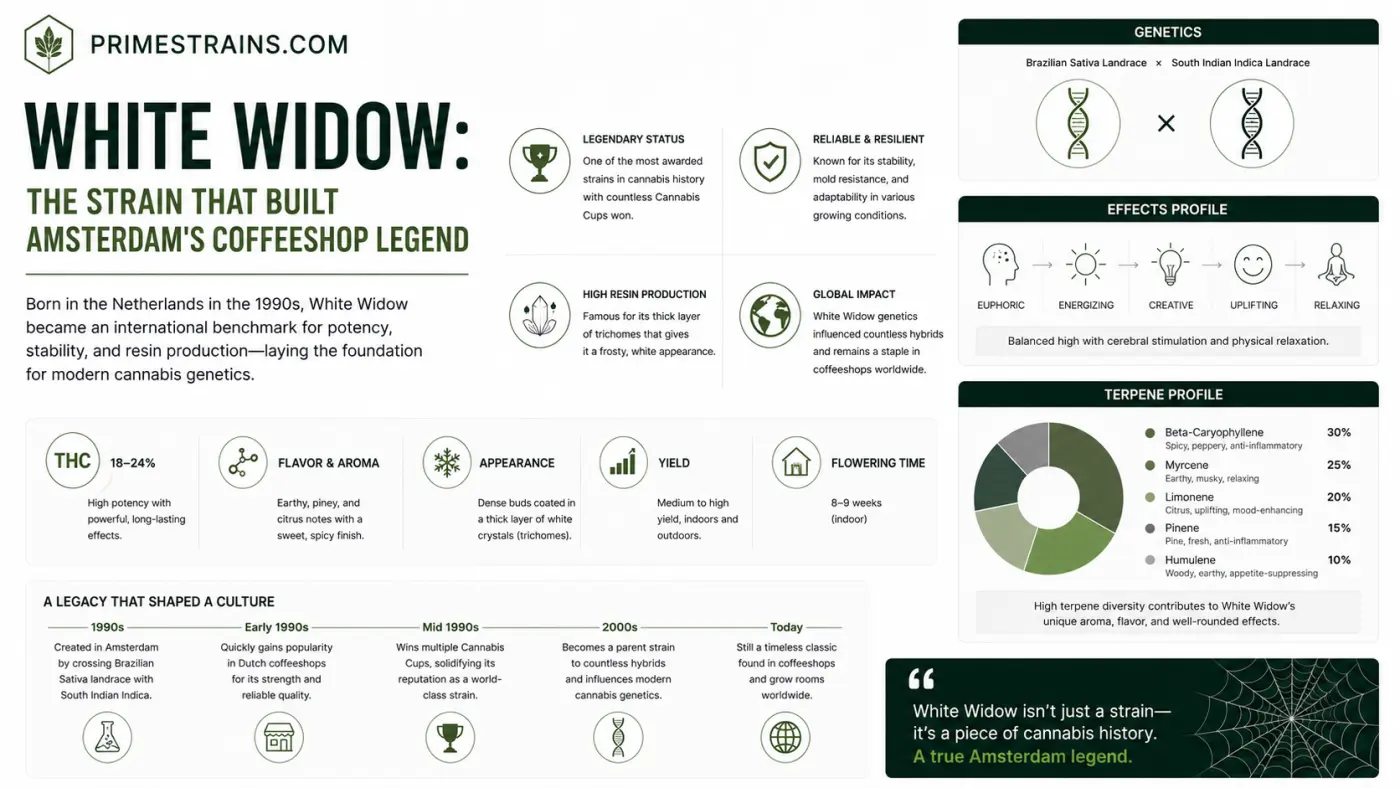
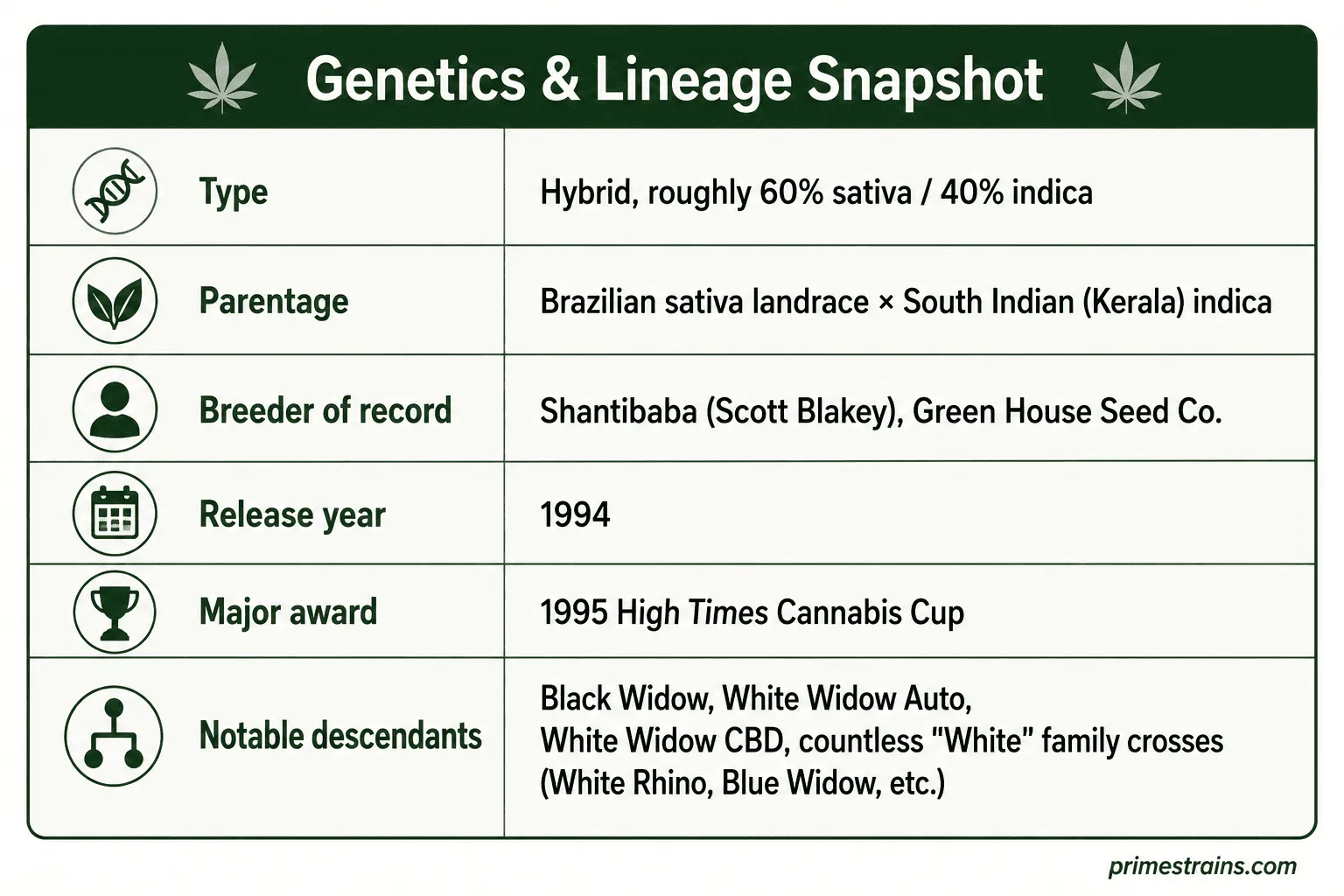
- White Widow was released in 1994 by Green House Seed Company in Amsterdam, bred by Shantibaba (Scott Blakey) from a Brazilian sativa landrace mother and a South Indian (Kerala) indica father.
- The strain won the High Times Cannabis Cup in 1995, beating out the era's dominant genetics including Skunk, Northern Lights, and Haze.
- White Widow's origin is disputed a second breeder, Ingemar De Sjamaan, has also claimed credit for creating the strain, and the two accounts have never been definitively resolved.
- After leaving Green House in 1998, Shantibaba renamed his personal lineage Black Widow to distinguish it from the White Widow genetics sold by other breeders.
- White Widow is a roughly 60% sativa / 40% indica hybrid known for dense, trichome-frosted buds, a myrcene-dominant earthy-pine terpene profile, and an effect that starts cerebral and settles into relaxed, balanced body ease.
White Widow isn't just another name on a seed list — it's one of the two or three genetics that defined what "Dutch weed" meant to an entire generation of smokers. Frost-caked buds so dense with trichomes they look dipped in sugar, a balanced high that swings from cerebral spark to body ease, and a name that's been copied, cloned, and re-released by nearly every seed bank on earth. This is the story of where it actually came from — and why the origin is more contested than most breeders like to admit.
The Origin Story: Amsterdam, 1994
White Widow traces back to Green House Seed Company, founded in Amsterdam in 1994 by Arjan Roskam and Australian breeder Scott Blakey — better known by his working name, Shantibaba. According to Shantibaba's account, the strain was the result of a very deliberate cross: a Brazilian sativa landrace as the mother, paired with a South Indian indica male sourced from the Kerala region.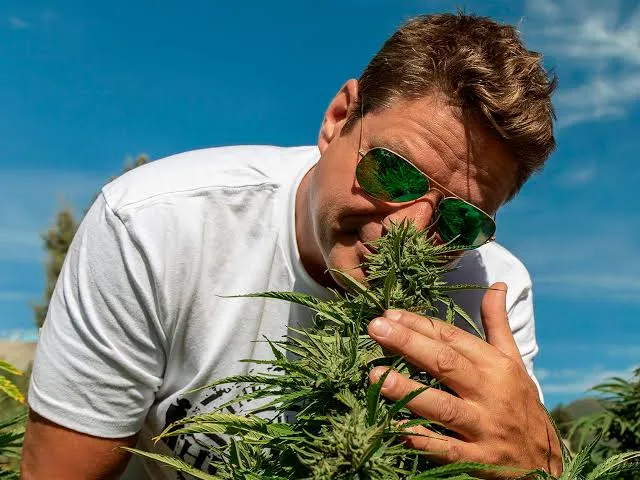
The story goes that Shantibaba, during travels in India, was introduced by a local farmer to a resin-heavy indica hybrid that had been selectively bred in the region for generations, prized specifically for its trichome production. He brought seed stock back to the Netherlands and crossed it with a Brazilian sativa — widely believed to be the landrace Manga Rosa — to stabilize what would become White Widow. Green House released the finished strain in 1994, and it won the High Times Cannabis Cup in 1995, cementing its reputation almost overnight.
A Second Claim: Ingemar De Sjamaan
Shantibaba's account isn't the only version of events. A second, competing origin story credits a low-profile Dutch grower named Ingemar, of the coffeeshop De Sjamaan, as the true originator of the White Widow genetics — claiming he developed the line independently and that Green House's commercial release drew on his work. Ingemar has never fully disclosed his own lineage details, and the dispute between the two accounts has never been definitively settled. It's a familiar pattern in Dutch cannabis history — genetics moved fast, paperwork didn't exist, and origin stories were often reconstructed years later from memory and reputation rather than breeding records.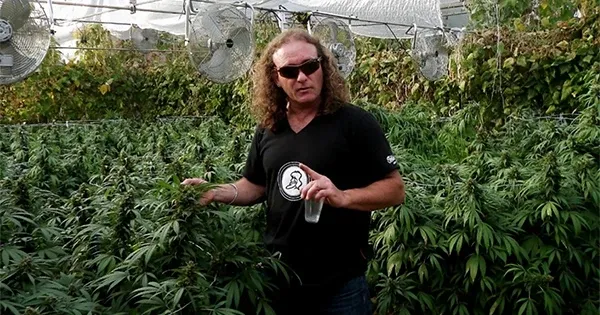
The Split, and the Birth of Black Widow
In the late 1990s, Shantibaba and Arjan Roskam parted ways. Shantibaba sold his stake in Green House in 1998 and, together with Howard Marks, founded Mr. Nice Seed Bank. To separate his original genetics from the increasingly diluted and re-bred versions of "White Widow" circulating under other seed banks, Shantibaba renamed his personal line — the genetics he maintains are the true 1995 Cannabis Cup winners — as Black Widow. Green House, meanwhile, continued selling and developing White Widow under its original name, and it remains one of the brand's flagship strains to this day.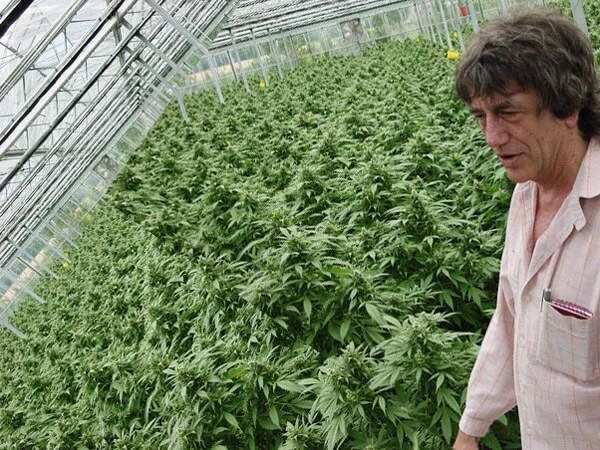
Appearance, Aroma & Flavor
White Widow earns its name honestly — mature colas disappear under a thick coat of white trichomes, giving the buds a frosted, almost snow-dusted look even before the calyxes swell. The bud structure leans dense and chunky, a legacy of its indica-heavy Kerala parent, wrapped in bright green leaf tissue with sparse orange pistils threading through.The terpene profile is classic old-school Dutch: myrcene-dominant, giving it an earthy, herbal backbone, layered with a fresh pine note from pinene and a light peppery bite on the exhale courtesy of caryophyllene. It's a clean, grounded aroma rather than a sweet or fruity one — the smell that effectively defined what "Amsterdam weed" was supposed to smell like for most of the 1990s and 2000s. A 4–6 week cure noticeably deepens the earthy-pine complexity and rounds off any harshness from the flower.
Effects Profile
The sativa/indica split shows up clearly in how the high unfolds. The onset is cerebral and energizing — a clear-headed, sociable lift that made White Widow a coffeeshop favorite for daytime and social use. As the high develops, the indica half of the genetics takes over, settling into a relaxed, body-easing calm without tipping into heavy sedation for most users. It's this balance — up-then-down, rather than one-note — that's kept White Widow in continuous commercial production for three decades while flashier, trendier crosses have come and gone.Growing Info: Quick Facts
- Flowering time: 8–9 weeks indoors
- Climate suitability: Bred from landrace parents adapted to Brazil and South India, White Widow tolerates a range of conditions but performs best in a controlled indoor or greenhouse environment
- Yield potential: Medium to high, with dense bud structure that rewards good airflow and canopy management
- Growth pattern: Robust, vigorous growth typical of its sativa-leaning genetics; benefits from structural training
- Grower difficulty: Beginner-to-intermediate friendly — one of the reasons it became a go-to "starter" classic alongside strains like Northern Lights and Skunk #1
Why the Origin Story Still Matters
White Widow's contested history is a useful lens on cannabis breeding history generally: for most of the 20th century, genetics moved through informal trade, personal reputation, and word of mouth rather than documented pedigree. That's part of why the modern breeding world has shifted so heavily toward transparency and genetic stability — true-breeding F1 hybrid programs exist specifically to avoid the kind of lineage ambiguity that surrounds a strain like White Widow, where two breeders can credibly claim the same genetic thirty years later and neither can fully prove it. Modern techniques, including work with triploid and seedless cannabis genetics, represent how far the science has come since two guys were trading Kerala landrace seed out of a backpack in Amsterdam.White Widow (Green House) vs Black Widow (Mr. Nice)
| Criteria | White Widow | Black Widow |
|---|---|---|
| Breeder / Bank | Green House Seed Co. (Arjan Roskam) | Shantibaba / Mr. Nice Seed Bank |
| Release Year | 1994 (commercial release) | Late 1990s (renamed after Green House split) |
| Claimed Lineage | Brazilian sativa × South Indian (Kerala) indica | Shantibaba's original 1995 Cup-winning genetics |
| Reason for Name | Original commercial name used by Green House | Renamed by Shantibaba to distinguish his line from other "White Widow" versions |
| Sativa/Indica Ratio | ~60% sativa / 40% indica | Similar balanced hybrid profile |
| Cannabis Cup History | Genetic associated with the 1995 High Times Cup win | Shantibaba maintains his plants are the true Cup-winning stock |
| Availability Today | Widely sold by Green House and countless other seed banks | Sold exclusively through Mr. Nice Seed Bank |
| Best For | Growers wanting the widely available, standardized commercial line | Growers wanting the lineage closest to the original 1995 genetics |
Frequently asked questions
Is Black Widow the same strain as White Widow?
They share the same original genetic foundation. Black Widow is the name Shantibaba gave to his personal White Widow lineage after leaving Green House Seeds, specifically to distinguish his original 1995 Cannabis Cup-winning genetics from the White Widow sold commercially by other breeders. They're closely related but have diverged through decades of separate breeding.
Who really created White Widow — Shantibaba or Ingemar?
There's no definitive answer. Shantibaba's account, tied to Green House Seed Co.'s 1994 commercial release, is the most widely documented and credited version. A competing claim from Dutch grower Ingemar De Sjamaan has never been fully substantiated with disclosed lineage, and the dispute has never been resolved either way.
Is White Widow high in THC?
Yes — White Widow has historically tested as a strong, above-average THC strain, which was part of what made it stand out at the 1995 Cannabis Cup against the era's dominant genetics like Skunk, Northern Lights, and Haze. Exact potency varies by breeder and phenotype.
Authoritative sources
References supporting factual claims and further reading in this guide.