Landrace Strains vs. Modern Polyhybrids: Why Pure DNA Matters
Explore the critical differences between pure landrace cannabis and modern polyhybrids. Learn how genetic bottlenecks affect crop health, why heirloom DNA matters, and how master breeders use ancestral lines to create resilient modern cultivars.
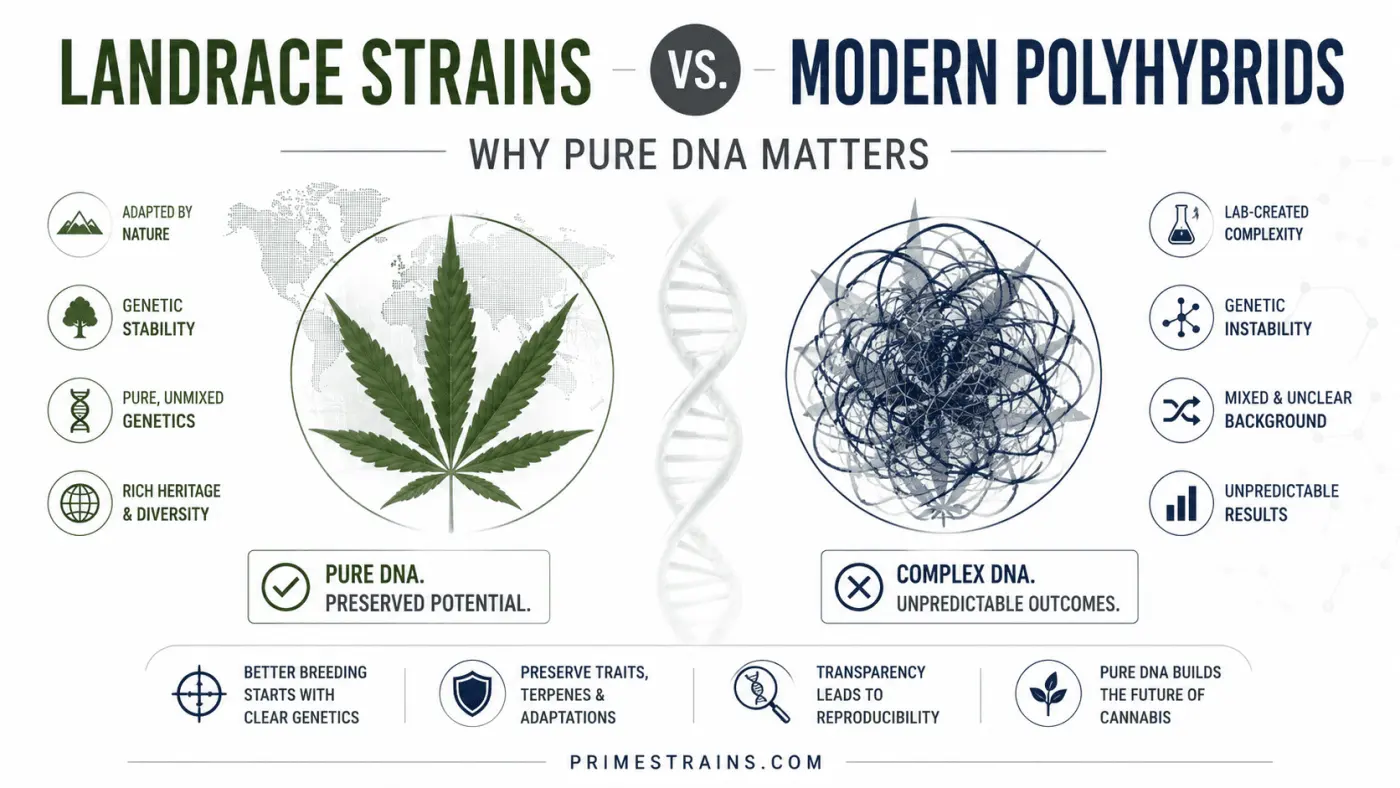
Key takeaways
- Landrace Definition Pure landrace cannabis strains are wild or domesticated cultivars that evolved naturally in specific geographical regions without artificial hybrid crossing.
- Polyhybrid Definition A polyhybrid is a cultivar produced by crossing two or more hybrid strains, combining multiple complex genetic lineages within a single plant.
- Genetic Bottlenecks Decades of selective breeding for high THC content have narrowed the cannabis gene pool, increasing crop vulnerability to pests, diseases, and viroids like Hop Latent Viroid (HLVd).
- Minor Cannabinoids Landrace lines frequently contain elevated concentrations of rare minor cannabinoids such as THCV, CBDV, and CBG that have been accidentally bred out of modern polyhybrids.
- Phenotypic Uniformity Pure landrace cultivars offer extreme genetic stabilization for specific regional traits, whereas polyhybrids often produce diverse "pheno-hunts" with high variation.
The modern cannabis market is dominated by high-potency polyhybrids—strains bred by crossing hybrid with hybrid for generations. While these cultivars boast soaring THC levels and intense dessert terpene profiles, decades of aggressive interbreeding have introduced a hidden challenge: genetic homogenization.
As commercial growers face rising pathogen pressures, unpredictable phenotypic variance, and environmental stressors, many master breeders are returning to the plant's ancestral foundation: pure landrace strains.
Understanding the fundamental differences between unhybridized heirloom genetics and modern polyhybrids is essential for cultivators looking to build a resilient canopy and for seed buyers seeking true genetic stability.
What Is a Pure Landrace Strain?
A landrace strain is an original, unhybridized cannabis cultivar native to a specific geographic region. Shaped over centuries through open pollination and local environmental pressures, landraces adapted to survive extreme conditions—from the humid valleys of Southeast Asia to the high-altitude, arid mountains of the Hindu Kush.As detailed in our foundational guide to ancestral landrace cannabis strains, these heirloom plants represent the unaltered, pure diploid (2n) DNA from which all modern cultivars descend.
Core Traits of Landrace Strains:
- Natural Environmental Hardiness: Built-in resistance to regional mold, mildews, pests, and drought.
- Diverse Cannabinoid Ratios: Naturally balanced profiles rich in minor cannabinoids like THCV, CBDV, and CBC.
- Homozygous Stability: High genetic predictability; seed offspring look and perform nearly identically to the parent plants.
What Is a Modern Polyhybrid?
A polyhybrid is created when two distinct hybrid strains are crossed (for example, crossing Cookies x Gelato with Gorilla Glue x Zkittlez). Today, almost every popular strain found on dispensary shelves is a multi-generational polyhybrid.While polyhybrids deliver exceptional potency and intense resin production, they possess a highly complex, heterogeneous genetic structure.
Core Traits of Modern Polyhybrids:
- Extreme Potency & Aromas: Engineered specifically for high THC yields (28%) and distinct terpene signatures.
- Phenotypic Variation: Seed batches exhibit diverse growth habits, flowering times, and structural traits, requiring extensive "pheno-hunting."
- Heterozygous Vulnerability: Complex hybrid backgrounds mean offspring rarely reproduce true-to-type from seed without extensive stabilization.
The Genetic Bottleneck: Why Modern Weed Needs Pure DNA
By repeatedly crossing the same narrow pool of popular polyhybrids over the past two decades, breeders have unintentionally weakened the plant's overall genetic fitness. This phenomenon—known in agronomy as inbreeding depression—leads to several commercial vulnerabilities:
- Increased Pathogen Susceptibility: Narrow gene pools make commercial crops far more vulnerable to systemic threats like Powdery Mildew, Pythium, and Hop Latent Viroid (HLVd).
- Loss of Minor Cannabinoids: In the rush to maximize THC, valuable secondary compounds that contribute to the "entourage effect" have been largely diluted out of modern commercial lines.
- Phenotypic Instability: Cultivators buying modern hybrid seed batches often struggle with uneven canopy heights, inconsistent nutrient requirements, and variable finish dates.
Landrace Strains vs. Modern Polyhybrids
| Criteria | Landrace Strains | Modern Polyhybrids |
|---|---|---|
| Genetic Lineage | 100% Pure, unhybridized regional DNA | Multi-generational hybrid cross (3+ lineages) |
| Genetic Uniformity | Extreme (Seeds reproduce true-to-type) | Low to Moderate (High phenotypic variation) |
| Pathogen Resistance | High (Evolved natural immune responses) | Lower (Prone to mold, mildews, and viroids) |
| THC Output | Moderate (12% - 20%) | Extreme (25% - 32%) |
| Minor Cannabinoids | Rich (Elevated THCV, CBDV, CBG, CBC) | Low (Dominated almost entirely by THC) |
| Flowering Time | Variable (7 to 16+ weeks depending on origin) | Standardized (8 to 10 weeks) |
| Primary Value | Breeding stabilization & genetic preservation | Immediate commercial flower output & retail appeal |
How Master Breeders Use Pure DNA Today
Pure landrace genetics are not just historical artifacts—they are essential tools for modern plant breeding.Elite seed banks use stable landrace males and females to inject fresh genetic vigor back into tired polyhybrid lines. When combined with modern breeding breakthroughs outlined in our ultimate guide to premium cannabis seeds, heirloom genetics unlock powerful advantages:
- Heterosis (Hybrid Vigor): Crossing a stable, homozygous landrace with a modern polyhybrid creates first-generation (F1) offspring with explosive growth rates and heightened stress tolerance.
- Chromosome Doubling Stock: Geneticists use resilient 2n diploid landraces as the starting point for chemical doubling into 4n tetraploids, which are then used to synthesize high-yielding, sterile 3n triploid lines.
- Targeted Minor Cannabinoid Profiling: Breeding heirloom African or Central Asian lines allows breeders to isolate specific traits, such as high-THCV strains tailored for functional, non-sedating user experiences.
The Future of Cannabis Genetics
The ultimate goal of modern breeding is not to choose between landraces and polyhybrids, but to merge their greatest strengths. By combining the natural immunity, stability, and cannabinoid diversity of ancestral landrace DNA with the resin density and speed of modern polyhybrids, breeders are engineering the next era of super-performing cultivar, and including next-generation seedless triploid cannabis strains.Frequently asked questions
Are pure landrace strains better for home growing?
It depends on your goals. Pure landraces offer unmatched resilience and unique effects, but tropical landrace sativas can take 14+ weeks to flower and stretch significantly indoors. Modern hybrids or landrace-dominant F_1 crosses are usually easier to manage in indoor tents.
Can a polyhybrid become as stable as a landrace?
Yes, but it requires extensive backcrossing (BX) and line-breeding over many generations (F5 - F8) to fix desirable traits and eliminate genetic variation, a process that takes years of rigorous testing.
Authoritative sources
References supporting factual claims and further reading in this guide.