Landrace Cannabis Strains: The Ancestral Blueprint of Modern Weed
Before modern dispensaries were filled with high-potency polyhybrids, cannabis evolved naturally in isolated biomes across the globe. Landrace strains represent the pure, unadulterated DNA of the plant—adapted over centuries to specific regions like the Hindu Kush mountains and tropical South Africa. Discover what makes these ancestral genetics unique, explore iconic landrace strains, and learn why preserving their pure heritage is critical for the future of cannabis cultivation.
Key takeaways
- Definition of landrace strains Landraces are pure, unhybridized ancestral cannabis strains shaped naturally over centuries by open pollination in specific geographical environments.
- Environmental adaptation Mountain landraces (Indicas) adapted to cold, dry climates with short, resinous builds, while tropical landraces (Sativas) grew tall and wispy to resist high humidity and mold.
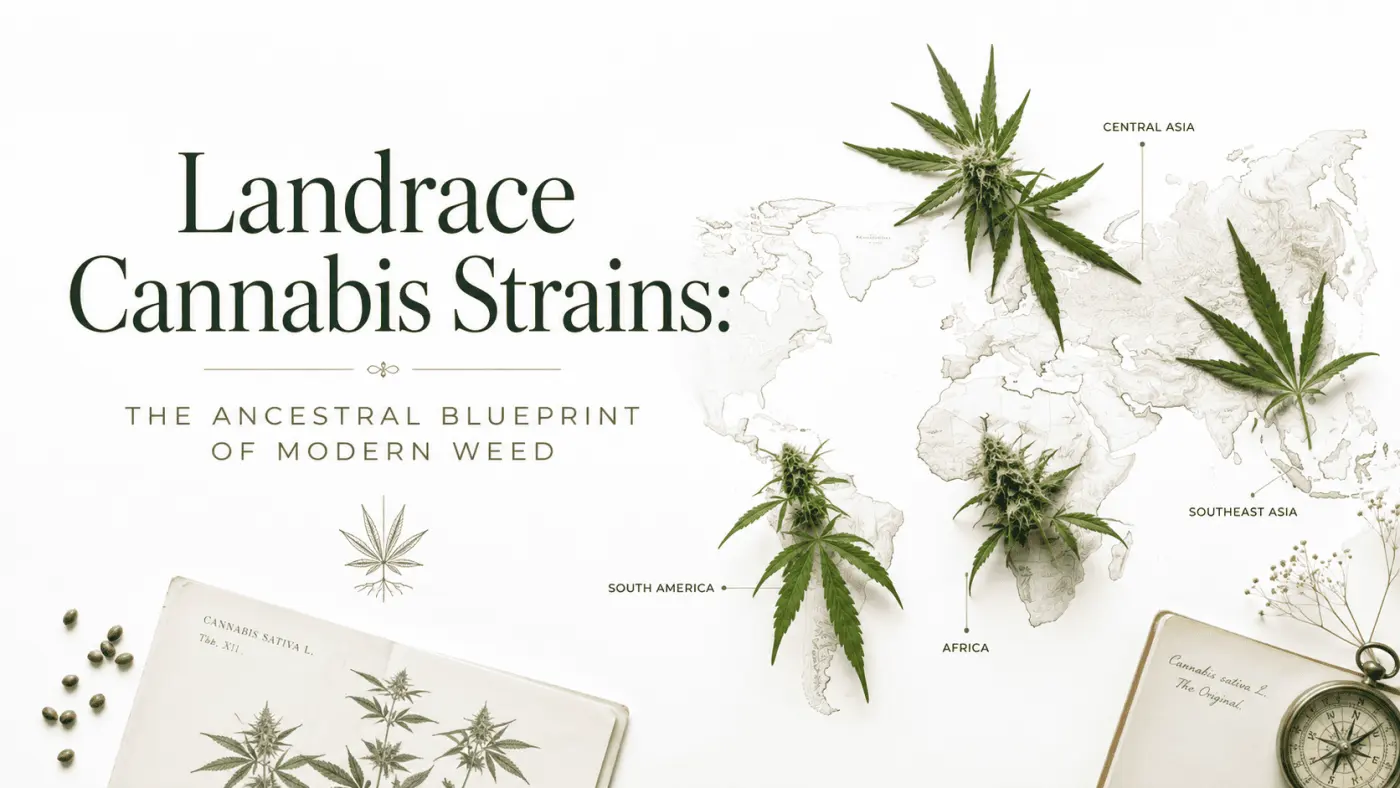
- Pure regional origins Iconic landraces trace directly to isolated regions, such as Hindu Kush (Central Asia), Durban Poison (South Africa), Acapulco Gold (Mexico), and Thai (Southeast Asia).
- Balanced cannabinoid profiles Unlike modern high-THC hybrids, landrace strains frequently express higher baseline ratios of minor cannabinoids like THCV, CBG, and CBD.
- Essential genetic preservation Pure landrace DNA protects the global cannabis gene pool from inbreeding bottlenecks, offering critical traits like natural pest, disease, and drought resistance for future breeding.
In an era dominated by high-potency polyhybrids and engineered genetics, modern dispensary menus can sometimes feel overwhelming. Yet, every single strain on the shelf today traces its family tree back to a handful of naturally adapted, pure-bred ancestral plants known as landrace strains
Understanding landraces is like studying the original DNA of the cannabis plant. They represent pure, unadulterated lineages that evolved over centuries in isolated geographical pockets across the globe.
Whether you are a breeder looking to stabilize new crosses, a cultivator searching for resilient plant traits, or a consumer seeking clear-headed, authentic effects, here is your complete guide to landrace cannabis strains.
What Is a Landrace Strain?
A landrace strain is an original cannabis cultivar that adapted naturally to a specific regional environment, climate, and microclimate over generations.Unlike modern hybrid strains—which are intentionally cross-bred indoors by humans to maximize specific traits like raw THC content—landraces were shaped primarily by natural selection and traditional local farming practices.
Key Takeaway: A true landrace is an open-pollinated, regionally unique population of plants. They represent the genetic baseline of Cannabis sativa, Cannabis indica, and Cannabis ruderalis.
Landrace Strains vs Modern Polyhybrids
| Criteria | Landrace Strains | Modern Polyhybrids |
|---|---|---|
| Genetic Origin | 100% pure, naturally adapted regional lineages | Cross-bred combinations of multiple hybrid lines |
| Breeding Selection | Natural selection and open environmental pollination | Selective human breeding for target physical traits |
| Cannabinoid Profile | Moderate THC (12–20%) with higher ratios of THCV, CBD, and CBG | Maxed THC levels (25–35%+) with lower minor cannabinoid diversity |
| Plant Structure | Environment-dependent (short/dense in mountains; tall/wispy in tropics) | Uniform, optimized structures built for indoor space efficiency |
| Flowering Time | High natural resistance to local pests, heat, drought, or mold | Higher reliance on controlled indoor climates and chemical nutrients |
| Primary Value | Preserving essential genetic diversity and breeding resilience | Maximizing yield, commercial potency, and rapid harvest turnover |
How Environment Shaped Landrace Characteristics
1. High-Altitude Mountain Regions (Indicas)
Plants originating in harsh, arid, high-altitude regions—such as the Hindu Kush mountain range spanning Afghanistan and Pakistan—developed compact, stout frame structures.- Physical Traits: Short, broad leaves and dense, resin-heavy bud structures designed to protect against cold temperatures, winds, and strong UV radiation.
- Effects: Heavily sedating, physically relaxing, and rich in calm terpenes like myrcene and beta-caryophyllene.
2. Tropical Equatorial Climates (Sativas)
Strains native to hot, humid, sun-drenched regions near the equator—such as Southeast Asia, Central America, and West Africa—adapted to long growing seasons with abundant rainfall.- Physical Traits: Tall, wispy frames with thin, narrow leaves and airy flower structures that resist mold and bud rot in intense humidity.
- Effects: Uplifting, cerebral, and energetic, often featuring high concentrations of bright terpenes like pinene, terpinolene, and limonene.
Legendary Landrace Strains by Region
Central & South Asia (Hashplants)
- Afghan Kush / Afghani: Hailing from northern Afghanistan, this pure indica cultivar is famous for its thick resin glands, sturdy growth habit, and historical role as the foundation of traditional hashish.
- Hindu Kush: Sourced from the mountainous border of Pakistan and Afghanistan, Hindu Kush is world-renowned for its deep physical relaxation, earthy-pine aroma, and pest resilience.
Africa
- Durban Poison: Originating from the South African port city of Durban, this pure sativa provides a functional, clear-headed, and energizing experience, often rich in the secondary cannabinoid THCV.
- Malawi Gold: Hailing from the highlands of Malawi, this legendary strain produces golden-hued buds with a sweet, spicy profile and a long-lasting cerebral high.
The Americas & Caribbean
- Acapulco Gold: A legendary Mexican landrace that gained fame in the 1960s and 70s, recognized for its golden pistils, smooth smoke, and uplifting euphoria.
- Colombian Gold: Adapted to the misty slopes of the Sierra Nevada de Santa Marta in Colombia, offering intense citrus aromas and energetic effects.
- Lamb's Bread (Lamb's Breath): A Jamaica-native sativa long associated with Rastafarian culture, celebrated for its creative spark and spicy, herbal flavor profile.
Southeast Asia
- Thai (Thai Stick): Known for tall, narrow growth habits and extreme flowering times, authentic Thai genetics offer sharp citrus-pepper aromas and an intensely stimulating high.
Why Landrace Preservation Matters for the Future
As the commercial cannabis market prioritizes ultra-high THC percentages, the industry faces a genetic bottleneck. Crossing the same popular polyhybrids over and over narrows the gene pool, leaving crops vulnerable to emerging pathogens, powdery mildew, and climate stress.- Breeding Safety Net: Landrace plants carry ancient traits—like natural drought tolerance, pest resistance, and low nutrient requirements—that can be bred back into modern lines.
- Minor Cannabinoids: Landraces often synthesize higher baseline levels of THCV, CBG, and CBD, driving research into targeted therapeutic benefits.
- The Entourage Effect: Instead of raw potency alone, the balanced ratios of native terpenes and secondary cannabinoids produce a smoother, more nuanced entourage effect.
The Heritage of Cannabis Cultivation
Frequently asked questions
Are landrace strains still pure?
True, unhybridized landraces are becoming increasingly rare due to global cross-pollination and the introduction of modern hybrid seeds into traditional farming regions. However, dedicated geneticists, seed banks, and preservationists actively collect and protect heirloom landrace seeds.
Are landrace strains weaker than modern weed?
Not necessarily. While modern strains are bred specifically for high THC lab tests, landraces offer broader cannabinoid and terpene profiles. Many consumers report that landraces deliver a more well-rounded, functional, and pleasant high.
Can I grow landrace strains indoors?
Yes, but it depends on the strain. Mountain indicas like Afghani or Hindu Kush are short, fast, and easy to cultivate indoors. Tropical sativas like Thai or Colombian, however, grow extremely tall, require long flowering cycles (12–16+ weeks), and demand precise humidity control.