Ultimate Guide to Premium Cannabis Seeds: Genetically Superior Strains from Top Breeders
From feminised to autoflowering genetics, learn how to select, germinate, and cultivate elite cannabis seeds from leading global breeders.
Key takeaways
- Visual Selection Viable cannabis seeds display a dark brown, black, or tiger-striped shell with a slight waxy sheen; pale green or soft white seeds are immature and unviable.
- Genetic Stabilization High-grade seeds undergo multiple filial generations of backcrossing (F1, F2, S1) to ensure uniform growth and minimize genetic drift.
- Storage Shelf Life Kept in airtight containers at 4–8°C (39–46°F) and under 30% relative humidity, cannabis seeds retain high viability for 2 to 5 years.
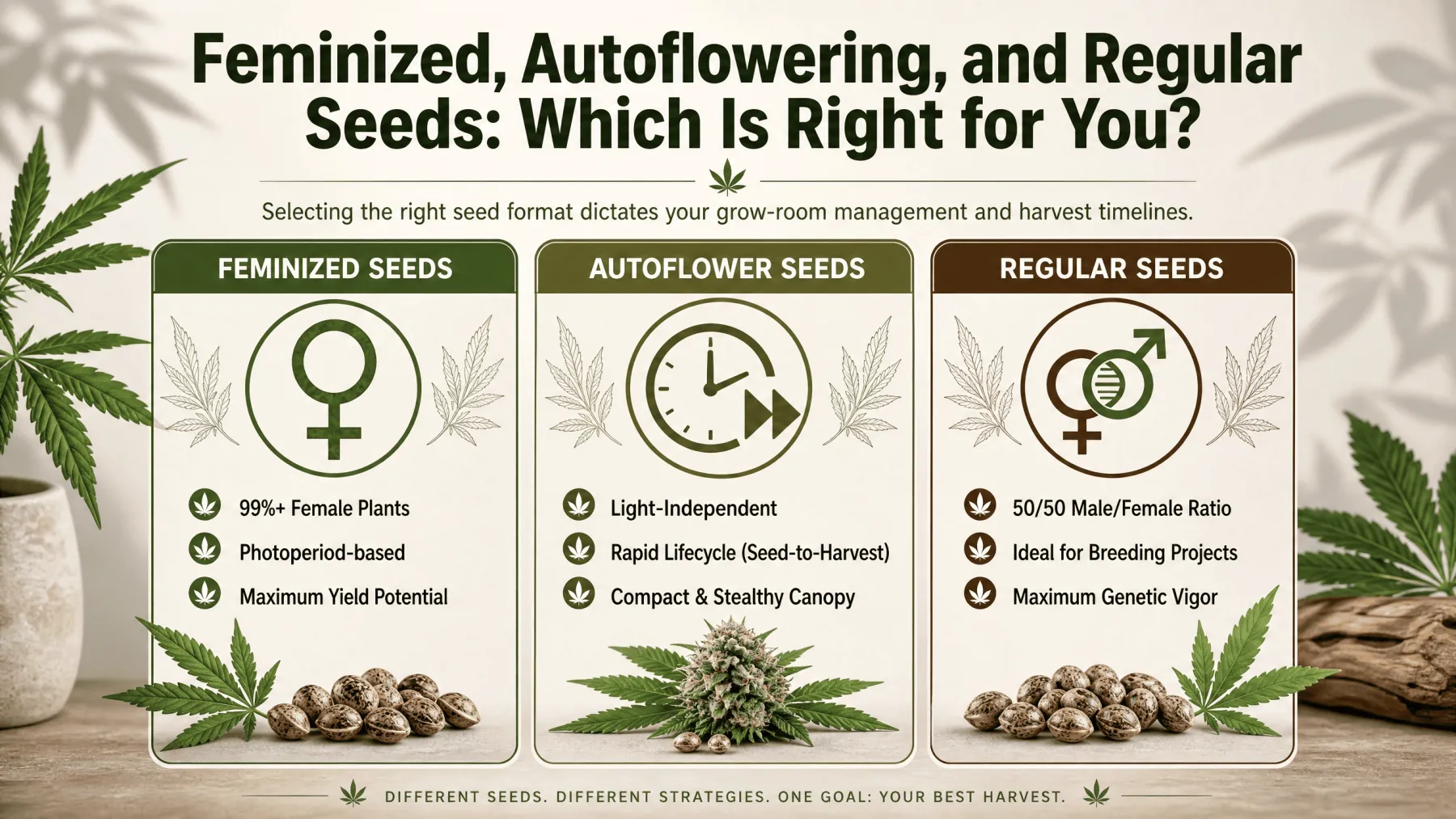
- Feminised Seeds Yield female flower-bearing plants with 99%+ accuracy by eliminating the male Y chromosome through stress-induced plant reversal.
- Autoflowering Mechanism Cannabis ruderalis genetics allow autoflowers to transition to bloom based on plant age (typically week 3 or 4) rather than photoperiod changes.
- Photoperiod Trigger Photoperiod feminised and regular strains require a shift to 12 hours of uninterrupted darkness per day to induce flowering.
- Regular Seeds Produce a natural 50/50 male-to-female ratio, making them the industry standard for genetic breeding and cloning vigor.
- Optimal Temperature The ideal germination range is 22–26°C (72–78°F). Temperatures below 15°C (60°F) stall growth, while heat above 32°C (90°F) kills fragile taproots.
- Humidity Target Relative humidity during germination should remain at 70–80% RH under a dome to keep seed coats soft without restricting root oxygen.
- Planting Depth Germinated seeds should be buried taproot-down at a depth of 0.5 inches (1.2 cm) in a pH-balanced medium (6.0-6.5 pH).
What to Look For When Choosing High-Quality Cannabis Seeds
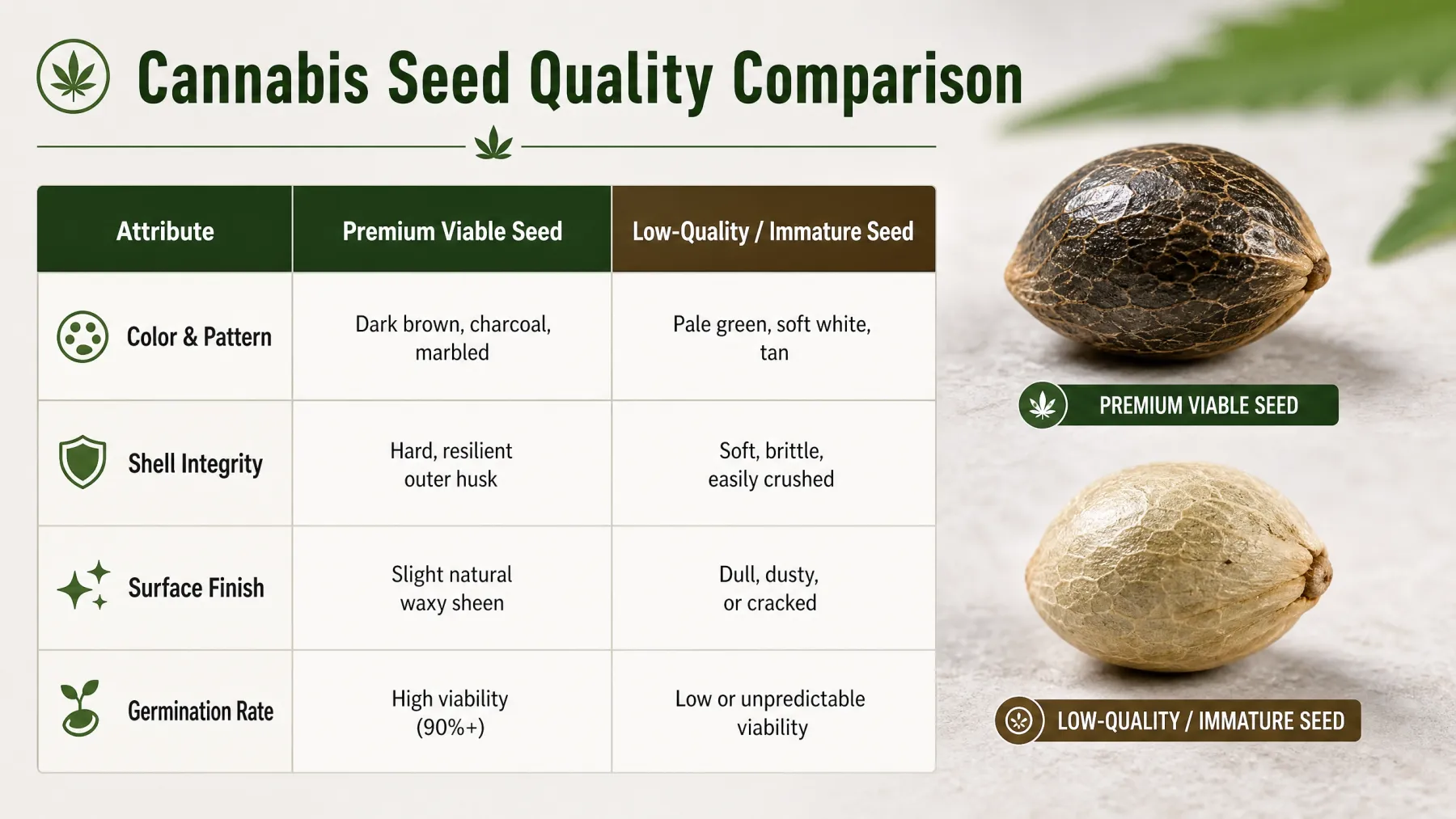
When evaluating cannabis seeds, phenotypic expression depends heavily on parental lineage. Inferior seeds often result in genetic drift, erratic growth rates, high susceptibility to hermaphroditism, and muted terpene output. Secure your genetics from reputable breeders who rigorously backcross and stabilize their lines through multiple filial generations (F1, F2, S1).
At Primestrains.com, every strain cataloged undergoes strict breeder verification so you receive verified, top-tier genetics every time.
Feminised, Autoflowering, and Regular Seeds: Which Is Right for You?
Selecting the right seed format dictates your grow-room management style, light schedules, canopy manipulation techniques, and overall harvest timelines.
1. Feminised Cannabis Seeds
- Best For: Growers seeking maximum flower yield per square foot without sacrificing space on male plants.
- Cultivation Advantage: Allows for extended vegetative periods, precise canopy training (SCROG, topping), and massive yield potential under controlled photoperiods (18/6 veg, 12/12 bloom).
2. Autoflowering Cannabis Seeds
- Best For: Beginners, discreet balcony grows, or cultivators desiring rapid turnaround times (often 70–85 days from seed to harvest).
- Cultivation Advantage: Highly resilient to light leaks and fluctuating environments; thrives under a continuous 18/6 or 20/4 light schedule throughout its lifespan.
3. Regular Cannabis Seeds
- Best For: Breeders, pheno-hunters, and mother-plant selection.
- Cultivation Advantage: Provides robust genetic vigor for taking clones and developing custom, proprietary crosses.
Photoperiod vs Autoflowering
| Criteria | Photoperiod | Autoflowering |
|---|---|---|
| Flowering Trigger | Photoperiod-dependent (12/12 light schedule switch) | Age-dependent (automatic transition regardless of light) |
| Sex Guarantee | 99% female plant output | Typically 99% female (if feminised auto) |
| Average Lifecycle | 10-16 weeks total (controlled vegetation) | 8-11 weeks total (seed to harvest) |
| Yield Potential | High (supports extensive canopy training & topping) | Moderate (fixed, compact canopy size) |
| Lighting Needs | 18/6 (veg) -> 12/12 (bloom) | 18/6 or 20/4 continuous throughout grow |
| Ideal Use Case | Maximum yield per plant & custom veg length | Rapid turnaround, small spaces, or beginner grows |
Exploring Cannabis Strains: Terpene Profiles & Cannabinoid Science
Understanding Cannabinoid Mechanisms
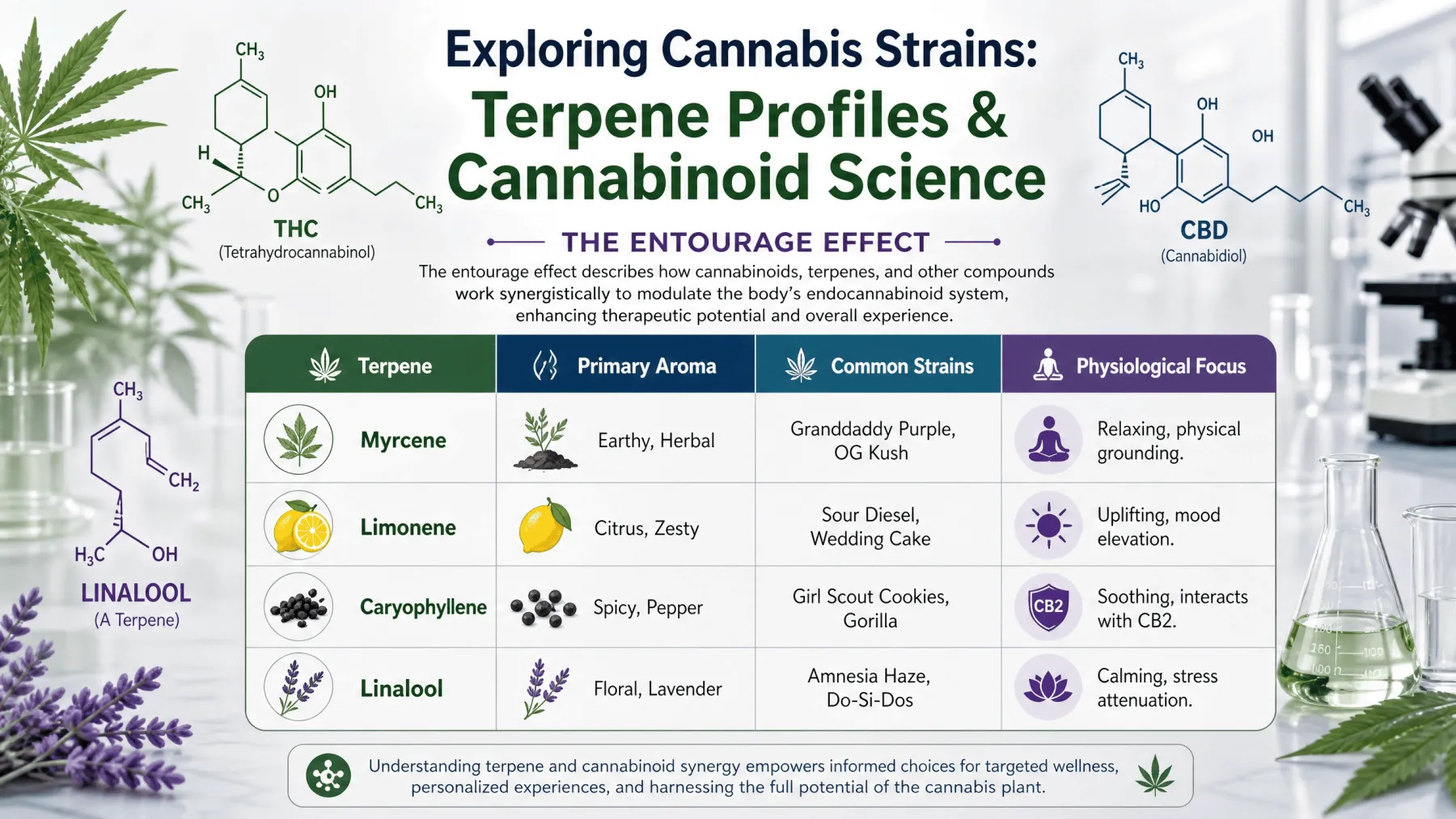
Cannabinoids interface directly with the body's Endocannabinoid System (ECS):
- Δ9-Tetrahydrocannabinol (THC): Binds primarily to central nervous system CB1 receptors, driving psychoactive effects and sensory enhancement.
- Cannabidiol (CBD): Acts as a non-intoxicating, negative allosteric modulator of CB1 receptors, smoothing out high-THC intensity and targeting peripheral CB2 pathways.
- Cannabigerol (CBG): The non-acidic form of the "mother cannabinoid" (CBGA), studied for its potential in focus and digestive support.
Germination & Early Cultivation: Step-by-Step
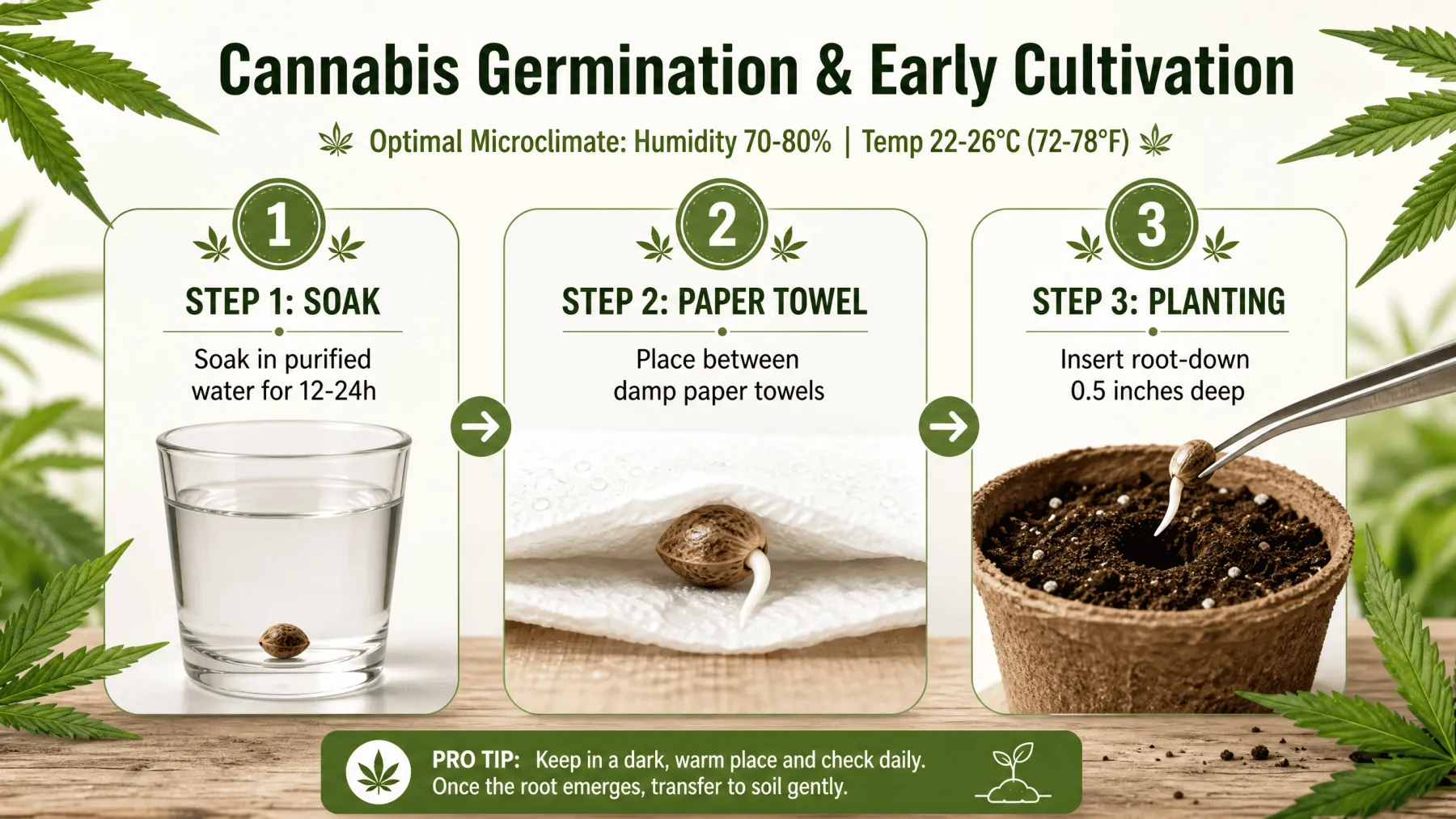
Step 1: Hydration Soak
Drop your seeds into a glass of lukewarm, purified pH-balanced water (6.0-6.5 pH) for 12 to 24hours. This softens the outer shell (pericarp) and signals the embryo to wake up.
Step 2: Moist Medium Transfer
Place the soaked seeds between damp (not dripping wet) unbleached paper towels, or directly into starter plugs (coco coir or rockwool). Store in a dark, warm environment.Step 3: Taproot Emergence & Planting
Once the white radicle (taproot) reaches 0.5 to 1.0 cm, plant the seed taproot-down about 0.5 inches (1.2cm) into your growing medium. Cover lightly with soil and keep moist under a humidity dome.
Master Cultivator Tip: Avoid handling the exposed taproot with bare hands. Human oils and micro-pathogens can damage tender taproot hairs and cause dampening-off fungal infections. Use sterilized tweezers.
Common Seed & Germination Mistakes to Avoid
- Overwatering the Starter Medium: Roots need oxygen just as much as moisture. Saturated media drown the taproot and invite Pythium (root rot).
- Planting Too Deep: Planting seeds deeper than 0.75inches (2cm) exhausts the embryo's stored energy before the cotyledons can reach the surface light.
- Inconsistent Temperatures: Dropping below 18°C (65°F) drastically slows germination or causes seed dormancy/rot.
- Unstable Light Distance: Hanging high-intensity LED or HPS lights too close burns delicate seedlings, while placing them too far causes leggy, weak stems.
Frequently asked questions
How long do cannabis seeds remain viable for germination?
When stored in an airtight, light-proof container inside a cool, climate-controlled environment (4–8°C / 39–46°F) with 30% relative humidity), high-grade seeds remain viable for 2 to 5+ years with minimal drops in germination rate.
What is the difference between Sativa, Indica, and Hybrid strains?
Traditionally, Indica refers to short, broad-leaf plants associated with relaxing bodily effects, while Sativa refers to tall, narrow-leaf plants linked to energetic effects. Today, most modern genetics are Hybrids; their true effects depend on specific terpene and cannabinoid ratios rather than leaf morphology.
Why should I buy seeds from a multi-breeder marketplace like Primestrains.com?
Marketplaces like Primestrains.com consolidate elite genetics from multiple verified global breeders in one place. This lets you compare stabilized strains, terpene profiles, and growth traits with guaranteed authentic breeding lines.
Are feminised seeds guaranteed to produce 100% female plants?
Feminised seeds offer a 99%+ female rate. While environmental stress (extreme temperature swings, light leak interruptions during bloom, over-fertilization) can induce hermaphroditism, starting with stable genetics virtually eliminates unwanted male plants.