Indoor Cannabis Climate Control: Temperature, Humidity, and VPD Guide
Master indoor grow room climate control. Learn how to manage temperature, relative humidity, and Vapor Pressure Deficit (VPD) for maximum plant health and yield.
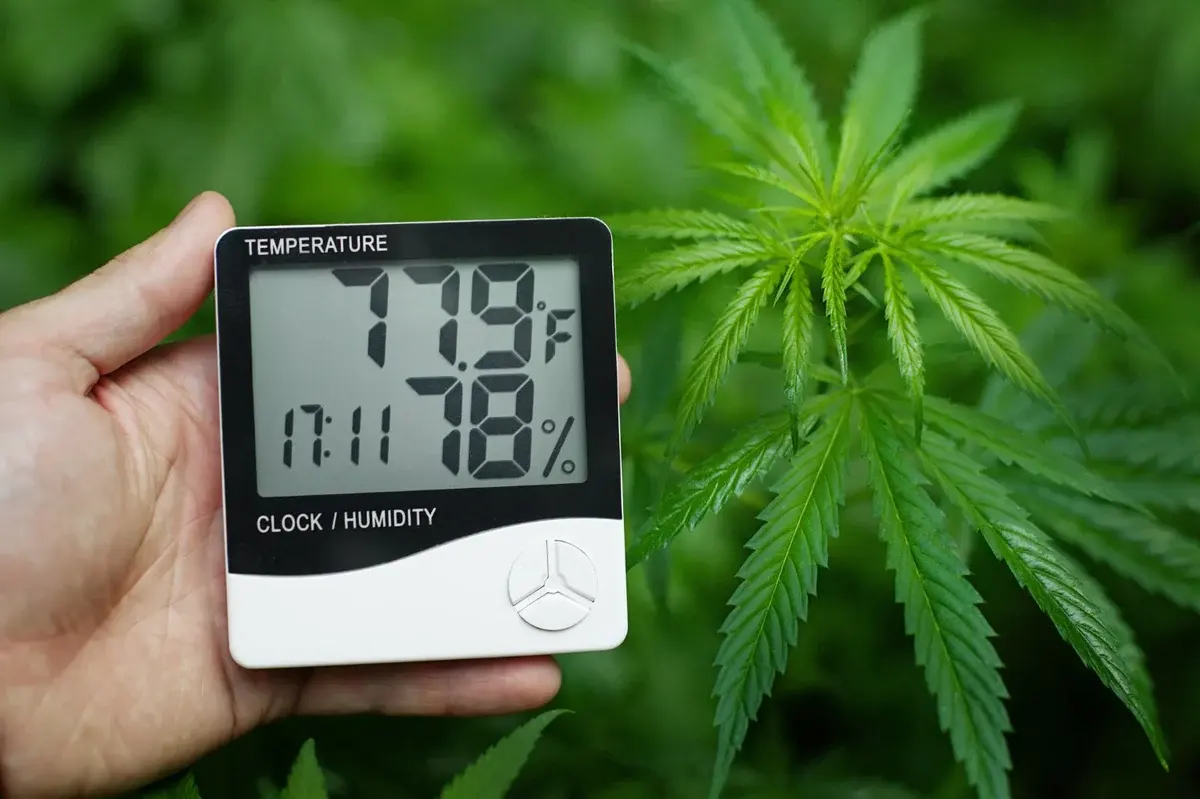
Key takeaways
- Prioritize VPD over raw temperature A room running at 80°F is perfectly safe if humidity is adjusted to keep VPD inside the target range (0.8 to 1.2 kPa).
- Lower humidity in late bloom Drop relative humidity below 45% during the final three weeks of flowering to protect dense buds from Botrytis (bud rot).
- Run exhaust 24/7 Never turn off inline exhaust fans when lights turn off; plants continue transpiring in darkness, causing rapid humidity spikes overnight.
Controlling the climate inside your grow tent is just as critical as choosing the right nutrients or lighting. Even high-end genetics will stall, develop leaf burn, or succumb to mold if temperature, humidity, and airflow are out of balance. For a complete breakdown of tent ventilation and setup, explore our step-by-step indoor cannabis grow guide.
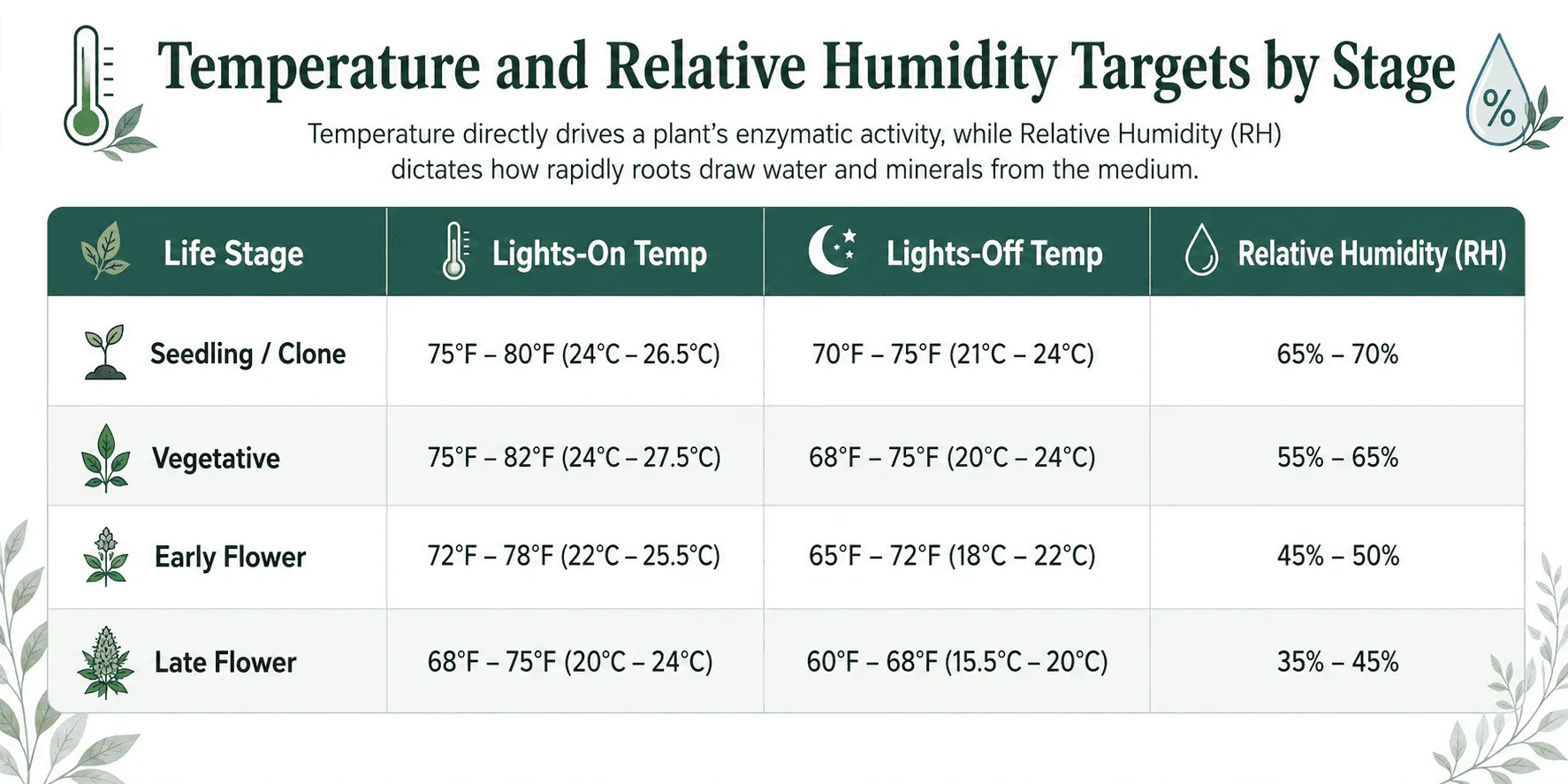
Temperature and Relative Humidity Targets by Stage
Temperature directly drives a plant’s enzymatic activity, while Relative Humidity (RH) dictates how rapidly roots draw water and minerals from the medium.
Vapor Pressure Deficit (VPD) Demystified
Instead of measuring temperature and humidity separately, professional growers rely on VPD. Expressed in kilopascals (kPa), VPD measures the difference between the pressure inside the leaf's moist interior and the vapor pressure of the surrounding air.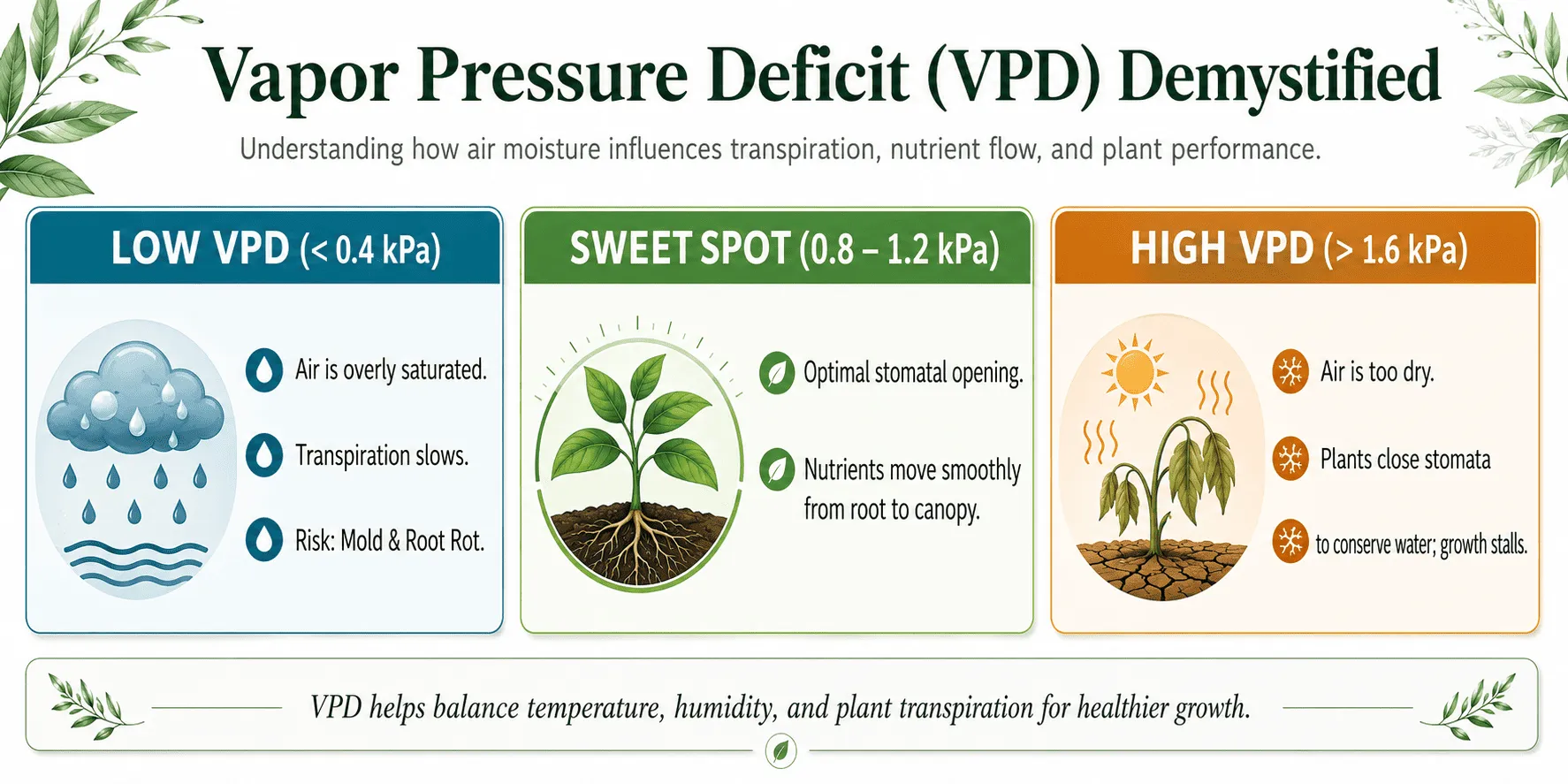
- Low VPD (Under 0.6 kPa): Air is too humid. Plants cannot transpire water, causing root pressure buildup, slow nutrient uptake, and fungal risks like powdery mildew.
- Target VPD (0.8 to 1.2 kPa for Veg / 1.2 to 1.5 kPa for Flower): Transpiration is balanced. Roots continuously absorb Calcium, Magnesium, and primary nutrients.
- High VPD (Over 1.6 kPa): Air is too dry. Leaves transpire water too quickly, causing stomata to shut down to prevent dehydration, which halts growth.
Airflow & Odor Control Setup
- Calculating CFM for Exhaust Fans: Your fan's Cubic Feet per Minute (CFM) rating must match tent volume.
- Example: A 4 x 4 x 6.5 ft tent equals 104 cubic feet. Add a 20% resistance factor for attached carbon filters or duct bends, requiring a fan rated for at least 125 CFM.
- Carbon Filter Integration: Attach your carbon filter to the intake side of your inline fan inside the top of the tent. Warm air naturally rises, making top-mounted extraction most efficient.
- Oscillating Canopy Fans: Place clip-on fans above and below the plant canopy to eliminate microclimates—pockets of stagnant, humid air trapped beneath large fan leaves.
Climate Control Equipment
| Criteria | Dehumidifiers | Evaporative Humidifiers |
|---|---|---|
| Primary Function | Removes excess moisture (Crucial in late flower) | Adds fine moisture (Crucial in seedling/veg stages) |
| Heat Impact | Generates moderate to high heat output | Provides a slight cooling effect |
| Maintenance Need | Requires daily water reservoir draining or continuous hose | Requires daily water refilling (Distilled water preferred) |
| Placement Strategy | Placed outside intake or inside larger tents | Placed inside tent near intake airflow |
Frequently asked questions
Why does my grow tent humidity spike at night?
When grow lights turn off, air temperatures drop quickly. Cool air cannot hold as much moisture as warm air, causing Relative Humidity (RH) to spike sharply. Setting an automated exhaust fan controller prevents nighttime condensation.
Can I run an air conditioner inside my grow tent?
Small portable AC units usually generate too much heat from their exhaust hoses to sit comfortably inside small tents. It is generally far more effective to cool and dehumidify the room outside the tent (the lung room) and let the tent draw that conditioned air inside.
Authoritative sources
References supporting factual claims and further reading in this guide.