Mold on Weed: How to Spot, Prevent & Treat Bud Rot
Discovering mold on weed can destroy a harvest overnight. Learn how to tell sparkling trichomes apart from dangerous bud rot or powdery mildew, why moldy cannabis poses health risks, and how to protect your plants from seed to jar using proven humidity controls and mold-resistant genetics.
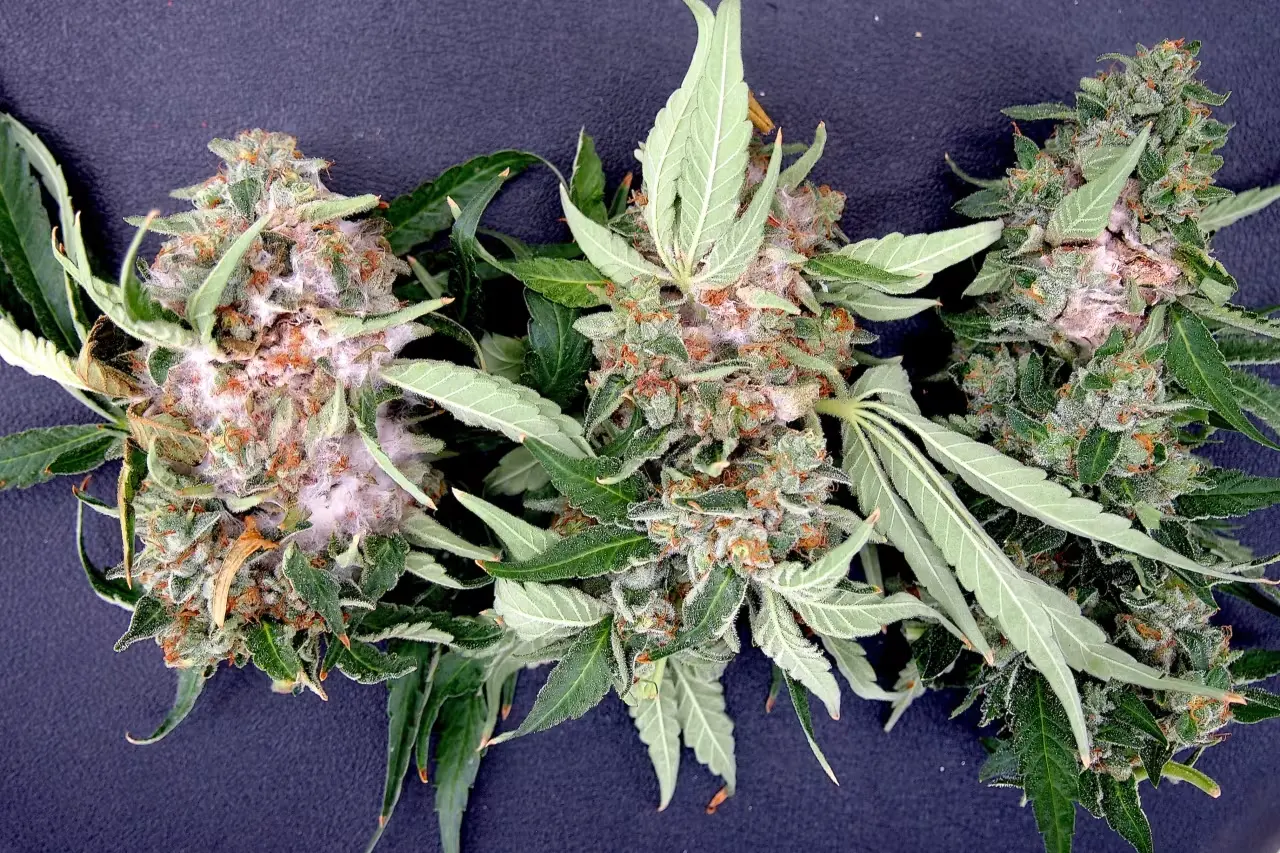
Key takeaways
- Botrytis cinerea (bud rot) and Podosphaera macularis (powdery mildew) are the two most common fungal pathogens affecting cannabis crops.
- Inhaling moldy cannabis can cause severe respiratory distress, allergic reactions, or pulmonary fungal infections (such as aspergillosis).
- Fungal spores dormant on cannabis plants germinate rapidly when ambient relative humidity exceeds 60% during flowering.
- Water washing, solvents (BHO/rosin), and freezing do not remove or eliminate fungal spores and mycotoxins from contaminated weed.
Mold on Weed: How to Spot It, Why It Happens and How to Prevent It
Discovering mold on weed is every grower's worst nightmare. You have spent months feeding, training, and caring for your plants, only to notice a suspicious white dusting on the fan leaves or a dull grey fuzz eating away at your biggest, densest colas. Fungal issues can quickly destroy an entire crop if left unchecked, leaving home growers frustrated and wondering where things went wrong.
So, what exactly is mold on weed? In simple terms, it refers to fungal infections—most commonly white powdery mildew or botrytis (bud rot)—that thrive on cannabis plants during the growing, drying, or curing stages.
The short answer on safety is uncompromising: moldy buds are not safe to smoke, vape, or consume in any form. Consuming contaminated cannabis can expose your lungs to harmful fungal spores and mycotoxins. Note that cannabis cultivation laws differ by country, so always ensure you are adhering to your local regulations before growing.
In this guide, we will walk you through how to identify mold with confidence, understand the environmental triggers that cause it, and implement proven techniques to keep your harvest completely mold-free.
How to Spot Mold on Weed
Catching a fungal outbreak early can save the rest of your garden. However, telling the difference between a pristine, resin-covered bud and a moldy one requires a trained eye. Beginners often mistake glistening trichomes for early fungal growth, or vice versa. (Note: whilst spelled "mold" throughout this guide for global search clarity, British growers often refer to it as "mould".)
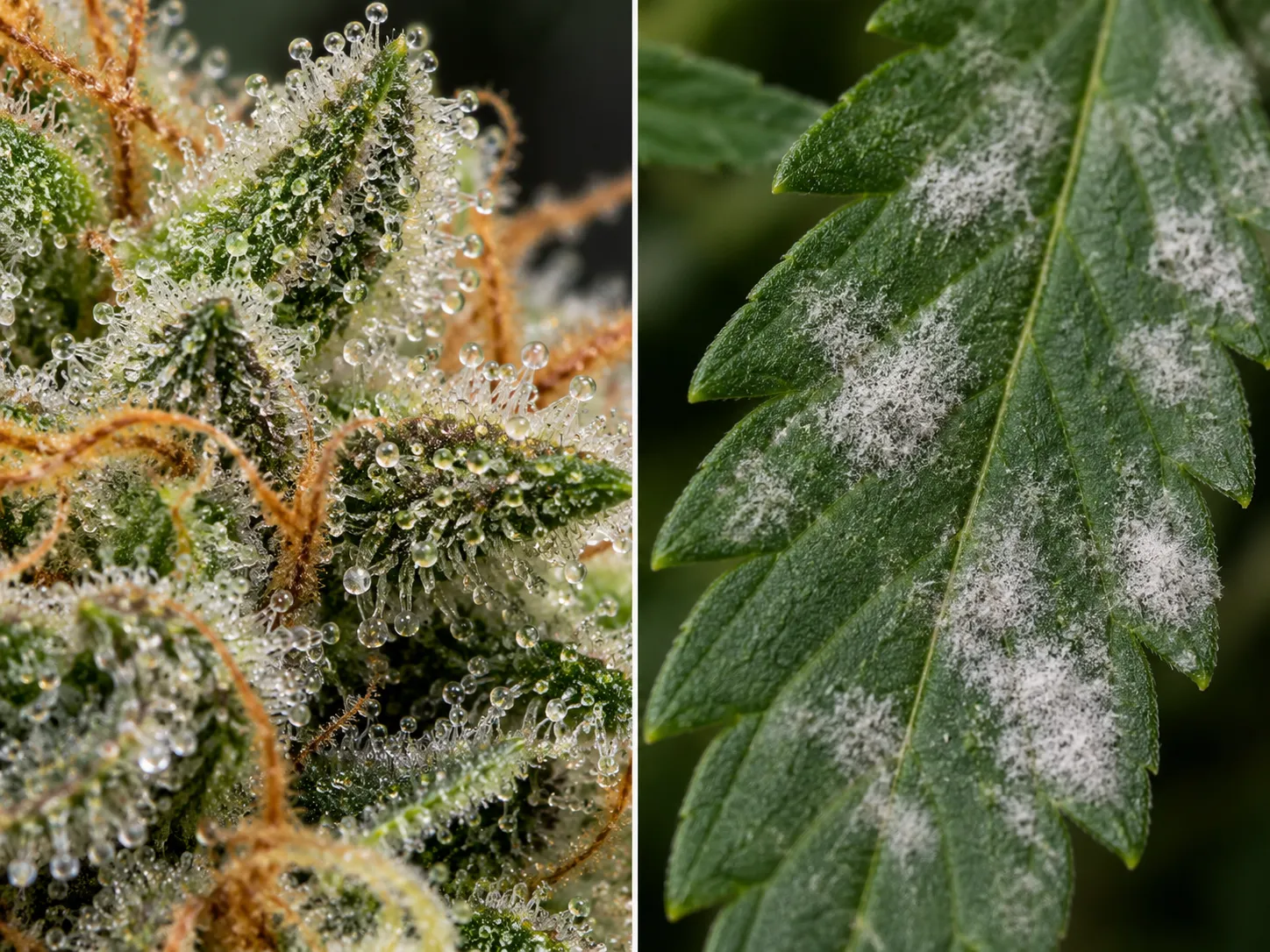
White Powdery Mildew vs. Trichomes
White Powdery Mildew (often abbreviated to PM) is a systemic fungal disease that manifests on the surface of leaves and stems.
Powdery Mildew: Looks like a dusting of flour, chalk, or powdered sugar scattered across the upper surfaces of leaves. It usually starts as small white patches and quickly spreads to form a matte, dull coating. PM lacks any sparkle or structure.
Trichomes: These are the microscopic, resin-secreting glands that give high-quality cannabis its potent kick and frosty sheen. Under close inspection, trichomes feature tiny stems topped with mushroom-shaped glandular heads. They sparkle in the light and look clear, milky white, or amber.
If the white substance looks flat, dull, and powdery rather than shiny and crystalline, you are dealing with mildew, not resin.
Bud Rot (Botrytis): Grey or Brown Fuzz Inside Dense Colas
While powdery mildew prefers the outer leaves, Botrytis cinerea—commonly known as bud rot—attacks the lush, dense center of your flowers.
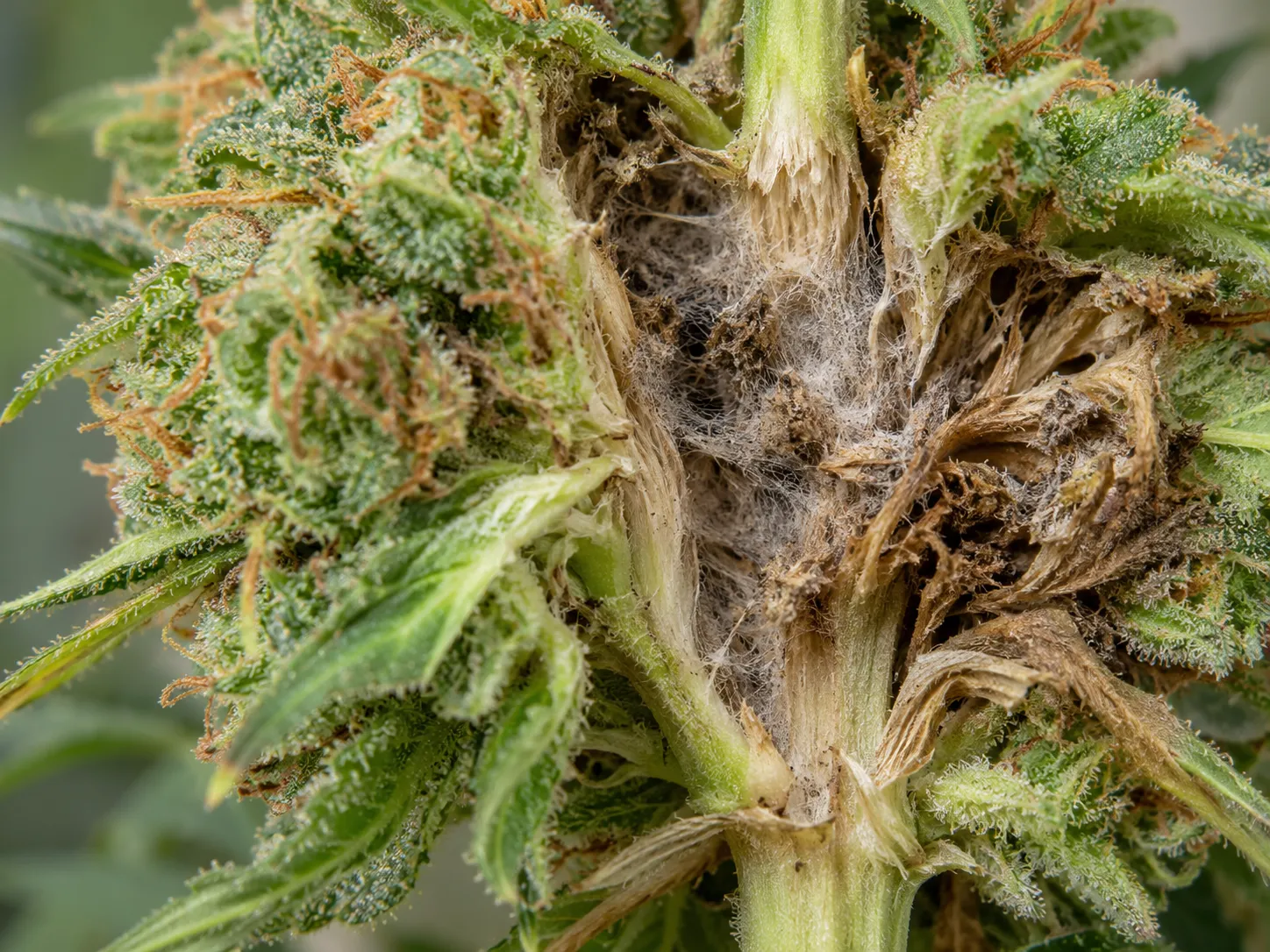
Bud rot usually starts inside the main stem of dense colas before moving outward. The first sign is often a single sugar leaf turning yellow, drying up, or dying inexplicably while the rest of the plant looks green and vibrant. When you gently part the cola to inspect the stem, you will find:
Dark, discolored grey, brown, or black tissue.
A soft, mushy texture inside the bud core.
A dusty, cobweb-like grey fuzz covering the calyxes.
Advanced infections that turn the inside of the flower into dry, crumbly dust that releases cloud-like spores when disturbed.
Smell, Texture, and the Magnifier Test
If your eyes leave you uncertain, rely on your other senses and a magnification tool:
The Smell Test: Healthy cured weed boasts a vibrant, complex aroma—ranging from sweet, fruity, and piney to earthy and skunky. Moldy pot gives off a distinct damp, musty smell similar to wet cardboard, sweat, a damp basement, or rotting grass.
The Texture Test: Healthy buds feel sticky and springy. If a bud feels damp, slimy, or crumbles instantly into a soft powder with no resinous tackiness, fungal decomposition is likely present.
The Magnifier Test: Grab a jeweller’s loupe or a digital microscope (30x to 60x magnification). Under magnification, trichomes clearly show stalk-and-head structures like tiny glass mushrooms. Mold spores and hyphae look like tangled strands of webbing, cotton fibers, or tiny, structureless dust particles.
Mold vs. Trichomes: A Quick Comparison Table
| Criteria | Healthy Trichomes | Mold / Mildew / Bud Rot |
|---|---|---|
| Appearance | Tiny crystal stalks with round, bulbous heads. | Flat white powder (PM) or web-like grey/brown fuzz (Bud Rot). |
| Light Response | Glistens, sparkles, and reflects light. | Dull, matte appearance; absorbs light. |
| Location | Spread evenly across flowers and sugar leaves. | Random patches on leaves (PM) or deep inside dense colas (Botrytis). |
| Texture | Sticky, resinous, and pliable. | Chalky, dry dust (PM) or slimy/mushy tissue (Bud Rot). |
| Aroma | Pungent, terpy, citrus, pine, fuel, or sweet. | Musty, damp cellar, stale sweat, or wet hay. |
Is Moldy Weed Safe to Smoke?
The short answer is a definitive no. You should never smoke, vape, or eat moldy buds.
When you burn or vaporize moldy pot, you inhale millions of fungal spores along with toxic fungal byproducts called mycotoxins directly into your lungs. While a healthy immune system might occasionally clear small exposures without severe harm, it frequently triggers immediate adverse reactions:
Respiratory Symptoms: Heavy coughing, wheezing, throat irritation, chest tightness, and sinus pain.
Allergic Reactions: Sneezing, runny nose, itchy eyes, and skin flare-ups.
Severe Infections: For individuals with asthma, existing pulmonary conditions, or weakened immune systems, inhaling mold spores can lead to severe fungal lung infections, such as pulmonary aspergillosis.
Heat from a lighter or vaporizer does not reliably destroy all fungal spores or render mycotoxins safe. If you confirm mold on a bud, discard the affected material immediately.
What Causes Mold on Weed?
Fungal spores exist naturally in almost all indoor and outdoor air; they simply sit dormant until environmental conditions allow them to germinate. Mold requires specific conditions to thrive:
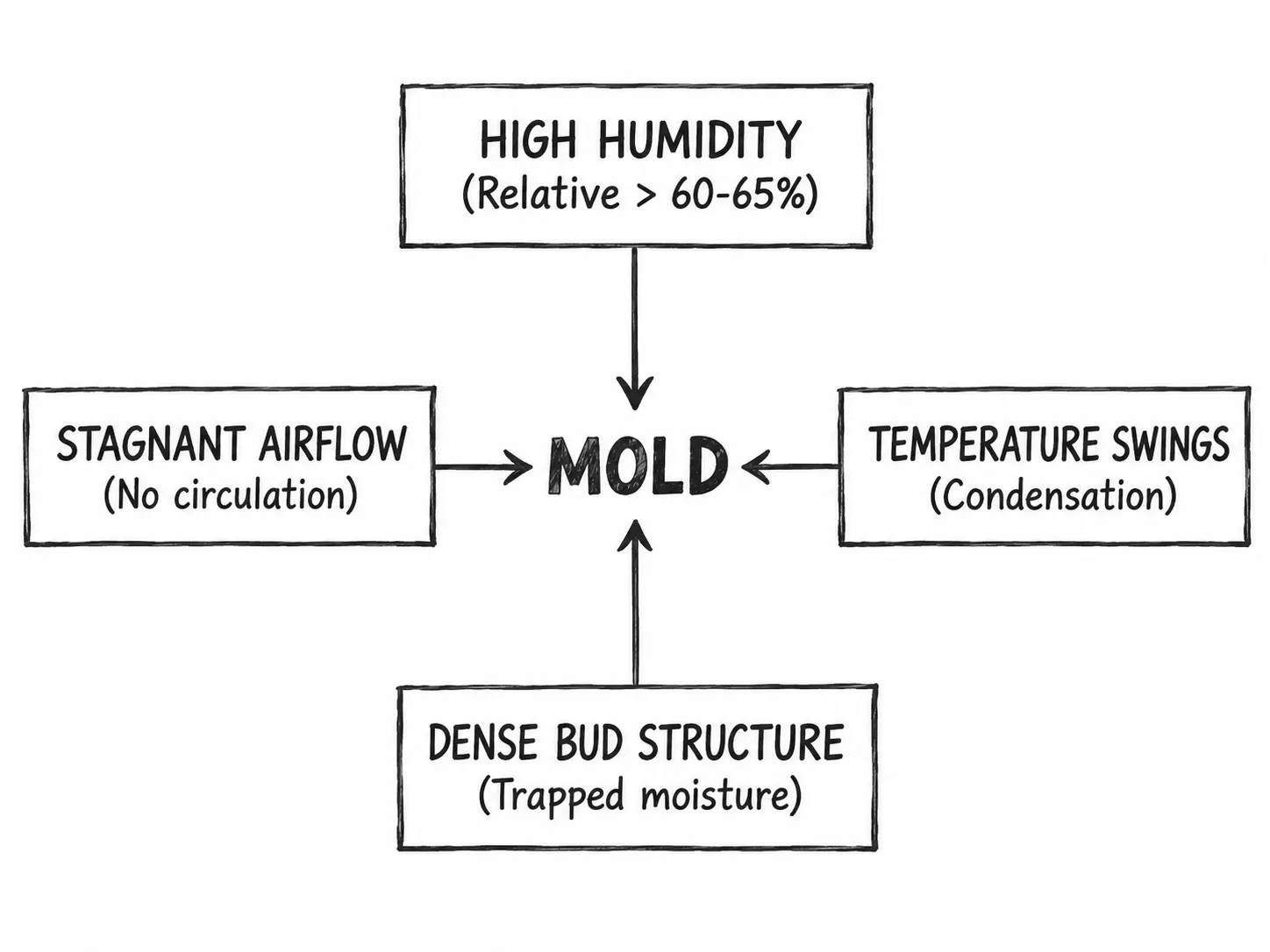
High Relative Humidity (RH): Moisture is mold’s primary requirement. Relative humidity levels above 60% during late flowering or drying create ideal conditions for spores to sprout.
Stagnant Airflow: Dead air pockets around the canopy allow moisture transpiring from leaves to settle on flower surfaces.
Dense Bud Architecture: Thick, tightly packed indica colas trap air and moisture inside their cores, creating humid microclimates hidden from circulating air.
Temperature Drops & Condensation: When temperatures plunge at night (especially indoors when lights turn off, or outdoors during autumn nights), cool air cannot hold as much water vapor. Moisture condenses directly onto leaves and flowers.
Wet Late-Season Outdoor Weather: Autumn rains, morning dew, and lingering fog near harvest time saturate dense flowers, offering ideal breeding conditions for botrytis.
How to Prevent Mold While Growing
Prevention is far easier than fighting an active fungal outbreak. Managing climate control and canopy architecture allows you to create an environment where cannabis thrives but mold cannot survive.
Indoor Mold Prevention
Target Optimal Humidity Levels: Keep relative humidity within recommended ranges for each stage of growth:
Vegetative Stage: 50% – 60% RH
Early Flowering: 40% – 50% RH
Late Flowering (Final 2–3 weeks): 30% – 40% RH
Maintain Continuous Air Circulation: Position oscillating fans above and below the canopy to keep leaves gently rustling. Ensure your extraction fan runs continuously to exchange warm, humid air with fresh air.
Defoliate and Space Plants: Prune lower fan leaves and inner foliage that block airflow. Space your pots far enough apart so leaves from neighboring plants do not overlap and trap moisture.
Outdoor Mold Prevention
Select the Right Planting Site: Choose a sunny location that receives maximum morning sunlight. Early sun dries off overnight dew quickly.
Prune for Airflow: Thin out dense inner growth throughout the summer to let breezes pass through the canopy freely.
Protect from Rain: Erect a simple shelter or transparent tarp over flowering plants during late-summer rainstorms to keep rain off developing buds. If you are planning an outdoor garden, choosing robust, weather-ready genetics is essential—explore our guide on the best outdoor cannabis strains to find varieties built for harsh climates.
Shake Off Dew: After rain or damp nights, gently shake plant main stems early in the morning to knock trapped droplets off heavy colas.
Adjust Harvest Timing: Keep a close watch on weather forecasts. If damp, rainy weather is predicted for late autumn, consider harvesting slightly early rather than losing your crop to rot.
How to Prevent Mold While Drying and Curing
Winning the fight against mold during the growing stage is only half the battle. Fungi frequently attack during the drying and curing phases if environmental controls slip.
+-----------------------------------------------------------------+
|                       DRYING ROOM TARGETS                       |
|  Temperature: 15°C–21°C (60°F–70°F)  |  Humidity: 45%–55% RH   |
|  Indirect Circulation (No fans pointing directly at buds)       |
+-----------------------------------------------------------------+
                                |
                                v
+-----------------------------------------------------------------+
|                       CURING JAR TARGETS                        |
|  Target RH: 58%–62%  |  Burp daily for first 2–3 weeks          |
|  Use Digital Mini-Hygrometers inside airtight glass jars        |
+-----------------------------------------------------------------+
Drying Room Standards
Environment: Keep your drying room dark, cool, and well-ventilated. Aim for temperatures around 15°C–21°C (60°F–70°F) and relative humidity between 45% and 55% RH.
Spacing: Hang harvested branches with plenty of space between them. Never pile harvested branches on top of each other.
Indirect Air Movement: Use a small oscillating fan to keep air moving gently around the room. Never point fans directly at hanging branches, as this dries the exterior too quickly while locking moisture inside the stem.
Curing Jar Best Practices
Dry Thoroughly Before Jarring: Only transfer buds to curing jars when small stems snap cleanly instead of bending.
Fill Jars Correctly: Fill glass jars loosely to about 75% capacity, leaving a 25% air cushion at the top. Never pack buds tightly.
Burp Jars Regularly: Open your jars for 10–15 minutes once or twice daily during the first two to three weeks. This releases built-up moisture and refreshes oxygen levels.
Monitor with Hygrometers: Place a small digital hygrometer inside each jar. Keep the reading between 58% and 62% RH. If a jar reads above 65% RH, take the buds out immediately and lay them on drying racks for a few hours. Use two-way humidity control packs to maintain optimal levels once humidity stabilizes.
Can You Save a Moldy Harvest?
When growers spot fungal growth on their plants, their instinct is often to salvage as much as possible. However, you must be realistic about what can be rescued and what must be discarded.
                           SIGHTING MOLD
                                 |
        +------------------------+------------------------+
        |                                                 |
        v                                                 v
[AFFECTED BUD/BRANCH]                            [UNAFFECTED BRANCHES]
        |                                                 |
        v                                                 v
  CUT OUT IMMEDIATELY                              ISOLATE & INSPECT
  (Bag carefully & throw away)                     (Monitor daily under light)
        |                                                 |
        v                                                 v
   DO NOT SAVE                                     SAFE TO HARVEST
  (No washing or extraction)                       (If clear of spores)
What You CAN Do
If you catch bud rot on a single branch early:
Carefully Snip the Infected Area: Cut off the infected cola along with 5–10 cm (2–4 inches) of clean stem below the rot.
Contain the Spores: Place a plastic bag over the infected section before cutting to stop dry fungal spores from blowing onto neighboring branches.
Isolate and Monitor: Remove the infected material from your grow area completely. Thoroughly inspect surrounding plants daily under bright light.
What You CANNOT Do (Common Myths)
Bud Washing Does Not Remove Internal Mold: Washing flowers in water solutions removes surface dirt and airborne dust, but it cannot kill systemic rot deep inside flower structures. Adding moisture to infected buds only accelerates rot.
Extracts are Not Safe: Running moldy bud through butane, alcohol, or press extractions does not remove mycotoxins. Concentrate processing often concentrates toxic fungal compounds alongside cannabinoids, creating a product that is hazardous to consume.
Freezing Does Not Kill Mold: Freezing temperatures pause fungal growth but do not kill spores. As soon as frozen material thaws, mold resumes growing.
Mold-Resistant Strains
One of the most effective ways to safeguard your harvest is to start with genetics built to resist fungal pathogens.
      SATIVA-DOMINANT GENETICS              INDICA-DOMINANT GENETICS
     (Airy, elongated structures)          (Dense, tightly packed colas)
            \          /                          \          /
             \        /                            \        /
       High Mold Resistance                   Lower Mold Resistance
       (Air flows through easily)             (Traps moisture internally)
What makes a strain mold-resistant?
Airy Flower Architecture: Sativa-leaning strains tend to develop elongated, calyx-heavy flowers with open structures that allow wind to pass directly through them.
Vigorous Transpiration: Resilient landrace and hybrid strains originating from humid regions (like Equatorial Sativas or coastal strains) evolved natural immune defenses against fungal spores.
Faster Flowering Times: Fast-flowering strains finish before late autumn rains and cold nights arrive.
When growing in damp or unpredictable climates, browsing high-quality mold resistant weed strains gives you a head start before your seeds even germinate.
Protect Your Crop from Day One
Dealing with mold on weed is a frustrating rite of passage for many growers, but it is entirely preventable. By monitoring humidity levels, ensuring continuous airflow, practicing clean drying and curing techniques, and culling infected material early, you can protect your harvest every season.
If you are growing outdoors in damp weather or managing high indoor humidity, starting with resilient genetics is your best defense. Explore our full catalog of premium feminised seeds at Prime Strains and select robust, mold-resistant strains for your next grow!
Frequently asked questions
Does mold on weed look like white fuzz?
Yes, mold on weed often appears as soft white fuzz, fine cobweb-like strands, or a flat chalky dust. Fuzz inside dense flower centers usually indicates bud rot (Botrytis), while flat white dust on leaf surfaces points to Powdery Mildew.
Can mold grow in a jar during curing?
Yes. If you jar your buds before they are sufficiently dry, moisture trapped deep in the stems transpires into the sealed environment. If the jar’s relative humidity rises above 65%–70% without regular burping, mold can develop within 24 to 48 hours.
How fast does bud rot spread?
Bud rot spreads rapidly. Under warm, humid, and stagnant conditions, a botrytis infection can destroy a large cola within 48 to 72 hours and spread across an entire grow room in days via airborne spores.
Does freezing kill mold on cannabis?
No. Sub-zero temperatures put mold spores into a dormant state rather than killing them. Once thawed at room temperature, spores reactivate and continue multiplying.
Can you cook moldy weed into edibles?
No. High baking or oil temperatures do not neutralize mycotoxins (toxic chemicals produced by fungi). Consuming edibles made with moldy weed can cause digestive problems, allergic reactions, and internal infection.
How do I know if my weed is too wet to store in glass jars?
Perform the "stem snap" test. If a small stem bends without making an audible snapping sound, the internal stem moisture is still too high for curing jars.
Authoritative sources
References supporting factual claims and further reading in this guide.
- Frontiers in Plant Science Pathogens and Molds Affecting Production and Quality of Cannabis sativa L. frontiersin.org
- Frontiers in Microbiology Fungal and Mycotoxin Contaminants in Cannabis and Hemp Flowers: Implications for Consumer Health frontiersin.org
- PubMed Central (NCBI) Too Many Mouldy Joints – Marijuana and Chronic Pulmonary Aspergillosis pmc.ncbi.nlm.nih.gov
- Pacific Northwest Plant Disease Management Handbook Hemp (Cannabis sativa) – Gray Mold (Botrytis Bud Blight) pnwhandbooks.org