Related Grow Guides
Outdoor Cannabis Soil Preparation: Compost, Amending & Living Soil
Learn how to build rich, living soil for outdoor cannabis. Master native soil testing, pH adjustment, no-till beds vs. fabric containers, and organic amendments.
Compare sugar-based fermented fruit juice with JADAM plant ferments. Learn preparation principles, method-specific dilution, storage precautions and realistic nutrient expectations.
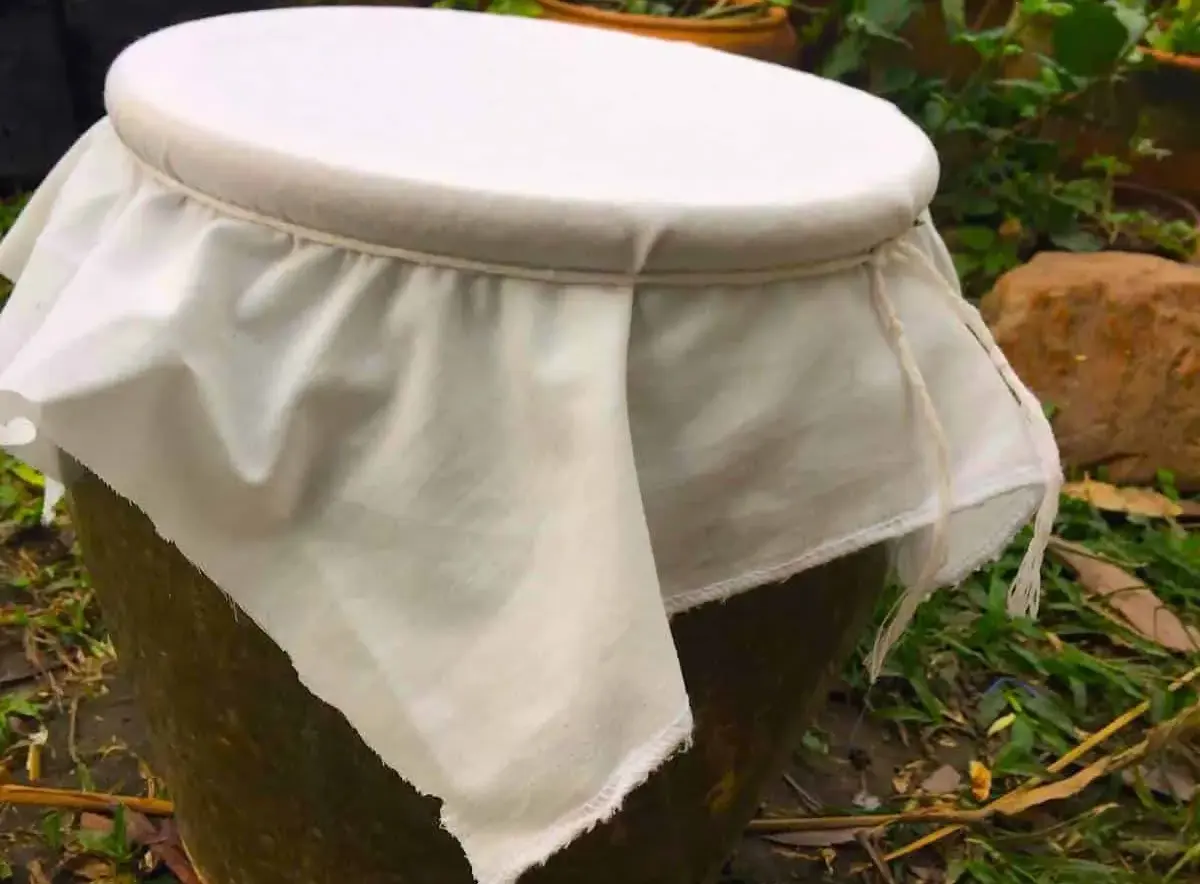
Fermented Fruit Juice (FFJ) is a sugar-extracted fruit preparation used in Korean Natural Farming. It is not the same as water-based JADAM Liquid Fertilizer (JLF), and neither is a laboratory-standardised NPK product. Choose one method, record the ingredients, and follow its own preparation and application guidance.
FFJ uses fruit and brown sugar. Fermented Plant Juice (FPJ) uses other plant material; the names describe the input, not a guaranteed nutrient analysis. The Pure KNF Foundation sugar-ratio guidance distinguishes fruit from growing tips, so a leafy FPJ recipe should not automatically become your FFJ recipe.
JADAM takes a different approach. In his 2016 liquid-fertilizer lecture, Youngsang Cho describes using nearby grass and crop residues with water. JLF is not a sugar-based FFJ, nor is it JADAM Microorganism Solution (JMS). Use the original JADAM instructions for the chosen feedstock and container rather than combining several recipes.
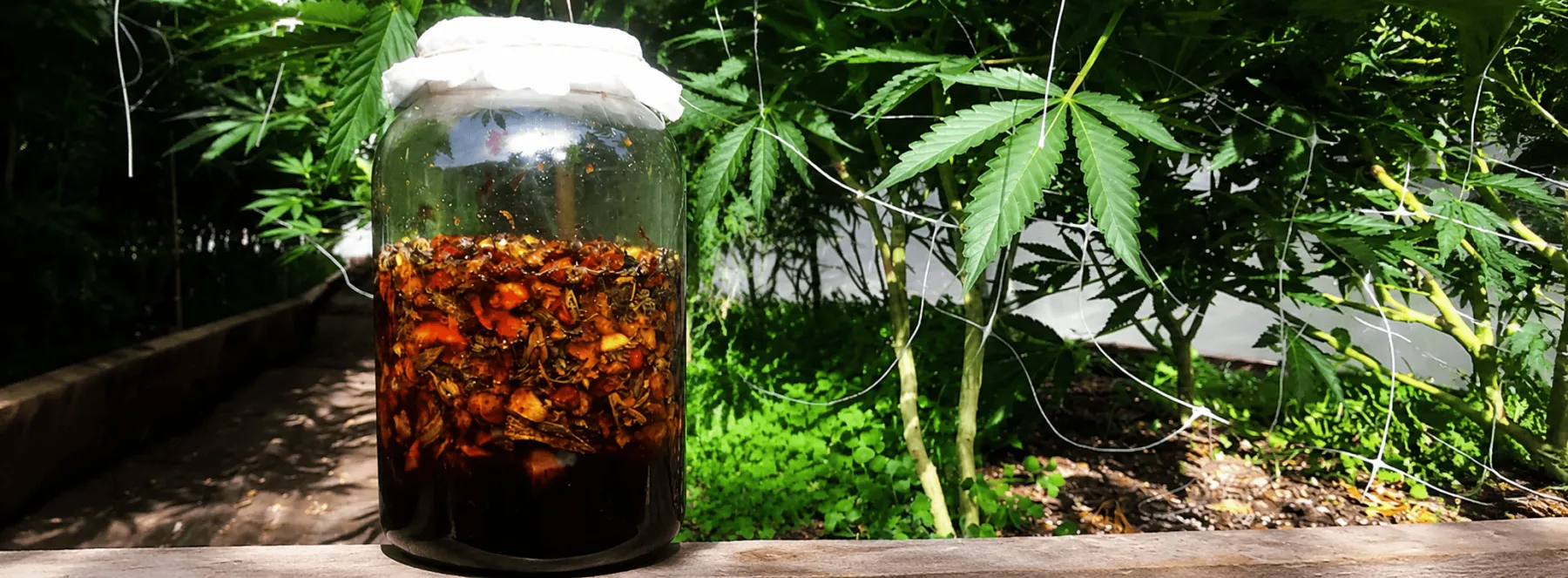
Begin with a manageable batch rather than a barrel. Set aside clean utensils, a scale, a strainer, a labelled food-contact container and a breathable cover. Keep agricultural ferments separate from food preparation.
The University of Hawaii SA-7 fermented plant juice bulletin explains sugar extraction, separation and gas-producing storage. It concerns FPJ: its timing is not a universal FFJ completion date. Temperature, ingredients and method affect the process. Do not stretch an unfinished or questionable batch into a fixed seven- or fourteen-day rule.
The comparison below separates ingredient choices from claims about potency. A plant name does not establish how much soluble nitrogen, potassium or phosphorus reaches the finished liquid.
There is no single dilution that fits FFJ, JLF, worm leachate and compost tea. The Pure KNF January 2026 plant-juice demonstration describes a 1:500 dilution. Treat that as guidance for its preparation, not a universal cannabis feeding prescription or a dose for JLF.
Write down whether a recipe means concentrate-to-water or concentrate-to-final-solution. For example, one part concentrate to 500 parts water means 1 mL plus 500 mL water. Use consistent measuring units and keep the method name beside the ratio.
For an unanalysed preparation, begin with a limited trial and an untreated comparison rather than changing the whole garden at once. Record the batch, dilution, substrate, date and plant response. A feeding interval cannot be selected reliably from the word fermented alone. Plan nutrition with the nutrient and feeding guide, and consider water quality in the irrigation guide.
Do not assume a soil application is also suitable for leaves or flowers. Avoid spraying unvalidated homemade ferments on material intended for consumption or inhalation. Do not add a ferment to an aerated compost brew merely because another recipe calls it a microbial activator.
Actively fermenting liquids can produce gas. Keep pressure from building in the vessel, keep labels readable, and keep containers away from children, pets and food storage. These preparations are agricultural inputs, not drinks.
The Pure KNF storage discussion describes additional sugar for preservation after extraction. That is a separate step: the initial fruit-to-sugar ratio does not establish a shelf life for every batch. Do not promise one or two years of storage, or indefinite usable strength for a water-based ferment.
Strong odor can accompany decomposition, but odor alone does not identify useful organisms, nutrient content or safety. Stop using a batch if its ingredients or handling history are uncertain. Do not try to rescue an unknown contaminated preparation with LAB, biochar or extra sugar.
Use identified, uncontaminated materials from a known source. A directory of comfrey, nettle, kelp or willow cannot substitute for testing the finished preparation. Avoid assigning exact hormones, vitamins, mineral availability or disease protection solely from the plant name.
These sources describe farming practices, not proof that homemade FFJ increases cannabis terpenes, cures deficiencies or replaces a complete nutrient programme. Keep expectations tied to observations and testing. For a broader soil strategy, continue with the related soil-preparation guide.
| Criteria | FFJ | JLF |
|---|---|---|
| Main input | Fruit and brown sugar | Grass or crop residues with water |
| Sugar recipe | Fruit example: equal weights | Do not copy the FFJ sugar recipe |
| Preparation | Sugar extraction and fermentation | Water-based breakdown of organic material |
| Timing | Depends on the chosen protocol and conditions | Depends on feedstock and conditions |
| Application | Use guidance for the specific fruit preparation | Use guidance for the specific JADAM preparation |
Related Grow Guides
Learn how to build rich, living soil for outdoor cannabis. Master native soil testing, pH adjustment, no-till beds vs. fabric containers, and organic amendments.
No. FFJ is a fruit-and-sugar preparation used in Korean Natural Farming. JADAM Liquid Fertilizer uses organic materials with water. Do not exchange their recipes, dilution ratios or storage advice. JLF is also different from JADAM Microorganism Solution (JMS).
There is no universal shelf life. Ingredients, sugar preservation, temperature and handling matter. Follow the storage method for your preparation, keep batch labels, prevent fermentation-gas pressure and do not assume an old water-based ferment remains usable indefinitely.
Follow the guidance for the specific preparation. A 1:500 plant-juice example is not a universal dose for fruit ferments or JLF. State whether the ratio means concentrate to water or final solution, measure consistently and trial a limited area before wider application.
No. The practitioner sources used here do not establish that homemade FFJ reliably increases cannabis terpene content. A named fruit or botanical ingredient is not a measurement of the finished preparation, and observed plant responses should not be presented as a guaranteed effect.
References supporting factual claims and further reading in this guide.
PrimeStrains is intended for adults aged 18 or over. Please confirm that you meet the legal age requirement where you live.
By continuing, you accept responsibility for following your local laws.