Outdoor Cannabis Pruning & Trellising: Topping, Defoliation & Support Systems
Master outdoor cannabis canopy management. Learn topping, lollipoping, heavy-duty T-post trellising, and structural wind protection to maximize yield and prevent branch snapping.
At a glance
Key takeaways
Top early and oftenTop plants at least 1 to 3 times during vegetative growth to build a broad, multi-cola canopy that resists mold and wind damage.
Lollipop the bottom thirdStrip all weak shoots and leaves from the base to boost airflow and eliminate pest entry points.
Use steel T-postsSecure large plants with driven steel posts and horizontal netting at two height levels to survive autumn rainstorms.
Managing canopy architecture is essential when growing full-season outdoor cannabis. Left unpruned, plants naturally form a tall Christmas-tree shape dominated by a single massive central cola. Outdoors, this central cola creates a prime target for wind shear and fungal infection. Pruning, defoliation, and heavy-duty trellising transform a single apical stalk into a multi-topped canopy engineered for maximum sun penetration and storm resilience, supporting the foundational principles detailed in our outdoor cannabis cultivation master guide.
1. Topping, FIMing, and Main-Lining for Outdoor Scale
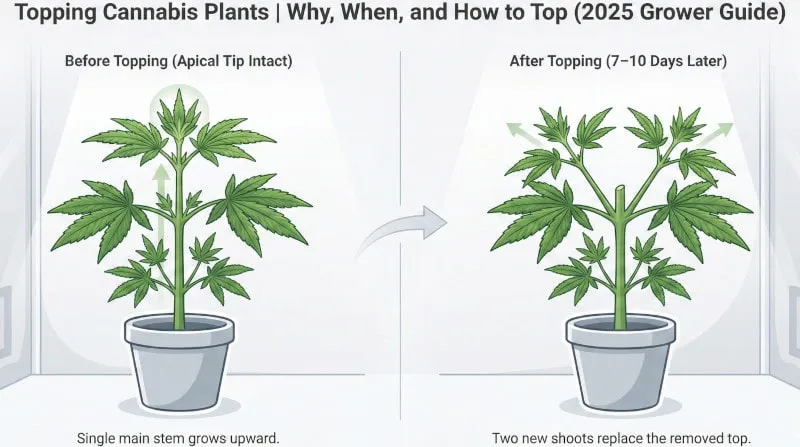
Topping involves removing the terminal shoot of the main stem, redistributing growth hormones (auxins) to lower lateral shoots. Outdoors, where plants can spend 3 to 4 months vegetating, topping produces 8 to 16+ main tops instead of one single central spear.
Cutting the main stem above a node splits apical dominance into multiple main colas.
Why Topping Prevents Outdoor Harvest Loss
Mold Risk Reduction: A single massive central cola traps morning dew and moisture, making it susceptible to Botrytis (bud rot). Multiple medium-sized colas dry faster and resist rot.
Structural Stability: Multiple main branches spread wind resistance evenly across the plant framework rather than concentrating force on a single central stem.
Canopy Uniformity: Creating a broad, flat top allows every branch to receive uniform Photosynthetically Active Radiation (PAR) daily; check how solar intensity interacts with your plot in our sunlight exposure and outdoor microclimate guide:
Master solar tracking, light intensity, and garden microclimates for outdoor cannabis. Learn how to optimize solar angles, manage heat stress, and eliminate morning dew pockets.
2. Bottom Pruning (Lollipoping) and Internal Canopy Airflow
Selective leaf removal (defoliation) outdoors serves a completely different purpose than indoors. Rather than simply boosting light access, outdoor defoliation manages relative humidity microclimates inside dense foliage and eliminates under-developed "larf" buds.
CANOPY STRUCTURAL ZONING
UPPER CANOPY
(70% Sunlight)
→ Prime Cola Development
MID CANOPY
(50% Sunlight)
→ Secondary Flowers & Net
LOWER THIRD
(Shaded / Damp)
→ STRIP CLEAN (Lollipop)
Begin lollipoping during late vegetative growth, approximately 2 to 3 weeks before plants transition into bloom. Remove all sucker branches, leaves, and tiny flower sites from the bottom 24 to 36 inches of the main stem. Stripping lower foliage removes pest ladders and reduces habitats for aphids and mites; coordinate your pruning schedule with our outdoor IPM and biological pest control guide.
3. Heavy-Duty Support Systems: Steel T-Posts and Multi-Layer Netting
A mature outdoor plant laden with rain or heavy autumn dew can easily weigh over 200 pounds. Flimsy indoor plastic hoops and bamboo stakes collapse under late-season wind storms.
Installing a Steel T-Post Trellis System
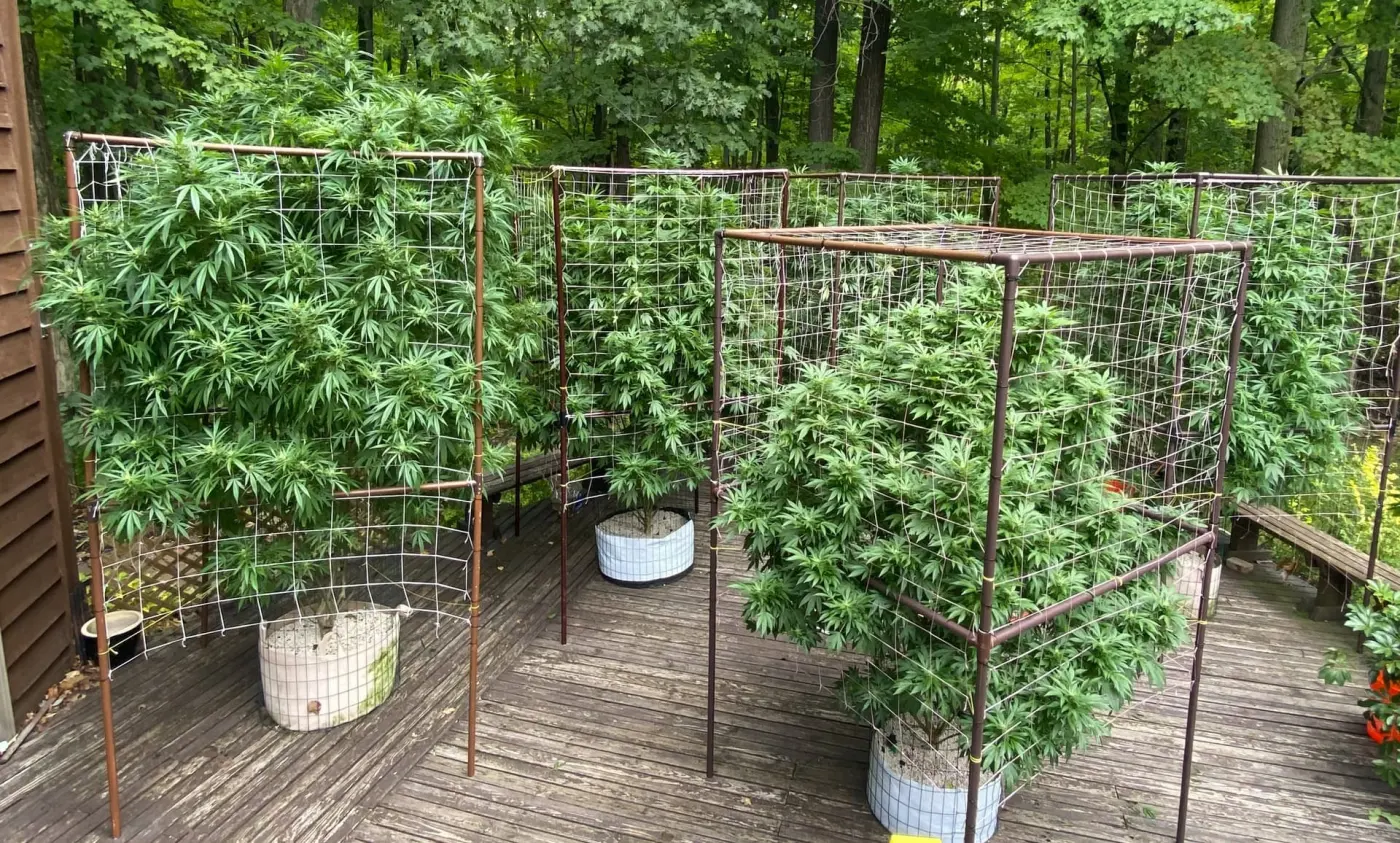
Set Corner Anchors: Drive 8-foot steel T-posts 2 feet deep into the ground at the four corners of your container or garden bed.
First Mesh Layer (Vegetative Stage): Stretch a layer of 6-inch square masonry or commercial trellis netting across the posts at 3 to 4 feet above ground level. Weave main lateral branches through individual squares as the plant grows outward.
Second Mesh Layer (Flowering Stage): Stretch a second trellis layer at 5 to 6 feet above ground level just as flower stretch begins. This top layer catches heavy, flower-laden colas during late autumn rain storms before harvest; review wet-weather protection steps in our outdoor harvest timing and weather defense guide.
Match your support framework to your strain's growth habit; learn how Indica and Sativa branch structures differ in our best outdoor cannabis strains directory:
Compare outdoor cannabis strains for short, humid and longer seasons, with exact breeder varieties, realistic harvest estimates and links to matching seeds.
Frequently asked questions
When should I stop pruning outdoor cannabis plants?
Cease major structural pruning and heavy defoliation by the end of the second week of flowering. Once plants stop their initial bloom stretch, heavy leaf removal stresses the plant, reducing energy available for resin and flower production.
What should I do if a large branch splits off the main trunk in a storm?
If a branch splits but remains partially attached, hoist it back into position immediately, wrap the split junction tightly with heavy-duty grafting tape or plant ties, and secure the branch to your trellis network. Cannabis stems heal split wood rapidly if re-joined within hours.
Evidence and further reading
Authoritative sources
References supporting factual claims and further reading in this guide.