Sunlight, Solar Angles, and Microclimates for Outdoor Cannabis
Master solar tracking, light intensity, and garden microclimates for outdoor cannabis. Learn how to optimize solar angles, manage heat stress, and eliminate morning dew pockets.
At a glance
Key takeaways
Prioritize morning lightPosition your garden where it receives unfiltered sun from 7:00 AM onwards to clear overnight humidity.
Watch late-season shadowsRemember that autumn solar angles sit lower than summer sun; ensure nearby trees won't shade flowering colas in September.
Elevate plants off cold groundAvoid planting in low drainage points where cold damp air accumulates overnight.
Sunlight provides an unmatchable full-spectrum solar intensity that drives heavy resin production and massive plant yields. However, simply placing a container in the yard isn't enough; understanding solar path variation across seasons, local shade obstructions, and microclimate air pockets dictates whether a garden thrives or succumbs to environmental stress. Optimizing your sun exposure is covered extensively in our outdoor weed growing step-by-step guide:
Learn how to grow massive outdoor cannabis plants from seed to harvest. Master living soil prep, strain selection, microclimates, irrigation, IPM, and weather protection.
1. Direct Sun Requirements (6+ Hours) and Path Tracking
Cannabis is a sun-loving plant that utilizes intense solar radiation to drive photosynthesis and terpene synthesis. Photosynthetically Active Radiation (PAR) peaks during midday solar noon, delivering up to 2000 u mol/m2/s of light energy directly to the top canopy.
Mapping Your Garden’s Solar Arc
Solar position shifts significantly between the spring equinox and late autumn harvest:
Spring (Vegetative Phase): The sun rises lower on the horizon. Plants placed too close to northern fences or high tree lines will experience early morning shadow.
Summer Solstice (Peak Growth): The sun reaches its highest zenith, maximizing direct top-down radiation.
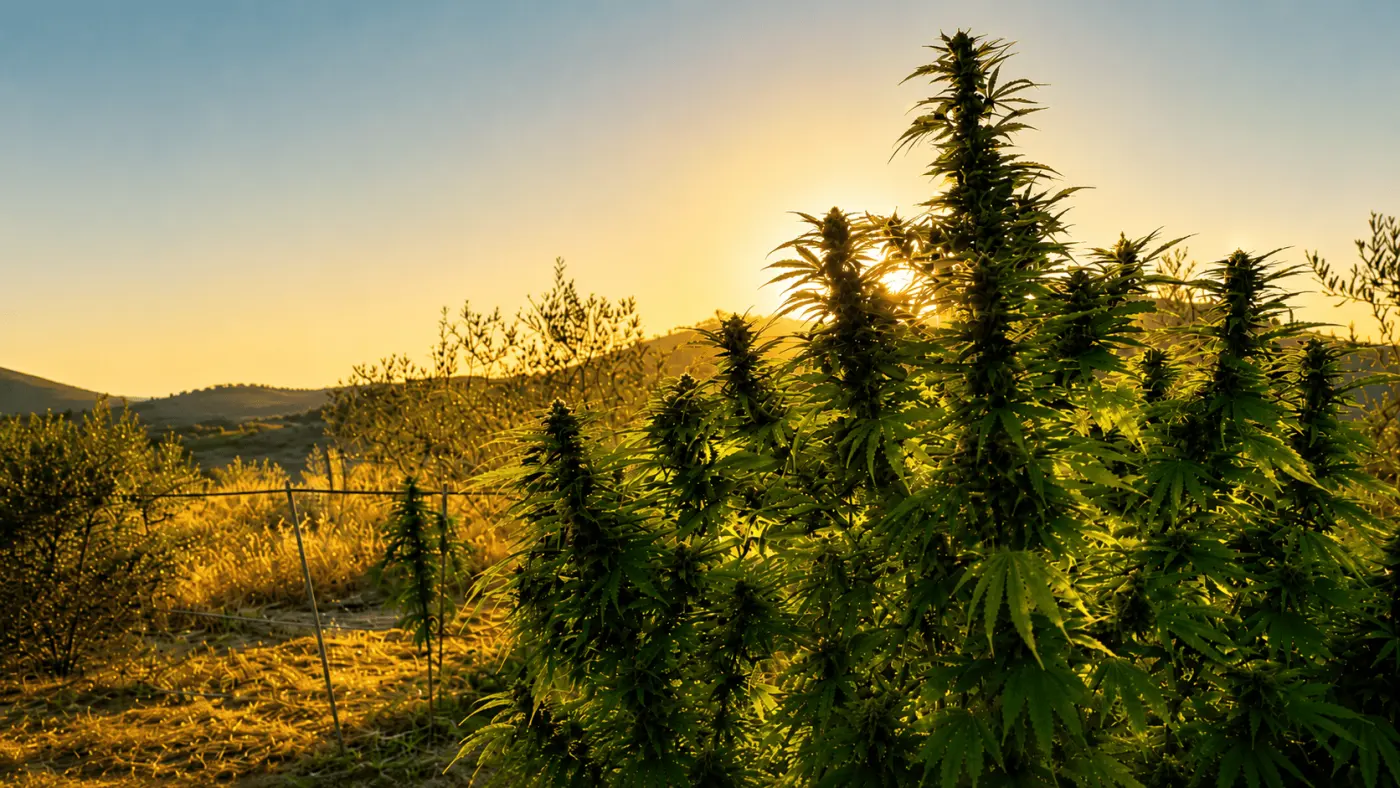
Autumn (Flowering Phase): As days shorten, solar elevation drops. Nearby structures that offered no shade in June may cast long shadows across your garden by late September.
Track daily light hours using physical sun-charting tools or smartphone solar trajectory apps before digging permanent garden beds. Sunlight availability dictates strain performance; see our top picks in the best outdoor cannabis strains breakdown:
Compare outdoor cannabis strains for short, humid and longer seasons, with exact breeder varieties, realistic harvest estimates and links to matching seeds.
2. Shielding Plants from Heat Stress and Extreme Sun Absorption
While sunlight fuels growth, excessive surface heat and intense UV exposure can induce cellular stress. When leaf temperatures exceed 88°F–90°F (31°C–32°C), plants enter a protective state: leaf stomata close to conserve water, bringing internal carbon dioxide absorption and growth to a temporary halt.
LIGHT EXPOSURE VS. PLANT PHYSIOLOGY
Environmental State
Plant Physiological Response
Full Sun (70°F–85°F)
Open stomata, rapid transpiration, high growth
Extreme Heat (>95°F)
Stomata closure, halted growth, leaf curling
Prolonged Shade (<5 hrs)
Stem elongation (stretching), weak node structure
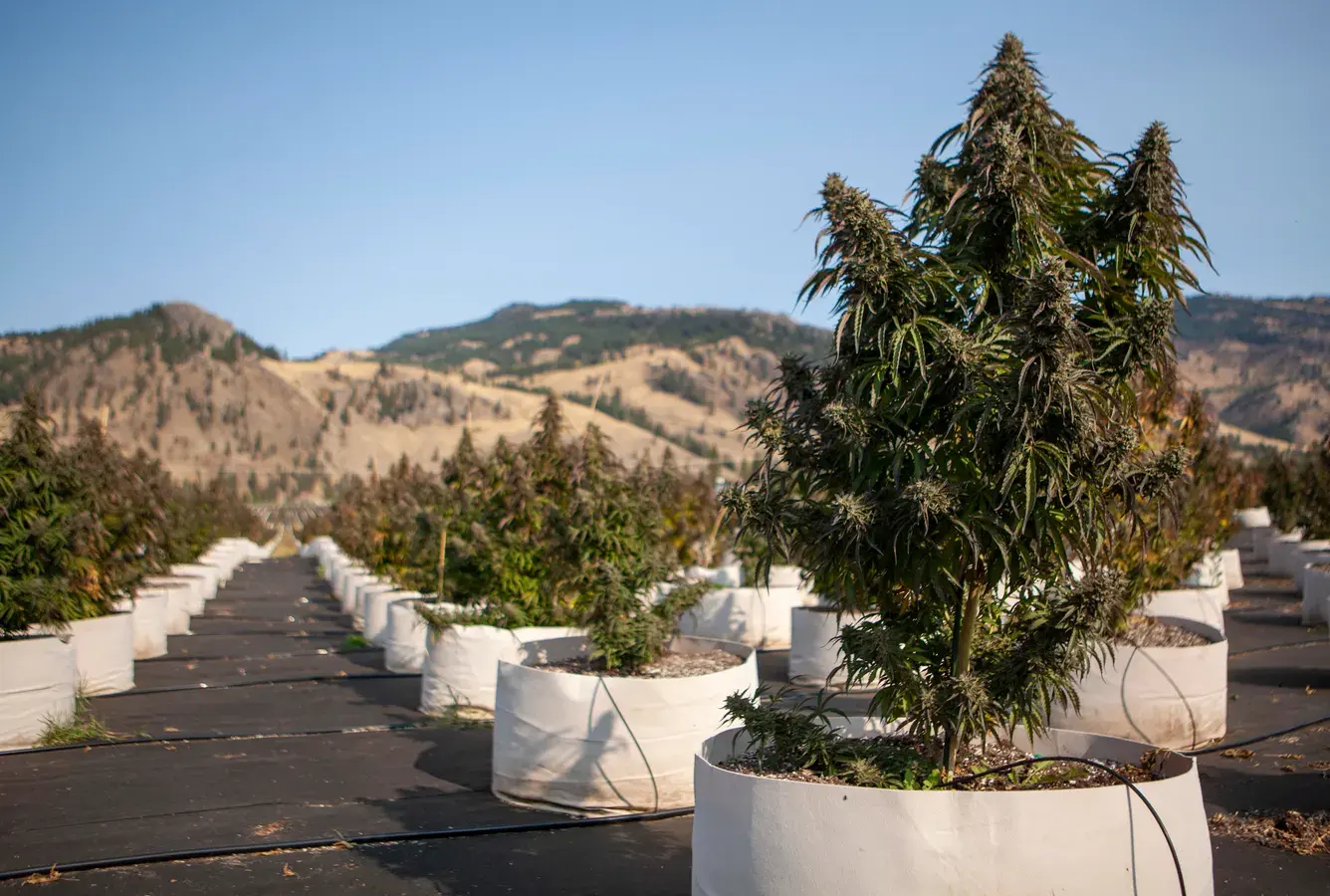
During extreme summer heatwaves, construct an overhead support frame using 30% white or green shade cloth. This lowers leaf surface temperature by 5°F to 10°F while allowing sufficient PAR light to maintain photosynthesis. Additionally, paint dark plastic containers white or use breathable light-colored fabric pots to prevent rootzone baking.
3. Managing Wind Corridors, Thermal Inversion, and Morning Dew
Microclimates are localized atmospheric zones created by immediate topography, structures, and vegetation. Understanding how microclimates behave protects plants against moisture-borne pathogens.
Common Microclimate Dynamics
Thermal Inversion & Cold Sink: Cold, dense air flows downhill at night and settles in valley floors or low yard depressions. Avoid low spots; cold sinks drop temperatures by several degrees and increase relative humidity.
Morning Dew Retention: Dew settles on fan leaves and developing flowers at dawn. Positioning gardens to catch early morning Southeast sun evaporates dew rapidly, reducing fungal spore germination.
Wind Corridors: Moderate air movement strengthens stem tissue and sweeps away humid air boundary layers around leaves. However, strong wind corridors (such as gaps between buildings) cause mechanical snapping and windburn.
Poor air movement and lingering dew accelerate fungal infections; implement preventive sprays from our outdoor pest control and IPM guide.
Microclimate Threat & Mitigation Guide
Criteria
Environmental Microclimate Risk
Impact on Cannabis & Recommended Action
Low-Lying Frost Pocket
Cold air pooling at night
Early root freeze and botrytis; elevate beds or use containers on deck platforms.
Stagnant Air Pocket (Shaded Wall)
Zero breeze + high ambient moisture
Powdery mildew outbreak; install oscillating outdoor fans or clear obstruction.
High-Wind Tunnel
Excessive wind shear & branch snap
Desiccation and stem breakage; install windbreak netting or heavy T-post trellises.
Radiant Heat Wall
South-facing brick or concrete heat accumulation
Root cooking and midday wilting; place 2–3 feet away from thermal mass structures.
Frequently asked questions
Can cannabis get too much direct sunlight outdoors?
In general, no—provided root temperatures stay cool and irrigation meets plant demand. However, when ambient temperatures exceed 95°F (35°C), solar intensity can cause heat stress and light bleaching, making temporary shade cloth beneficial.
How do I know if my garden site gets enough sun?
Perform a light audit over a full sunny day. Mark the area every hour from 8:00 AM to 6:00 PM to note when shadows cover the site. A site receiving 6 continuous hours of unshaded mid-day light is the absolute minimum, while 8 to 10 hours yields best results.
Evidence and further reading
Authoritative sources
References supporting factual claims and further reading in this guide.