Outdoor Cannabis Irrigation: Drip Systems, Water Quality & Mulching
Master outdoor cannabis watering and drip irrigation. Learn water source pH testing, gravity-fed systems, and mulching strategies to maximize yield.
At a glance
Key takeaways
Drip beats hosesAutomate your garden with drip lines to maintain steady root zone hydration and eliminate canopy moisture.
Always test pH at the root zoneMonitor water inputs and runoff/soil slurry pH to stay within the 6.2–6.8 optimal intake window.
Layer mulch heavyMaintain a 2–3 inch layer of organic straw or rice hulls to shade living microbes and halve water loss.
Water is the primary transport medium for mineral nutrition and thermal regulation in outdoor cannabis. During the peak heat of late summer, a mature, 8-foot outdoor canopy can transpire between 5 to 10 gallons of water per day. Establishing automated, high-efficiency irrigation systems ensures consistent root zone moisture without over-saturating living soil beds. Proper hydration management works alongside the foundational concepts in our guide to growing cannabis outdoors:
Learn how to grow massive outdoor cannabis plants from seed to harvest. Master living soil prep, strain selection, microclimates, irrigation, IPM, and weather protection.
1. Designing Automatic Drip Irrigation and Gravity-Fed Systems
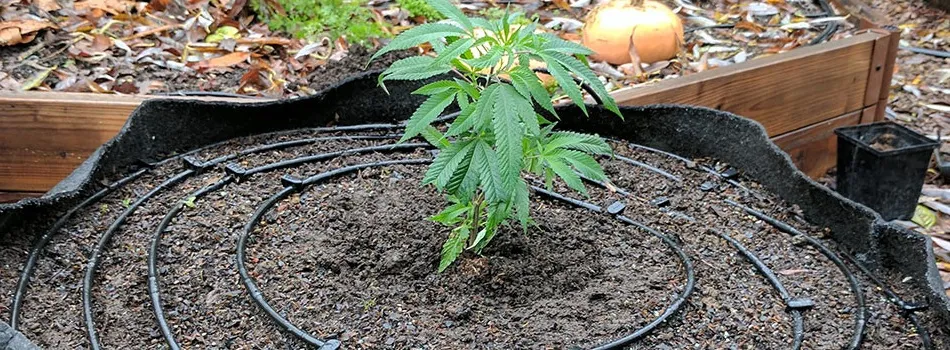
Hand-watering large outdoor plants with a hose or watering can leads to severe wet-dry cycles, topsoil compaction, and uneven moisture distribution across the root ball. Automated drip irrigation delivers slow, volumetric hydration directly to the root zone, maximizing water efficiency while keeping the leaf canopy dry.
Automated drip rings deliver uniform moisture directly to the root zone.
Core Components of an Outdoor Drip System
Main Distribution Line: 1/2-inch poly tubing connected to a hose spigot or elevated water reservoir.
Pressure Regulator & Filter: A 25 PSI pressure regulator prevents line blowouts, while a 120-mesh screen filter stops sediment from clogging emitters.
Emitters & Drip Rings: Use pressure-compensating drip emitters (0.5 to 2.0 gallons per hour) or continuous drip rings evenly spaced around the drip line of the plant canopy.
Gravity-Fed Rain Barrel Systems: For remote setups without municipal pressure, elevate 55-gallon rain barrels 3 to 6 feet above ground level to create passive gravity pressure for low-pressure drip lines.
Learn how to build rich, living soil for outdoor cannabis. Master native soil testing, pH adjustment, no-till beds vs. fabric containers, and organic amendments.
2. Well Water, Rainwater, and Natural Water Source pH Management
The source and chemical profile of your irrigation water directly impacts soil microbial health and nutrient availability.
WATER SOURCE COMPARISON & CORRECTION
Water Source
Typical Characteristics
Corrective Action Required
Rainwater
Low EC/TDS, acidic (5.5–6.0)
Buffering with Cal-Mag or lime
Well Water
High EC/TDS, hard minerals
Acidifying pH Down (Phosphoric)
Municipal Tap Water
Contains Chlorine/Chloramine
Off-gas or use KDF/Carbon filter
When using municipal tap water, let it stand in an open container for 24 hours to off-gas volatile chlorine, or pass it through a KDF/carbon hose filter to eliminate persistent chloramines. For well water with high calcium/magnesium hardness (high EC), acidify with organic citric acid or phosphoric acid to reach the ideal soil range of 6.2 to 6.8.
3. Mulching Techniques to Retain Soil Moisture and Prevent Topsoil Crusting
Leaving topsoil bare under direct summer sunlight bakes beneficial earthworms and mycorrhizal networks, forms a hard impermeable crust, and increases water loss through evaporation.
Recommended Outdoor Mulch Materials
Clean Barley or Wheat Straw: Excellent insulation value, creates a spongy protective layer, and breaks down into organic humus over time. (Ensure straw is weed-seed free).
Hardwood Shredded Bark / Wood Chips: Ideal for permanent in-ground living soil beds and pathways; long-lasting thermal protection.
Coco Chips or Rice Hulls: Clean, lightweight option for fabric pots that deters fungus gnats and topsoil erosion.
How much water does an outdoor cannabis plant need per day?
In mild weather, a mature outdoor plant in a 50-gallon pot needs 2 to 4 gallons per day. During summer heatwaves (>90°F / 32°C), large plants in full sun can require 5 to 10 gallons daily to support transpiring fan leaves.
Can I use un-filtered well water on outdoor cannabis?
You can, but test it first with an EC/TDS meter and pH probe. If your well water has an EC above 0.8 mS/cm or high bicarbonate levels, dilute it with rainwater or adjust the pH using organic acid before feeding.