Commercial Integrated Pest Management (IPM): Biological Controls, Biosecurity Audits, and Zero-Pesticide Residue Compliance
Master commercial cannabis Integrated Pest Management (IPM). Learn how to deploy biocontrols, establish biosecurity protocols, and ensure zero-pesticide residue testing compliance.
Key takeaways
- Proactive Biocontrol Strategy Preventive release of biological control agents—such as Amblyseius swirskii and Phytoseiulus persimilis—suppresses target pest populations (thrips and two-spotted spider mites) before they reach economic injury levels.
- Soil & Root Zone Protection Deploying beneficial nematodes (Steinernema feltiae) and soil-dwelling predatory mites (Stratiolaelaps scimitus) destroys fungus gnat larvae and root aphid populations in coco and living soil substrates.
- Entomopathogenic Bio-Fungicides Formulations containing Beauveria bassiana and Trichoderma species provide systemic protection against soft-bodied insects and root pathogens without leaving chemical residues.
- Airflow & Environmental Prevention Maintaining high boundary-layer air movement and managing Vapor Pressure Deficit (VPD) prevents microclimates that encourage airborne fungal spores like Botrytis cinerea and powdery mildew.
- Clean Flow Logistics Enforcing strict worker movement protocols (moving from cleanest propagation rooms to high-risk harvest bays) stops cross-contamination between facility zones.
In commercial cannabis operations, a single undetected pest outbreak can destroy millions of dollars in crop value, contaminate extraction inventory, or result in total batch destruction due to state regulatory pesticide failures. With legal markets enforcing near-zero tolerance thresholds for synthetic pesticides, heavy chemical sprays are no longer a viable defensive strategy.
To safeguard high-density canopies, commercial facilities must adopt a proactive Integrated Pest Management (IPM) framework.
By combining biocontrol agents (beneficial insects and entomopathogenic fungi), strict facility biosecurity protocols, and targeted sanitation schedules, cultivation managers can eliminate pest pressures while ensuring 100% compliance with regulatory residue standards.
1. The 3 Pillars of Commercial Biological Control
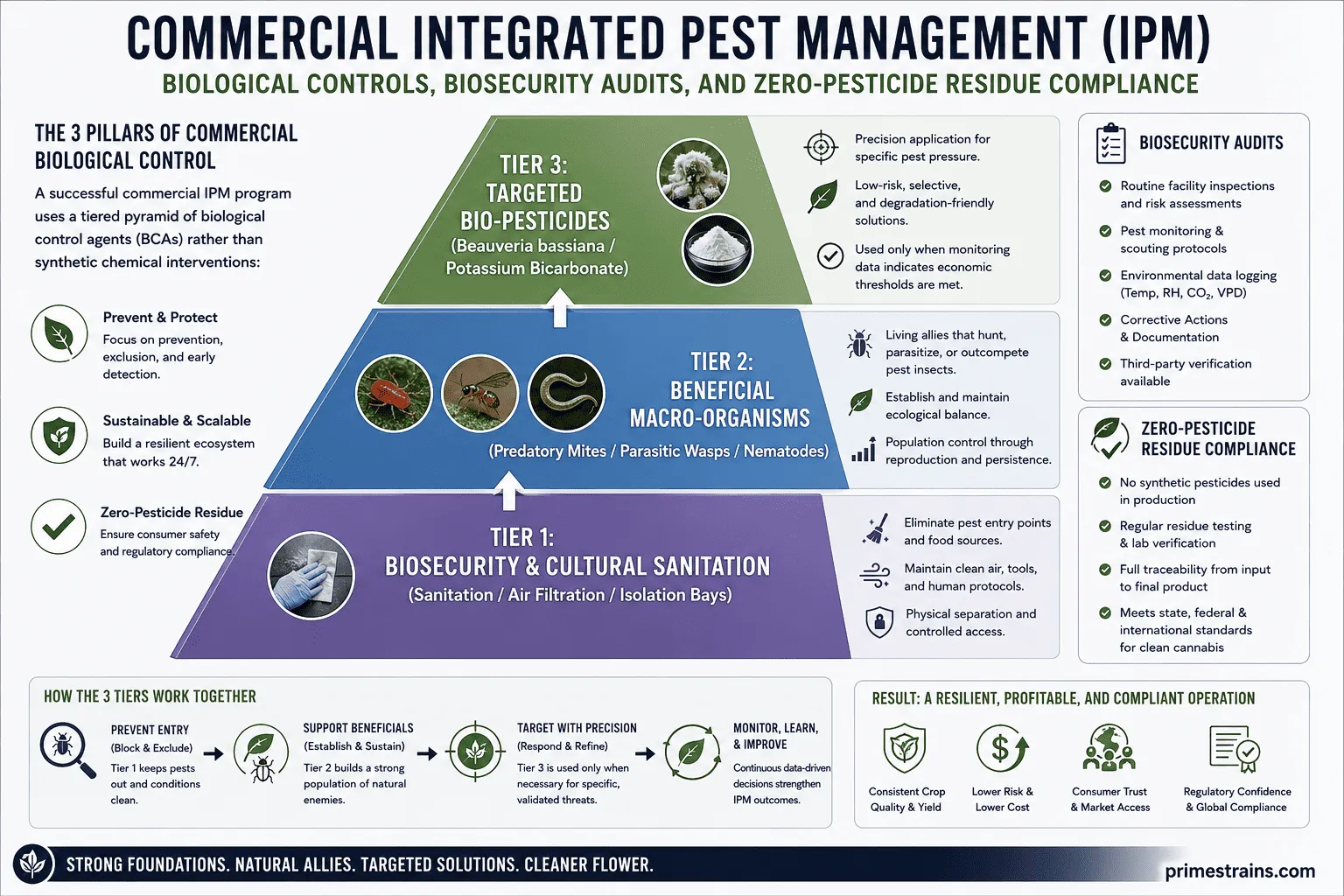
1. Predatory Mites & Macro-Organisms
- Amblyseius swirskii & Neoseiulus cucumeris: Generalist predatory mites that target thrip larvae and broad mites.
- Phytoseiulus persimilis: Obligate predator that aggressively eradicates two-spotted spider mite (Tetranychus urticae) hotspots.
- Chrysoperla carnea (Green Lacewing): Voracious generalist feeders whose larvae consume aphids, whiteflies, and soft scales.
2. Entomopathogenic Fungi & Microbials
- Beauveria bassiana: An entomopathogenic fungus that penetrates the cuticle of soft-bodied insects, causing systemic paralysis and death.
- Bacillus thuringiensis subsp. israelensis (BTI): Produces crystal proteins toxic specifically to the larvae of fungus gnats (Bradysia spp.) when ingested.
3. Beneficial Nematodes
- Steinernema feltiae: Microscopic roundworms applied via fertigation to actively hunt down fungus gnat larvae and thrip pupae in the substrate.
2. Scouting Protocols and Action Thresholds
- Yellow & Blue Sticky Traps: Deploy yellow traps for fungus gnats/aphids and blue traps for thrips at a density of 1 trap per 250 sq. ft. Inspect and log catches weekly.
- Microscopic Leaf Audits: Scout 5% to 10% of the canopy weekly using 30x–60x jewelers' loupes or digital microscopes, targeting the undersides of lower leaves and dense interior growth.
- Action Threshold Triggers:
- Level 1 (Preventive): Baseline pest population = 0. Deploy sachet-based beneficial mite releases every 3–4 weeks.
- Level 2 (Infiltration): 1–3 thrips/mites per leaf. Deploy high-density loose beneficial releases (P. persimilis or lacewings) directly on affected spots.
- Level 3 (Emergency Corrective): Heavy local infestation. Spot-treat with organic biological contact washes (e.g., potassium salts of fatty acids or Beauveria bassiana) followed by secondary predator re-introductions.
Chemical Pesticide Reliance vs. Biological IPM Program
| Criteria | Chemical Pesticide Reliance | Biological IPM Program |
|---|---|---|
| Pest Resistance Risk | Extreme (Pests rapidly build immunity) | Zero (Predators adapt alongside prey) |
| Testing Compliance | High failure risk for synthetic residues | 100% Compliant (Zero synthetic residue) |
| Plant Impact | Phytotoxicity, burnt pistils, stunted growth | Zero Phytotoxicity (Leaves plant healthy) |
| Labor Requirement | High (Requires personal protective equipment) | Low (Rapid sachet hanging & biological releases) |
| Consumer Safety | Unsafe (Potential chemical inhalation) | Maximum (Clean, clean-label flower) |
3. Integrating IPM with Overall Facility Management
- Irrigation Dryback Controls: Use precision fertigation and crop steering strategies to manage overnight substrate moisture, preventing standing water that breeds fungus gnats.
- Microclimate Airflow: Combine biological applications with optimized LED spectrum and high-PPFD canopy controls to maintain proper leaf surface temperatures and prevent stagnant humidity pockets.
- Clean Genetic Material: Ensure all incoming genetics pass through tissue culture and micropropagation clean stock protocols to eliminate latent viroids and pests before entering production bays.
Frequently asked questions
Will releasing beneficial insects result in bugs inside my final harvested flower?
No. Beneficial predatory mites and insects require live prey to survive. As target pest populations are eradicated, predatory insect populations die off or migrate away from top colas. Proper post-harvest bucking and fan leaf removal ensure finished flower remains clean and pest-free.
Can I apply Beauveria bassiana during late flowering?
While Beauveria bassiana is organic and compliant, applying liquid biological sprays during late flower (past Day 35–40) can raise overall moisture levels, increasing the risk of Botrytis (bud rot). Late-stage pest management should rely primarily on dry beneficial insect releases or predatory mites.
How do I quarantine incoming clones or genetic material?
All incoming plant material should spend 14 to 21 days in an isolated quarantine room equipped with independent HVAC airflow, yellow/blue sticky traps, and high-density beneficial releases. Conduct qPCR screening for pathogens and microscopic pest audits before releasing plants into main vegetative bays.
Authoritative sources
References supporting factual claims and further reading in this guide.