Tetraploids vs. Triploids vs. Diploids: Polyploid Cannabis Genetics Explained
Master the science of polyploid cannabis. Learn the key differences between diploids (2n), tetraploids (4n), and triploids (3n), how chromosome doubling works, and why polyploidy is reshaping modern seed breeding.
Key takeaways
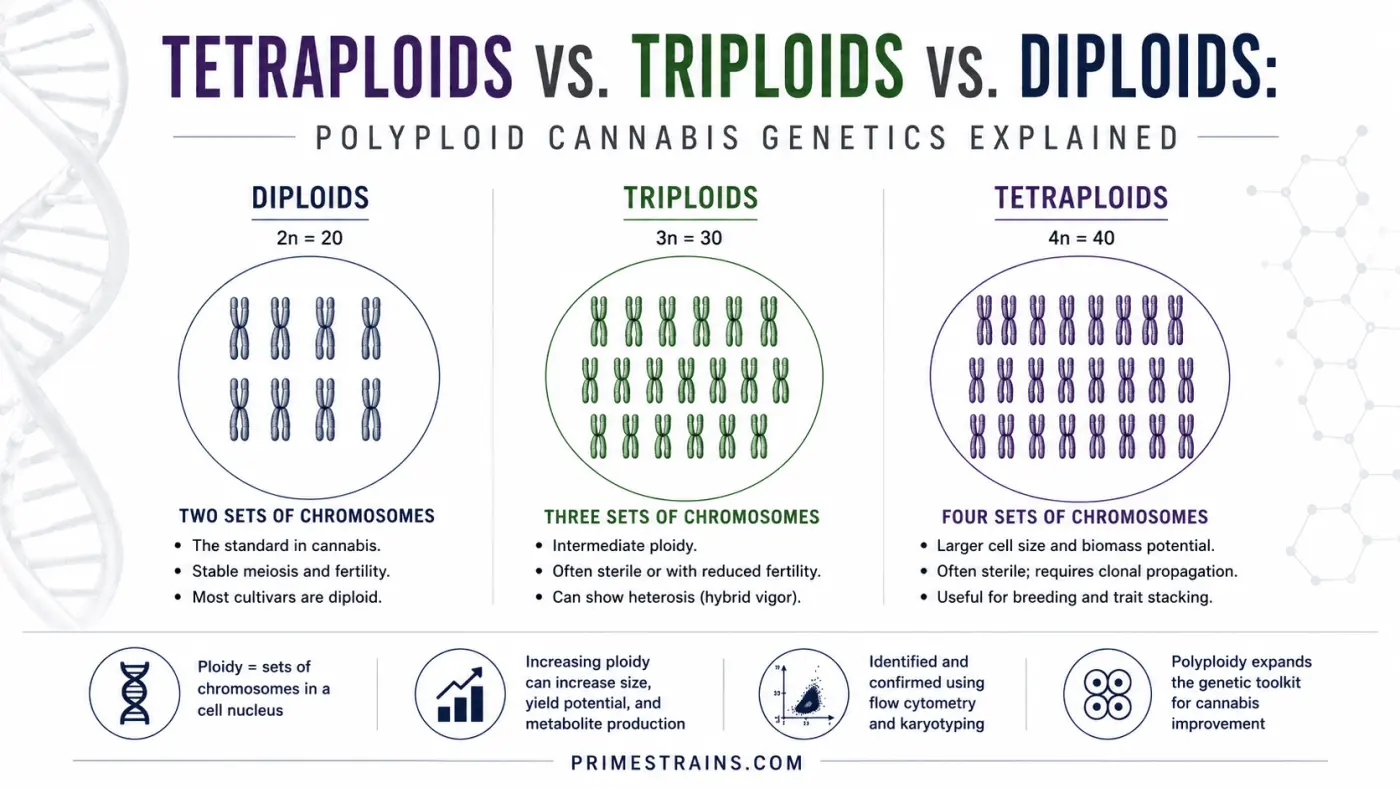
- Polyploid Definition Polyploid cannabis refers to plants possessing three or more complete sets of chromosomes, departing from the natural diploid (2n = 20) baseline.
- Tetraploid Creation Tetraploids (4n = 40) are induced using natural mitotic inhibitors to double diploid chromosomes, creating fertile 4n parent stock.
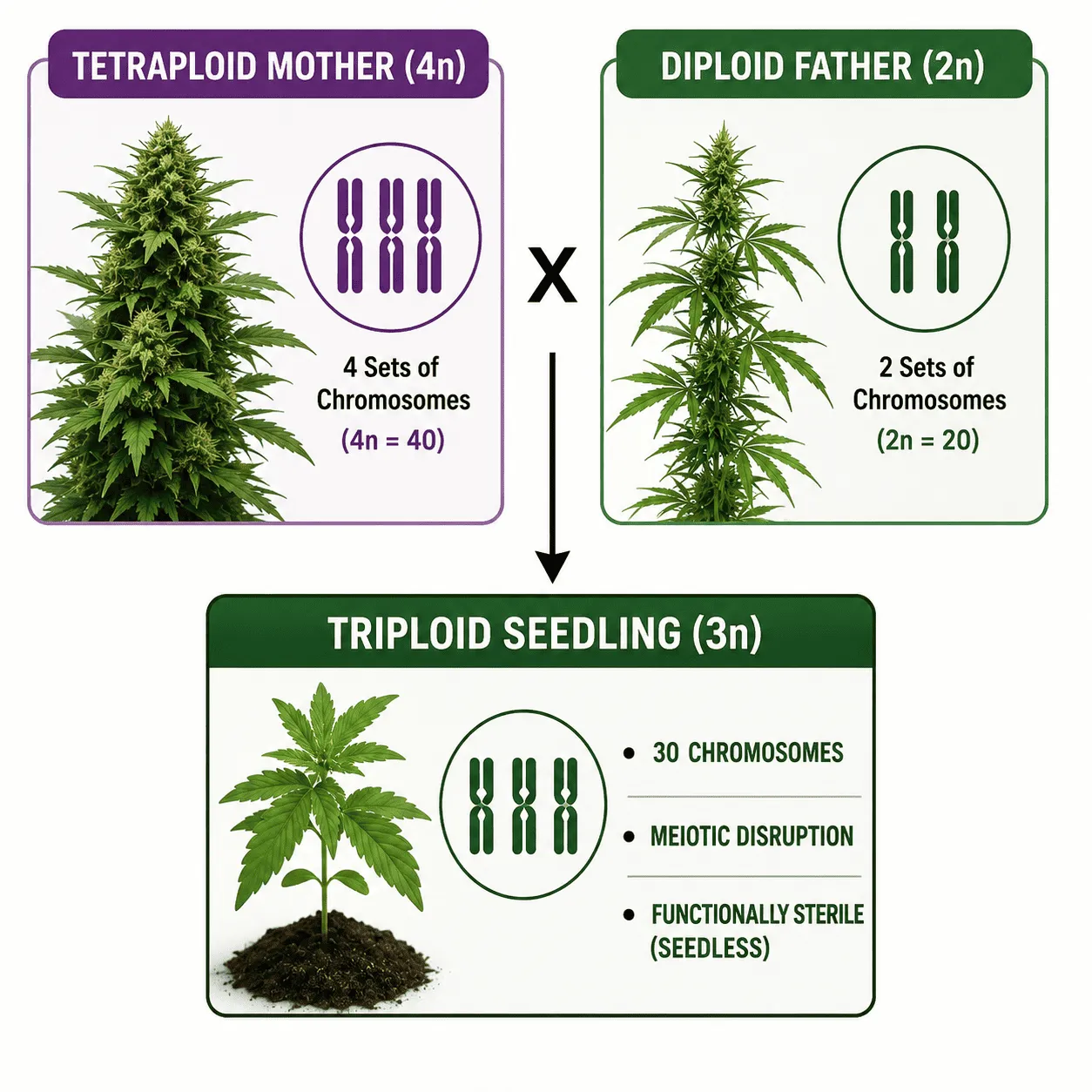
- Triploid Mechanics Triploid seeds (3n = 30) are produced by crossing a tetraploid (4n) female with a diploid (2n) male, resulting in an odd-numbered chromosome set that disrupts meiosis.
- Sterility Mechanism The odd-numbered chromosome structure of 3n plants prevents normal spore and gamete formation, rendering the plant functionally sterile.
- Metabolic Diversion Unseeded triploid crops redirect 100% of their photosynthetic energy away from reproductive seed formation into secondary metabolite production.
The cannabis industry is undergoing a quiet revolution driven by cytogenetics—the study of chromosomes and plant inheritance. For decades, breeders operated exclusively within the boundaries of standard diploid genetics. Today, the rapid emergence of polyploid cannabis is redefining plant vigor, resin output, and harvest consistency across commercial canopy spaces.
Understanding the difference between diploids (2n), tetraploids (4n), and triploids (3n) is no longer just for lab geneticists. It is becoming essential knowledge for commercial facility directors, home cultivators, and seed buyers who want to maximize yield and eliminate risk.
Here is your technical breakdown of polyploid cannabis genetics, how chromosome sets impact plant biology, and how breeders manipulate ploidy to engineer superior cultivars.
The Fundamentals: What Is Polyploidy in Cannabis?
- Diploid (2n = 20): Standard natural state (2 sets).
- Triploid (3n = 30): Three chromosome sets; functionally sterile.
- Tetraploid (4n = 40): Four chromosome sets; fertile, doubled genetic material.
1. Diploid Cannabis (2n): The Standard Baseline
Characteristics of Diploid Strains
- Reproductive Fertility: High. Males and females easily cross to create fertile offspring.
- Cell Size: Standard cellular volume and stomata density.
- Genetic Lineage: Forms the foundation of all heirloom strains. In fact, every modern hybrid traces its parentage directly back to pure ancestral landrace cannabis strains that evolved naturally in regional microclimates as diploids.
- Vulnerability: High susceptibility to accidental pollination, which converts valuable cannabinoid-producing biomass into seeded flower.
2. Tetraploid Cannabis (4n): The Breeder’s Building Block
How Tetraploids Are Created
These compounds temporarily block cell division during mitosis while allowing DNA replication to occur. The cell duplicates its chromosomes from 20 to 40, but fails to split, resulting in a stable tetraploid cell line.
Characteristics of Tetraploid Strains
- Physical Structure: Tetraploids display noticeable "giga" traits—broader leaves, thicker stems, larger stomata, and denser foliage.
- Resin Potential: Larger leaf cells often correlate with oversized glandular trichome heads.
- Fertility: Tetraploids are fully fertile (4n). When crossed with other tetraploids, they yield stable 4n seeds.
- Primary Role: The true power of a tetraploid lies in its ability to be crossed with a standard diploid (2n) parent to synthesize triploid (3n) offspring.
3. Triploid Cannabis (3n): The Seedless Commercial Powerhouse
Commercial Advantages of Triploid Cannabis
- 100% Seedless Crop Protection: Even under intense pollen pressure from neighboring hemp farms or stressful hermaphroditic flowers, triploid females cannot set seeds.
- Redirected Metabolic Energy: Because triploids expend zero energy on seed development or reproductive pathways, they funnel 100% of their metabolic resources into secondary metabolite synthesis.
- Increased THC & Terpenes: Field trial data demonstrates that seedless triploid cannabis strains frequently boast a 3% to 5% relative increase in total cannabinoids and significantly denser trichome head coverage.
- Faster Vegetative Vigor: Triploid crops achieve canopy closure up to 20% faster than diploid controls, shortening production cycles.
Diploid vs Triploid Cannabis Genetics
| Criteria | Diploid (2n) | Triploid (3n) |
|---|---|---|
| Chromosome Count | 20 (2 complete sets) | 30 (3 complete sets) |
| Reproductive Fertility | Fully Fertile (Produces viable pollen & seeds) | Functionally Sterile (Guaranteed seedless) |
| Pollen Resistance | Vulnerable to accidental pollination | 99.5%+ Pollen Resistant (Zero seed formation) |
| Primary Use Case | Standard cultivation & classical breeding | Commercial flower, biomass & extraction |
| Growth Vigor | Standard baseline growth rate | Up to 20% faster vegetative development |
| Potency & Terpenes | Standard baseline metabolite levels | 3%–5% relative increase in total THC/terpenes |
Why Polyploidy Is Critical for the Future of Cultivation
As legal commercial markets mature, margins shrink, and climate unpredictability threatens outdoor canopy integrity, genetic efficiency is paramount.Using polyploid science allows breeders to solve long-standing agricultural challenges:
- IP Protection for Breeders: Because triploid flower is sterile, growers cannot take seeds or reproduce proprietary genetics via sexual reproduction, protecting the intellectual property of elite seed banks.
- Standardization for Extraction: The consistency of triploid biomass makes it ideal for solventless wash facilities requiring precise trichome head size and predictable hydrocarbon yields.
- Elevated Genetic Resilience: Combining polyploid breeding tech with the naturally stable foundation outlined in our ultimate guide to premium cannabis seeds ensures cultivators can select seeds that deliver maximum yield with minimum environmental risk.
The Next Horizon in Cannabis Breeding
Polyploid genetics represent a major milestone in modern agricultural science. By pairing the natural genetic diversity of heirloom lines with precise chromosome doubling techniques, breeders are providing commercial cultivators with the tools needed to guarantee seedless harvests, elevate potency, and maximize square-foot ROI.Frequently asked questions
Can you identify a polyploid plant visually?
While tetraploids (4n) often display significantly wider leaves and thicker stems, triploids (3n) can look visually similar to vigorous diploids during early vegetative stages. The most reliable way to confirm ploidy levels is through flow cytometry lab analysis.
Are triploid seeds considered stable?
Yes. When produced by experienced breeders who have stabilized their tetraploid (4n) parent lines, triploid seed batches exhibit exceptional phenotypic uniformity across canopy grows.
Is polyploidy safe?
Absolute safety is one of polyploidy’s greatest strengths. Polyploidy is a natural cellular phenomenon that occurs across millions of agricultural plants we eat every day, including seedless bananas, commercial oats, and potatoes. It involves zero gene editing, recombinant DNA, or foreign genetic material.
Authoritative sources
References supporting factual claims and further reading in this guide.
- Journal of the American Society for Horticultural Science (2024) Cannabis Triploids Exhibit Reduced Fertility and Similar Growth and Flower Production Compared to Diploids journals.ashs.org
- MDPI Genetics (2021) Characteristics of the Diploid, Triploid, and Tetraploid Versions of a Cannabigerol-Dominant F1 Hybrid Industrial Hemp Cultivar mdpi.com
- Cornell University Hemp Research Program (2022) Triploid Pollen-Challenge Field Trials hemp.cals.cornell.edu
- Frontiers / PMC Plant Science (2024–2025) Machine Learning-Aided Optimization of In Vitro Tetraploid Induction in Cannabis pmc.ncbi.nlm.nih.gov