Seeds vs. Clones vs. Tissue Culture: Scaling Pathogen-Free Canopies
Evaluate seeds, traditional clones, and tissue culture micropropagation for commercial scaling. Learn how seed coats block systemic viroids like HLVd, protect canopy health, and lower operational overhead.
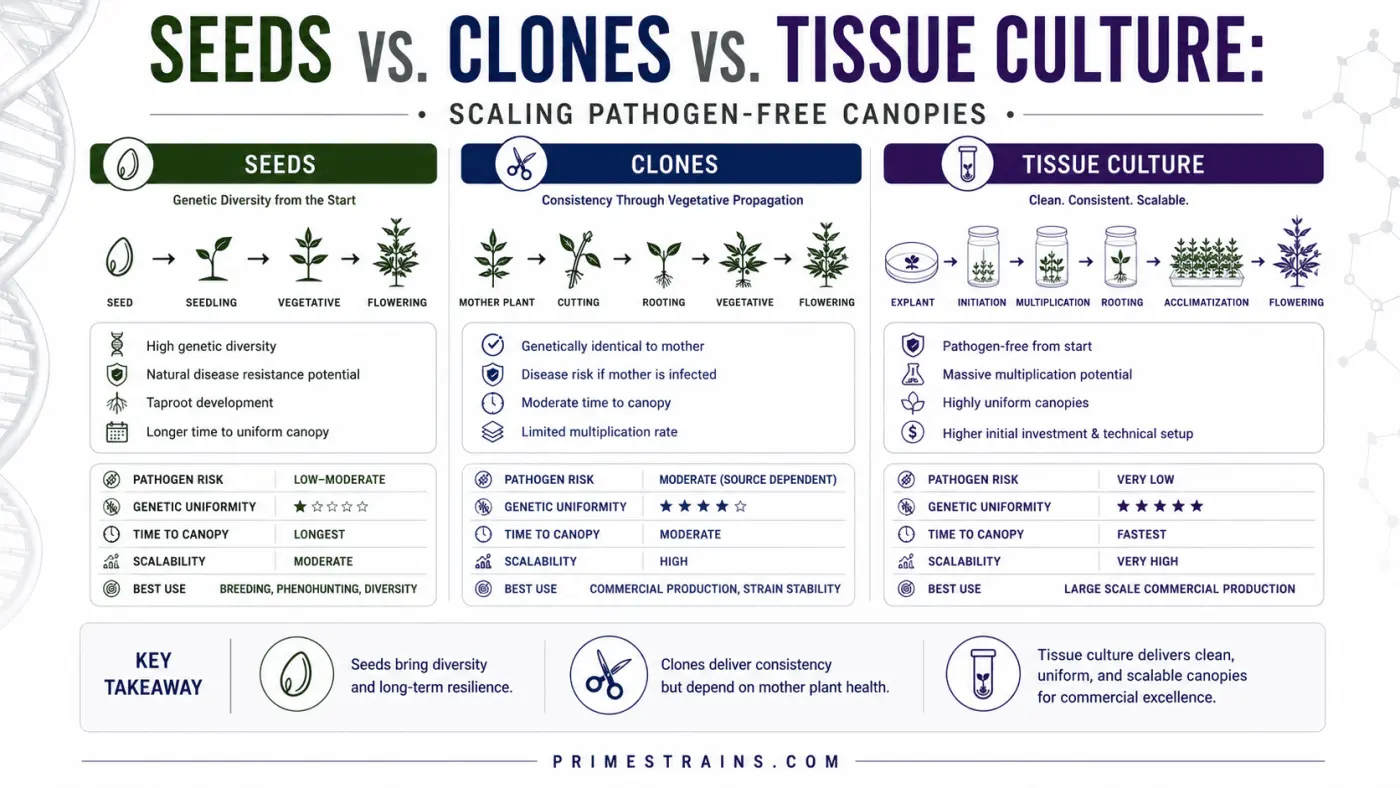
Key takeaways
- Hop Latent Viroid Impact HLVd (also known as "dudding disease") causes stunted growth, brittle stems, up to a 50% reduction in total cannabinoid output, and severe loss of commercial flower biomass.
- Seed Coat Pathogen Barrier Cannabis seed embryos naturally exclude systemic plant viroids like HLVd during seed development, providing growers with a clean biological reset.
- Tissue Culture Cleanup Micropropagation uses meristematic tissue excision under aseptic laboratory conditions to eliminate pathogens and regenerate clean clone stock, though at a significantly higher capital expenditure.
- Taproot Advantage Seed-grown plants develop a true taproot system that enhances anchor stability, water efficiency, and nutrient absorption compared to the fibrous adventitious root systems of traditional cuttings.
- Mother Room Overhead Maintaining dedicated mother rooms for traditional clone propagation consumes 15%–25% of facility floor space, requiring constant lighting, nutrient inputs, and continuous pathogen testing.
For decades, commercial cannabis production relied almost exclusively on vegetatively propagated clones. Taking stem cuttings from a designated "mother plant" allowed growers to replicate proven phenotypes with absolute genetic fidelity.
However, the rapid spread of systemic pathogens—most notably Hop Latent Viroid (HLVd), which infects an estimated 90% of commercial facilities in major markets—has exposed the fundamental vulnerability of legacy clone rooms.
To maintain biosecurity and protect operational margins, facility directors are re-evaluating their propagation pipelines. Comparing pathogen-free seeds, traditional clones, and tissue culture micropropagation reveals the clearest path to scaling a disease-free canopy.
1. The Viroid Crisis: Why Clones Are Failing
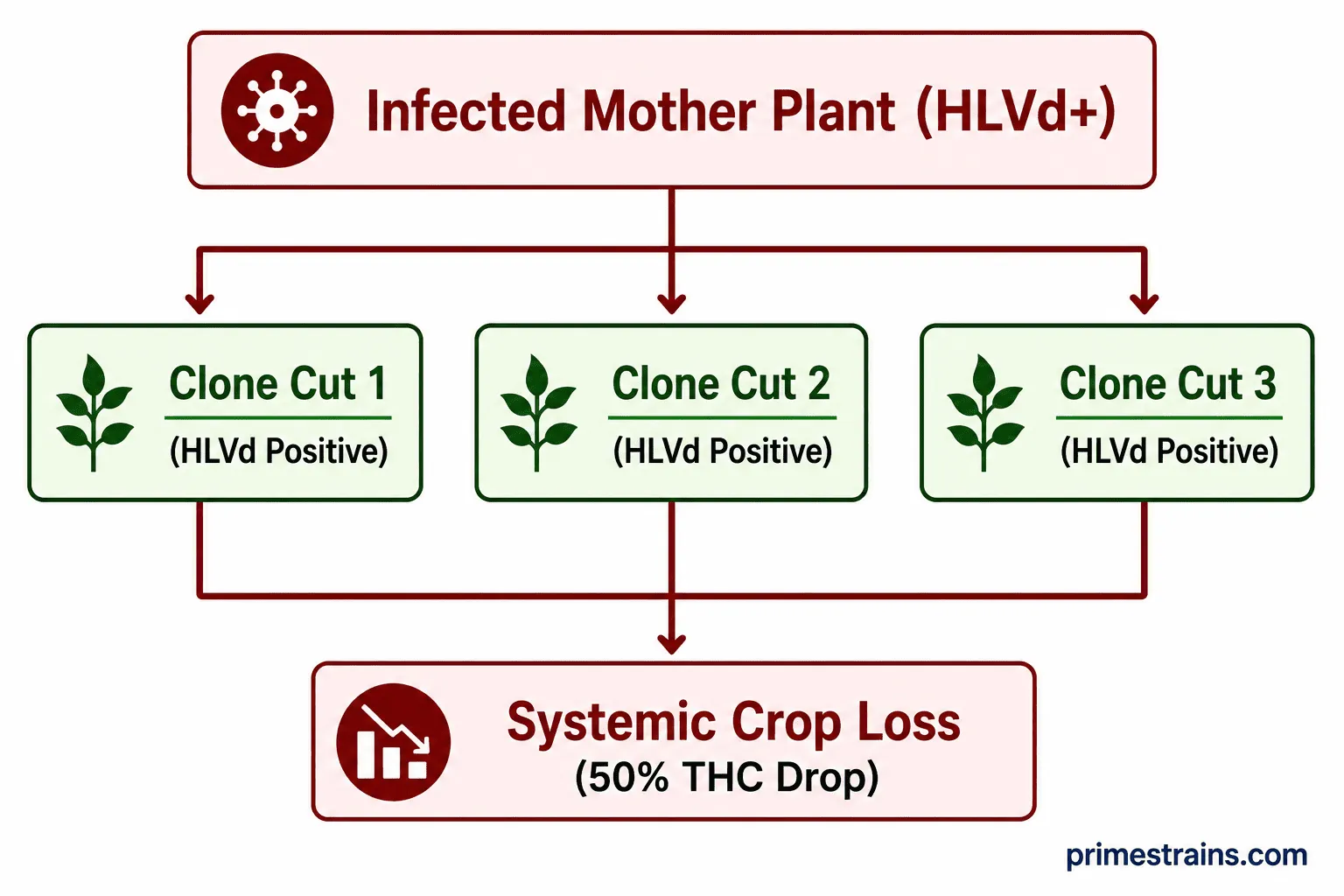
Symptoms of HLVd in Commercial Canopies:
- "Dudding" Stature: Stunted vegetative growth, horizontal branching, and loss of apical dominance.
- Trichome & Terpenic Reduction: Flower heads fail to swell, resulting in loose, larval-looking buds with severely degraded aroma profiles.
- Potency Crashing: Total THC output drops by 20% to 50%, rendering top-tier flower unmarketable for extraction or retail sale.
2. Tissue Culture Micropropagation: The Laboratory Reset
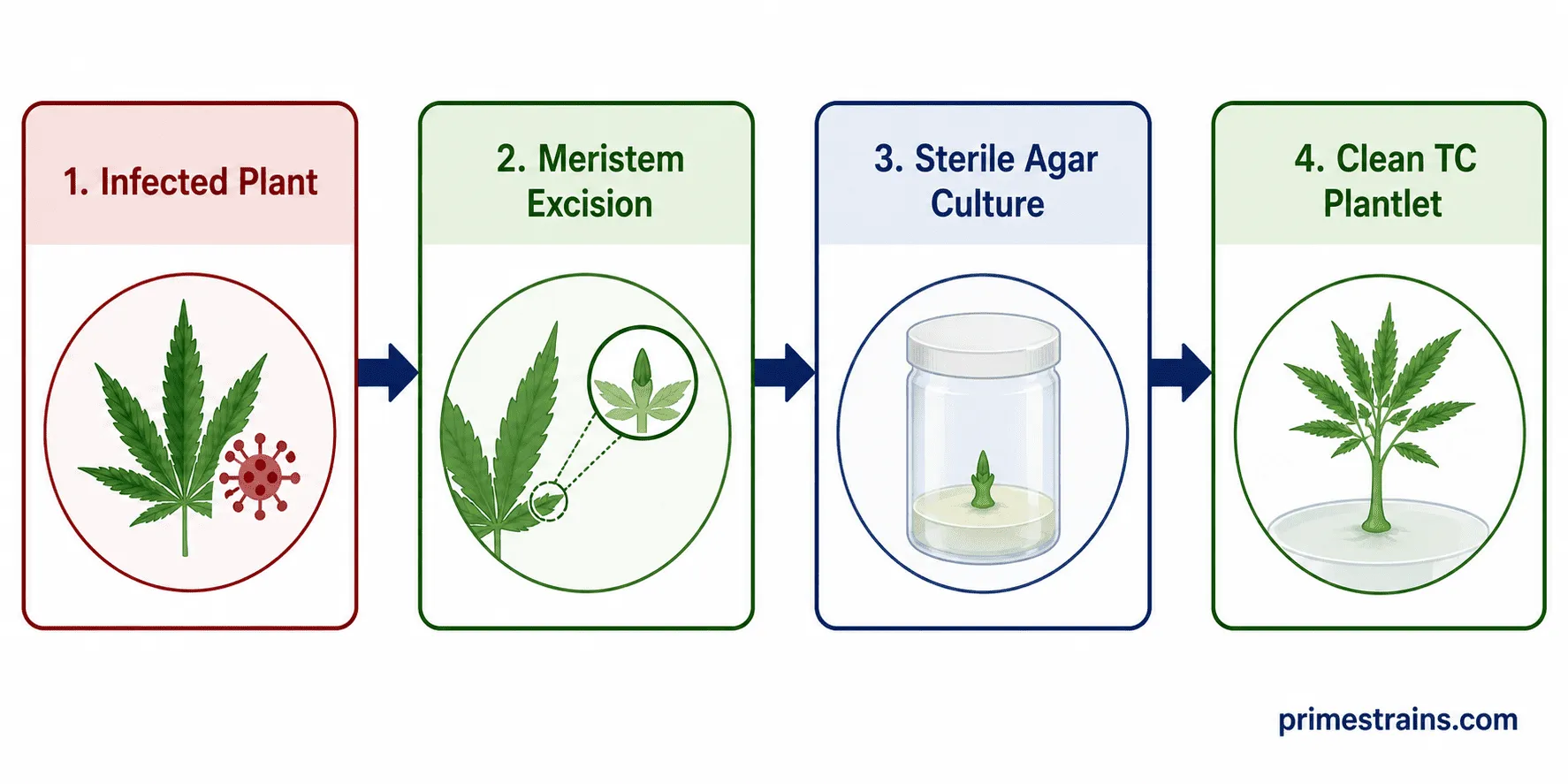
Pros and Cons of Tissue Culture:
- Pro: Reclaims priceless, infected clone-only cultivars that would otherwise be lost.
- Pro: Allows high-density banking of thousands of cultivars in minimal laboratory space.
- Con: High barrier to entry (requires cleanrooms, laminar flow hoods, autoclaves, and specialized tissue culture technicians).
- Con: Somaclonal variation and tissue vitrification can occur during prolonged subculturing phases.
3. Seed Propagation: Nature’s Biosecurity Barrier
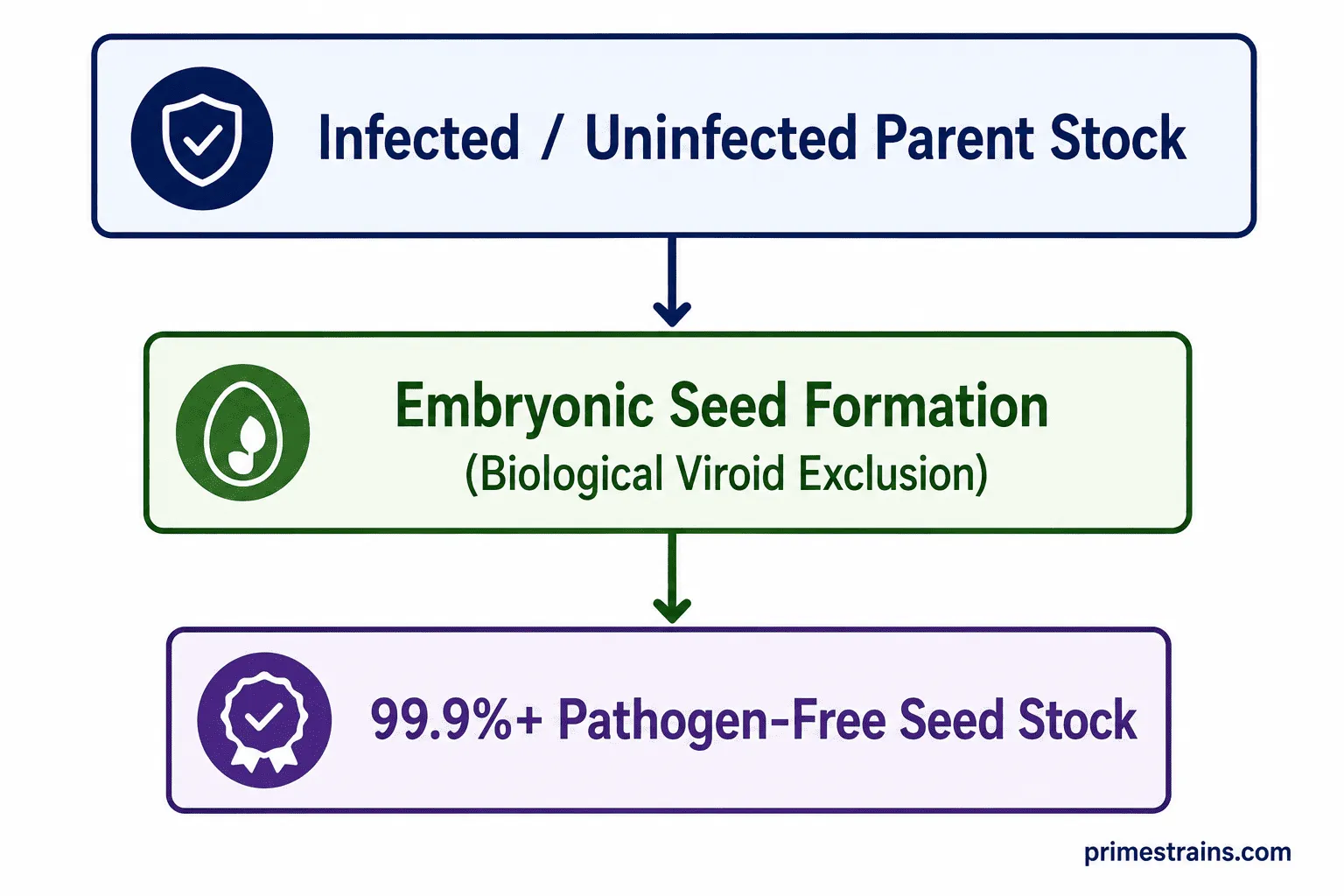
Advantages of Seed-Based Commercial Canopies:
- True Taproot Architecture: Seeds project a central taproot that anchors deep into media, improving drought tolerance, nutrient transport, and overall structural vigor.
- Elimination of Mother Rooms: Reclaiming room dedicated to mother plants allows facilities to convert non-productive square footage directly into flowering canopy, increasing annual revenue.
- Zero Cross-Contamination Risk: Seeds arrive dry, stable, and sealed. They do not introduce mites, thrips, powdery mildew, or viroids into sterile cultivation bays.
- Compatibility with Advanced Genetics: Modern breeders pair seed propagation with feminised photoperiod technology and stable homozygous lines to deliver clone-like uniformity without the disease liability.
True F1 Seeds vs Traditional Clones
| Criteria | True F1 Seed Stock | Traditional Clones |
|---|---|---|
| Pathogen & Viroid Risk | Zero to minimal (Natural seed-coat barrier excludes HLVd) | High (Systemically transmits HLVd, Pythium, and pests) |
| Root Architecture | True Taproot (Deep anchor, higher nutrient & water absorption) | Adventitious / Fibrous (Shallower root structure) |
| Facility Space Overhead | Zero mother room space required (100% canopy for flower) | 15%–25% of floor space wasted on perpetual mother stock |
| Genetic Uniformity | 98%–99% uniform (Extreme stability with True F1s) | 100% identical duplicates |
| Upfront Capital & Maintenance | Low (Pay per seed batch, zero continuous maintenance) | High (Continuous lighting, nutrients, labor, and PCR testing for mothers) |
| Scale & Automation Potential | Highly automatable (Direct-seeding plug trays) | Labor-intensive (Manual taking, dipping, and sticking cuts) |
Facility Decision Framework
- For Massive Commercial Scale (10,000+ sq. ft. Canopy): Transition primary production bays to True F1 Feminised Seeds or Feminised Triploids. This eliminates mother room overhead, guarantees pathogen-free turns, and simplifies labor automation.
- For Proprietary Genetic Preservation: Utilize a hybrid approach—keep elite parent stock in Tissue Culture micropropagation, and use those clean parents to produce clean F1 seed inventory for production runs.
- For Boutique Phenotype Vaults: Reserve traditional cloning strictly within isolated, highly quarantined nursery modules backed by routine PCR testing for HLVd and systemic pathogens.
Frequently asked questions
Can Hop Latent Viroid (HLVd) be transmitted through cannabis seeds?
Extensive testing and academic literature demonstrate that HLVd is transmitted almost exclusively via mechanical means (cuts, shears, handling) and infected clone cuttings. Seed coats and embryonic tissue naturally exclude the viroid during development, yielding pathogen-free seedlings.
Do seed-grown plants take longer to harvest than clones?
Seedlings require approximately 10 to 14 days of early germination and seedling establishment. However, because seed-grown plants develop a true taproot and demonstrate superior vegetative vigor, they quickly catch up to and often outpace rooted cuttings during the vegetative phase.
Is tissue culture better than buying seeds?
Tissue culture is designed to clean and clone an existing genetic line, whereas seeds provide fresh biological vigor and zero risk of viral carryover without needing an expensive laboratory infrastructure. For commercial flower production, true F1 seeds offer a far lower cost-per-plant than tissue-culture plantlets.