Federal Hemp Loophole Closing: Why New Seed Regulations Threaten Cannabis Genetics and Supply Chains
Federal hemp redefinitions threaten interstate cannabis seed shipping. Discover how breeders and commercial growers are pivoting to tissue culture, in-state hubs, and strict compliance documentation to protect their genetics.
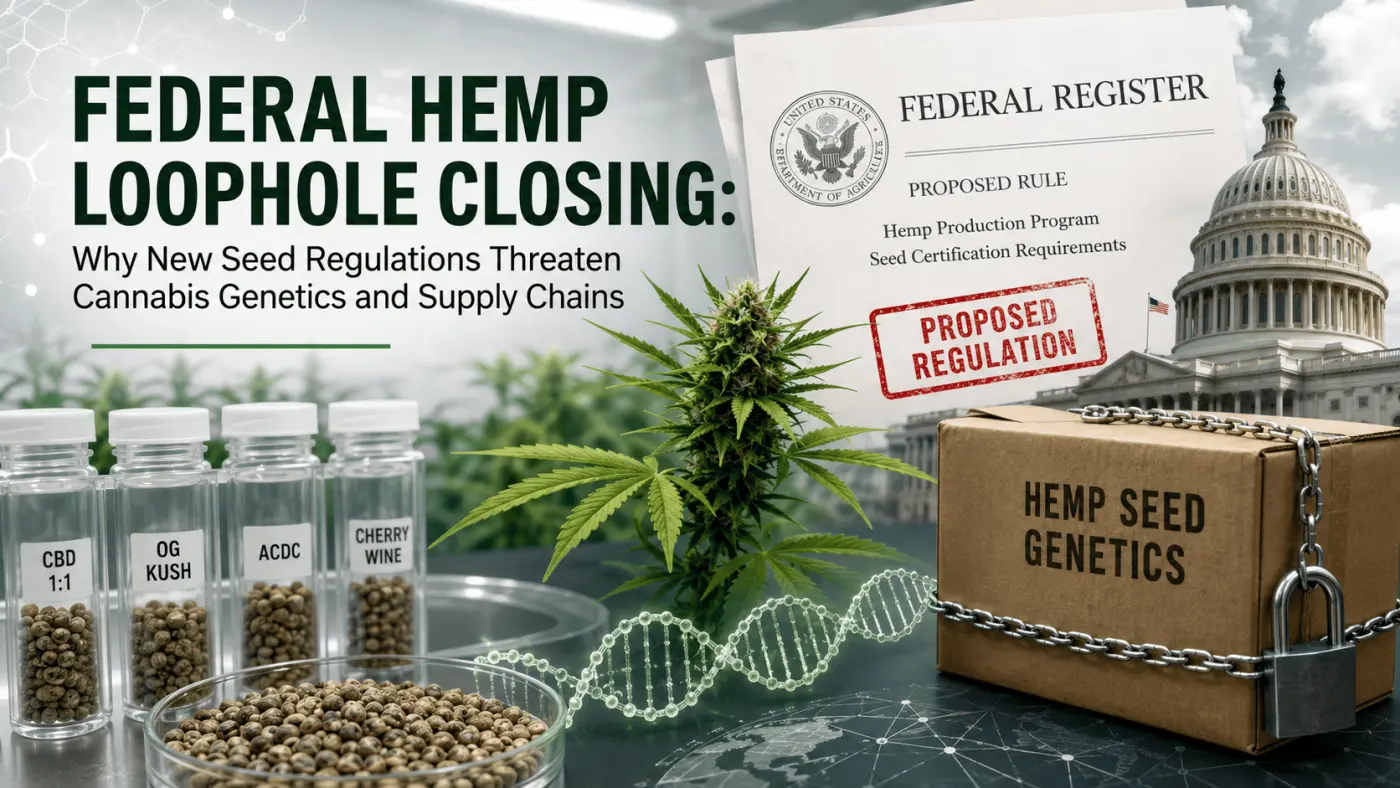
Key takeaways
- Potential THC Classification Under the updated federal redefinition, seeds and propagation genetics are classified based on the mature plant's potential THC output, barring interstate transport for cultivars that yield over 0.3% total THC.
- Interstate Commerce Ban Shipping seeds across state lines becomes illegal starting November 12, effectively ending Farm Bill protections for high-potency cannabis seed banks.
- Supply Chain Disruption Cultivators and retailers face severe genetic constraints as out-of-state seed access closes, limiting strain diversity and commercial pheno-hunting pipelines.
- Intrastate Regional Expansion Seed companies are adapting by establishing localized in-state clone hubs, tissue culture operations, and physical pop-up shops to serve individual legal markets legally.
- Rigorous Chain of Custody To maintain compliance, genetics providers must maintain transparent documentation, verified breeder attribution, and complete analytical records.
- USDA Reclassification Push Industry coalitions are actively lobbying federal regulators to manage cannabis seeds as agricultural inputs under the USDA rather than controlled substances under the DEA.
Any cannabis enterprise relying on interstate seed shipping, tissue culture, or clone genetics faces an impending operational deadline.
Updates to federal regulations are set to redefine hemp, closing the legal status quo that seed banks and genetics providers have operated under since the 2018 Farm Bill. By reclassifying seeds based on the potential THC output of the mature plant, federal authorities are putting an end to unrestricted interstate seed shipping for high-potency cannabis cultivars.
For commercial cultivators, seed banks, and retail dispensaries, this regulatory shift threatens to disrupt supply chains, restrict genetic diversity, and force geneticists to restructure their business models overnight.
How the Redefined Hemp Ban Impacts Genetics
Since the passage of the 2018 Farm Bill, the cannabis seed market operated under the premise that ungerminated seeds contained less than 0.3% Delta-9 THC, allowing them to be shipped across state lines as industrial hemp.The updated regulatory framework closes this loophole by judging seeds and propagation material on potential THC expression rather than the seed's raw chemical composition.
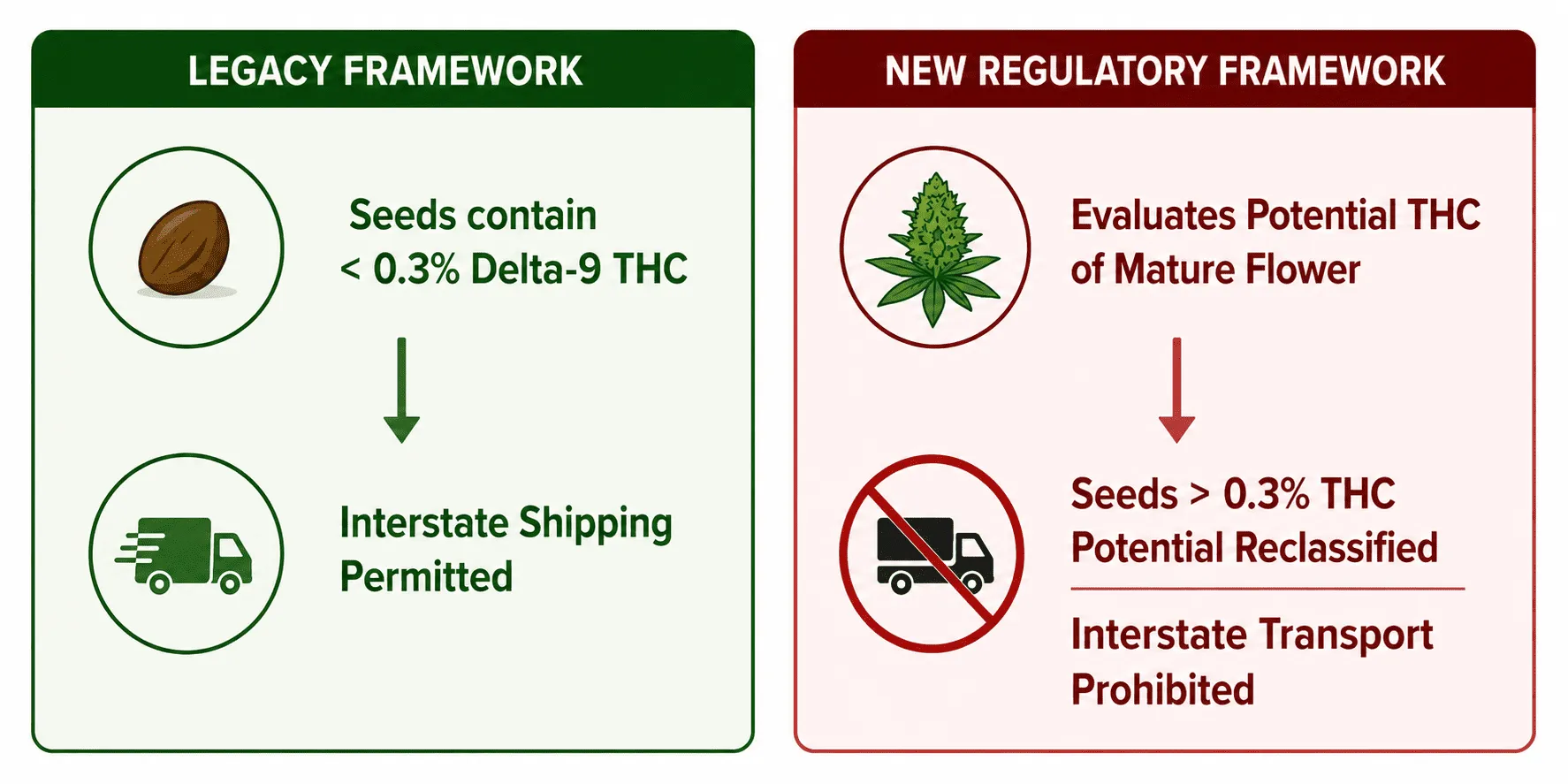
If a seed produces a plant that matures past the 0.3% total THC limit, shipping that seed across state lines becomes a federal violation.
Supply Chain Risks for Commercial Cultivators
For commercial canopy directors who rely on out-of-state seed banks to introduce novel strains, reset infected mother stock, or source true F1 hybrid seeds, the elimination of interstate seed shipping creates immediate operational hurdles:- Restricted Genetic Diversity: Dispensary shelves risk becoming homogenised as cultivators are limited strictly to genetic pools available within their state borders.
- Banking and Financial Friction: Financial institutions are tightening scrutiny on seed businesses. Without federal hemp coverage, seed providers must prove their revenue ties directly to state-licensed, intrastate commercial channels.
- Surge in Local Nursery Demand: Operators are shifting focus toward localized micropropagation, tissue culture, and state-licensed clone pop-ups to bypass interstate transport restrictions.
How Seed Banks Are Adapting to Survive
To mitigate legal exposure and prepare for the federal shift, leading geneticists and seed houses are implementing several defensive strategies:1. In-State Footprint Diversification
Genetics companies are establishing localized hubs in multiple legal states. By setting up physical tissue culture facilities and nursery networks locally, brands can distribute clones and plantlets intrastate without crossing state lines.2. Upgrading Chain-of-Custody Documentation
Seed businesses are moving away from informal operations. Maintaining compliance requires airtight records, including certified breeder lineage, full cannabinoid/terpene analytics, and transparent supply-chain tracking to verify compliance for state regulators and banking partners.3. Advocating for USDA Agricultural Status
Industry coalitions are actively lobbying federal agencies to classify cannabis seeds as standard agricultural inputs under the jurisdiction of the U.S. Department of Agriculture (USDA) rather than controlled substances managed by the Drug Enforcement Administration (DEA).Compliance Checklist for Seed Operators & Cultivators
| Criteria | Action Item | Operational Purpose |
|---|---|---|
| Catalog Audit | Execute Immediate Genetic Audit | Analyze all seed lines and classify inventory based on potential total THC expression of the mature plant. |
| Lineage Data | Document Chain-of-Custody | Organize verified breeder records, lineage documentation, and existing terpene/cannabinoid analytics. |
| Regional Footprint | Localize Propagation Infrastructure | Establish in-state tissue culture labs, clone nurseries, or pop-up shops to serve single-state legal markets. |
| Financial Compliance | Realign Banking Protocols | Transition financial disclosures from broad hemp exemptions to state-licensed intrastate commercial channels. |
Looking Ahead
As federal oversight tightens around interstate genetics, the industry is entering an era where biological security, legal compliance, and regional supply chains take precedence. Cultivators and seed producers who audit their catalogs and build localized propagation networks today will be best positioned to protect their genetics—and their market share—moving forward.Authoritative sources
References supporting factual claims and further reading in this guide.