Cannabis Plant Training: LST, Topping, and SCROG for Indoor Yields
Master indoor cannabis plant training techniques. Learn how Low-Stress Training (LST), Topping, FIMming, and Screen of Green (SCROG) maximize light penetration and double your yields.
Key takeaways
- Tuck, don't chop, during early veg Keep fan leaves attached whenever possible during early veg; bend them beneath the canopy instead of cutting them off to maintain maximum photosynthetic surface area.
- Stop topping before flower Never perform high-stress techniques like topping or super-cropping right before or during flowering; the plant needs all its energy focused on bud development, not tissue repair.
- Ideal for autoflowers Stick strictly to gentle LST for autoflowering strains to avoid stunting their fixed 3- to 4-week vegetative timeline.
Left to grow naturally, indoor cannabis plants exhibit strong apical dominance—growing in a tall, Christmas-tree shape with a single dominant main cola. In an indoor grow tent where artificial light intensity drops off rapidly with distance, this shape wastes valuable light on lower, shaded branches.
By applying plant training techniques, you flatten the canopy structure, forcing the plant to distribute growth hormone (auxin) evenly across dozens of main flower sites. Canopy training is most effective when paired with optimal environment controls outlined in our complete indoor cannabis growing guide.
1. Low-Stress Training (LST)
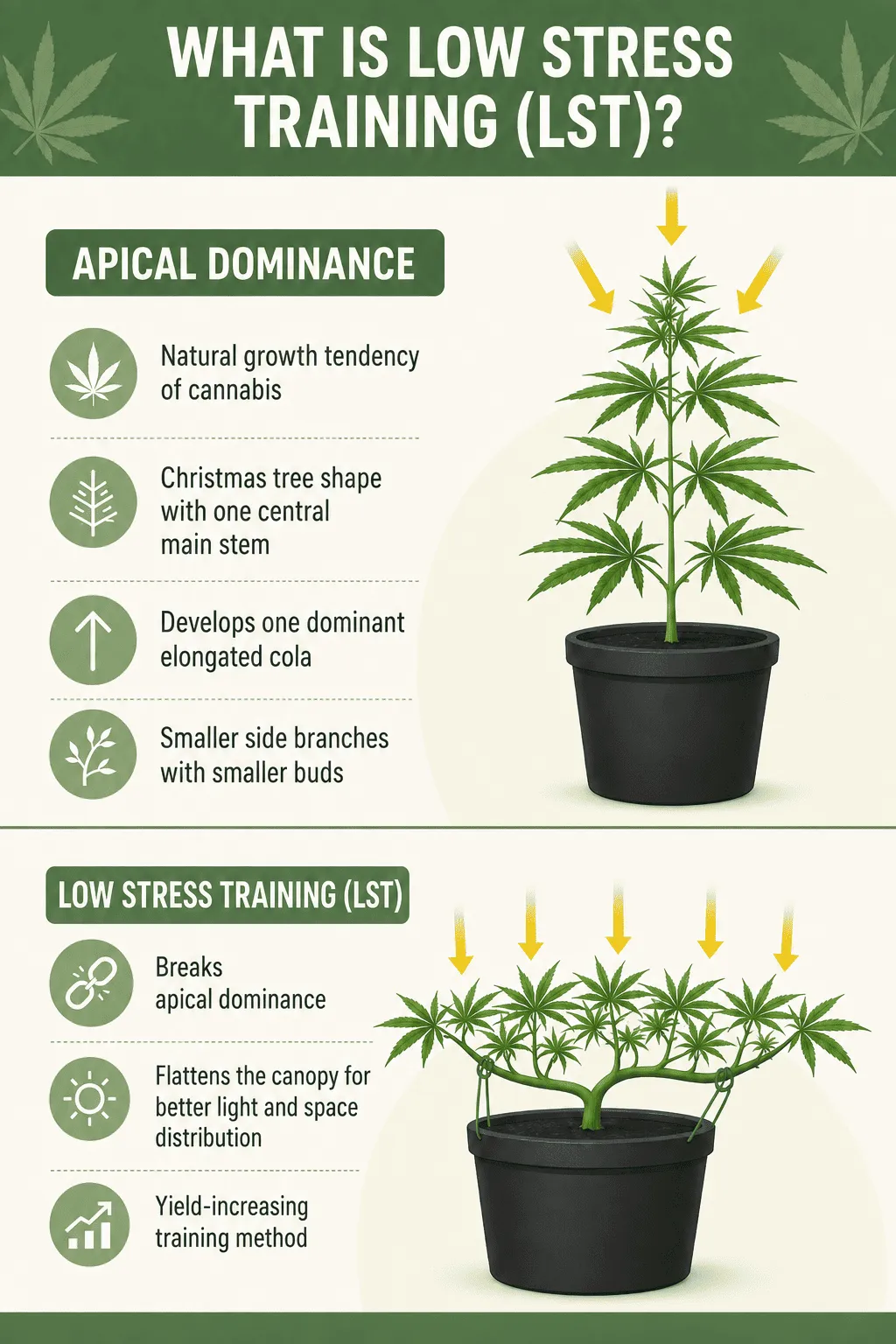
- When to Start: Week 2 or 3 of veg, once the seedling has developed 4 to 5 nodes.
- How it Works: Bending the top tip of the plant lower than the side branches trick the plant into distributing auxins equally, turning lower branches into primary colas.
- Risk Level: Extremely low. If a branch accidentally snaps, tape it immediately with plant tape; cannabis stems repair themselves rapidly during veg.
2. Topping vs. FIMming (HST)
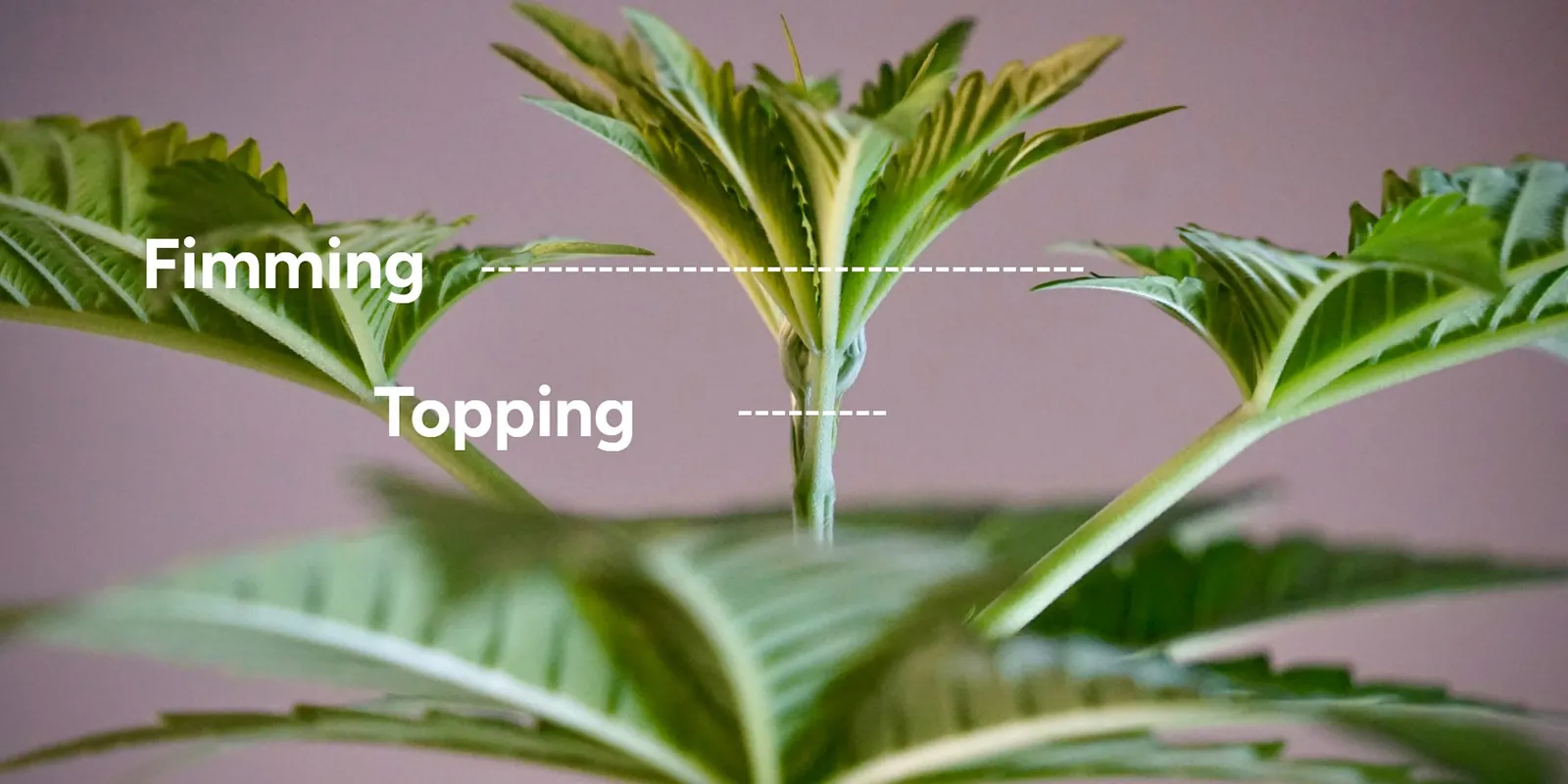
- Topping: Cutting the main stem directly above the 4th or 5th node. This completely removes the top shoot and splits the main stem into 2 primary main colas.
- FIMming ("Fuck I Missed"): Pinching off 70–80% of the newest tip growth rather than cutting the entire stem through the node. This leaves partial tissue behind, often resulting in 4 or more main colas with minimal growth delay.
3. Screen of Green (SCROG)
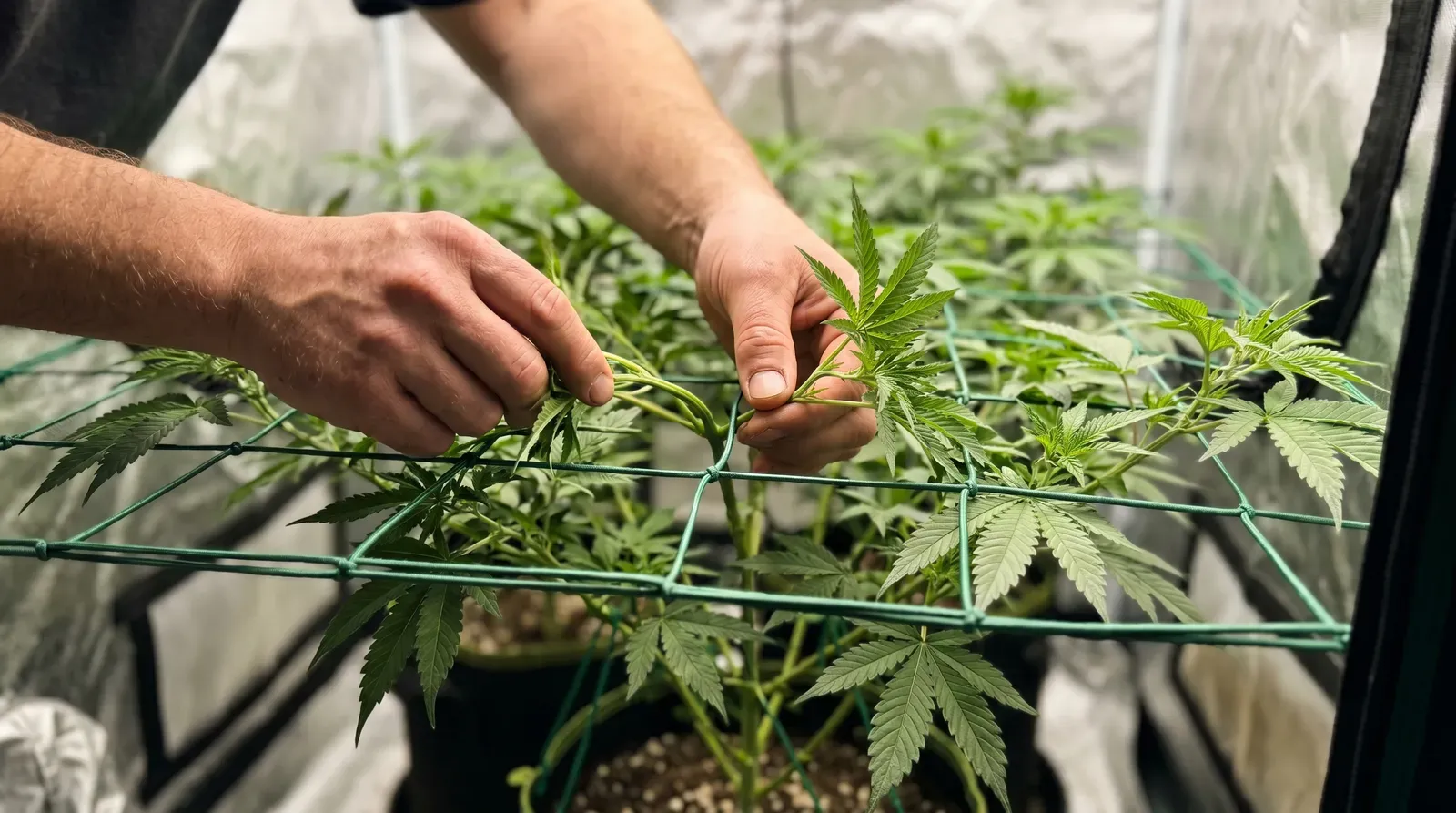
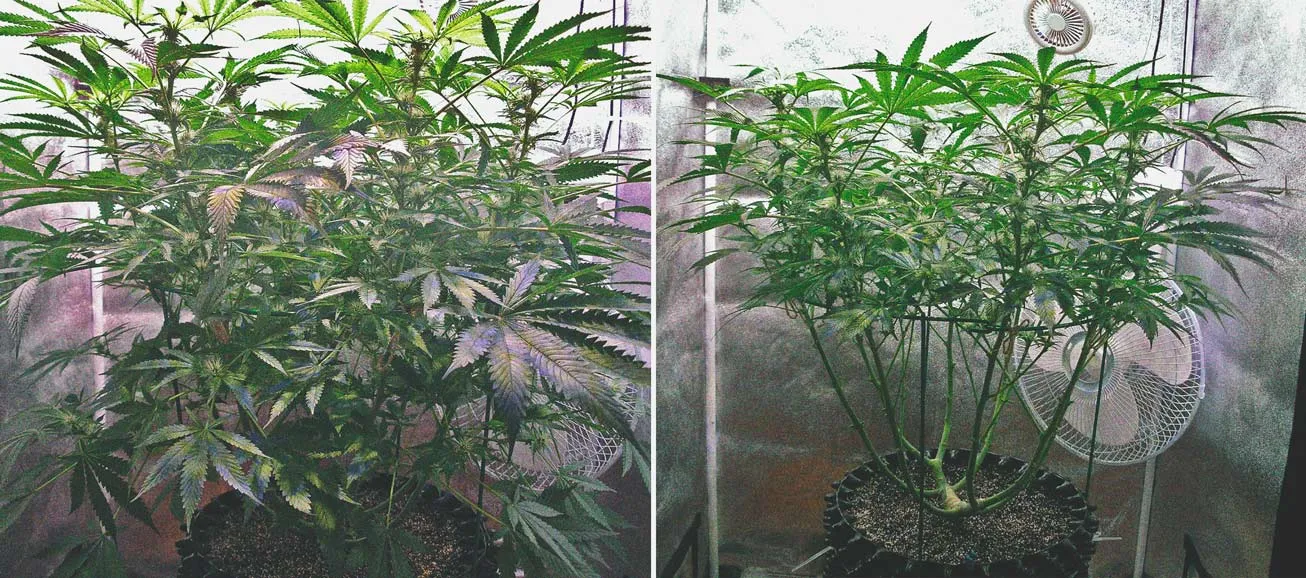
As branches grow up through the screen during late veg and the first two weeks of flower stretch, you manually weave and tuck them beneath adjacent squares. This forces the plant to grow horizontally until the entire screen is filled with uniform bud sites receiving equal PPFD.
Spreading colas horizontally ensures even light distribution; read our guide on maximizing light footprint efficiency.
4. Super-Cropping & Defoliation
- Super-Cropping: Pinching and crushing the inner cell wall (xylem/phloem) of a firm stem between your thumb and forefinger until it softens, allowing you to bend it 90 degrees without snapping the outer skin. The plant responds by building a thick, reinforced knuckle that increases fluid transport capacity.
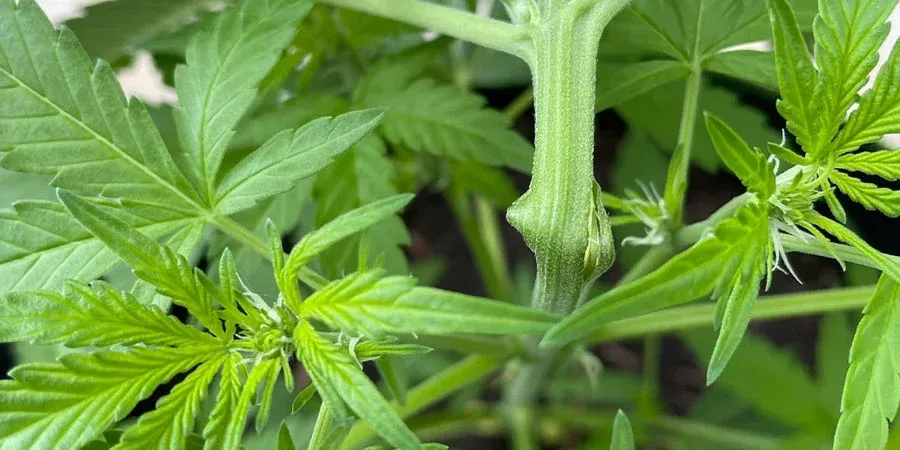
- Defoliation: Strategically stripping large lower and middle fan leaves during week 3 of veg and day 21 of bloom. This opens up airflow through the dense canopy and prevents microclimates that breed mold.
Cannabis Training Methods Compared
| Criteria | Low-Stress Training (LST & SCROG) | High-Stress Training (Topping & Super-Cropping) |
|---|---|---|
| Plant Stress Level | Zero to minimal stress (No growth stunt) | Moderate to high stress (Requires 3–7 days recovery) |
| Best Life Stage | Early Vegetative through Early Bloom stretch | Mid Vegetative stage only (Never in bloom) |
| Yield Expansion Potential | Maximum (Creates dozens of uniform colas) | High (Multiplies main cola branches) |
| Suitability for Autoflowers | Highly recommended (Safe for short veg life) | Use with caution (Can stunt short autoflower veg windows) |
Frequently asked questions
How many times should I top a cannabis plant?
For a standard 4x4 grow tent, topping a plant 1 to 3 times (resulting in 2, 4, or 8 main tops) is usually ideal. Combine this with LST to spread those tops out across your tent floor.
When should I stop weaving branches in a SCROG net?
Stop weaving and tucking branches roughly 10 to 14 days after flipping your lights to the 12/12 bloom schedule. At this point, allow the developing buds to push vertically through the screen toward the light.
Authoritative sources
References supporting factual claims and further reading in this guide.